


Budget Yard Tool Buying Guide for Homeowners in 2026
TL;DR:
- A budget yard tool buying guide helps homeowners select affordable, durable tools covering most yard tasks for $100–$150.
- Focusing on five core hand tools and choosing quality over cheap all-in-one sets ensures longevity and better performance.
A budget yard tool buying guide is defined as a framework for selecting affordable, durable tools that cover the full range of routine yard maintenance without overspending. The right foundational set covers roughly 80% of yard tasks for an initial investment of $100–$150, according to expert tool research. That figure matters because it proves you do not need a garage full of gear to maintain a healthy, attractive yard. The key is choosing tools based on value, durability, and how often you actually use them.
What does a budget yard tool buying guide actually cover?
The University of Illinois Extension recommends starting with seven core tools and only adding specialized items as real needs arise. That approach keeps your budget tight and your tool storage manageable. Buying selectively also prevents the common trap of owning ten mediocre tools when three great ones would do the job better.
Which essential hand tools does every homeowner need on a budget?
Five hand tools form the foundation of any practical yard kit: bypass hand pruners, a hand trowel, a spading fork, a stirrup hoe, and a 2-gallon watering can. These five tools, chosen well, handle planting, weeding, watering, and pruning across every season. Cheap all-in-one kits under $50 typically include stamped metal tools with hollow handles that bend or break within a single season. Buying two or three quality individual tools beats buying a full low-grade set every time.
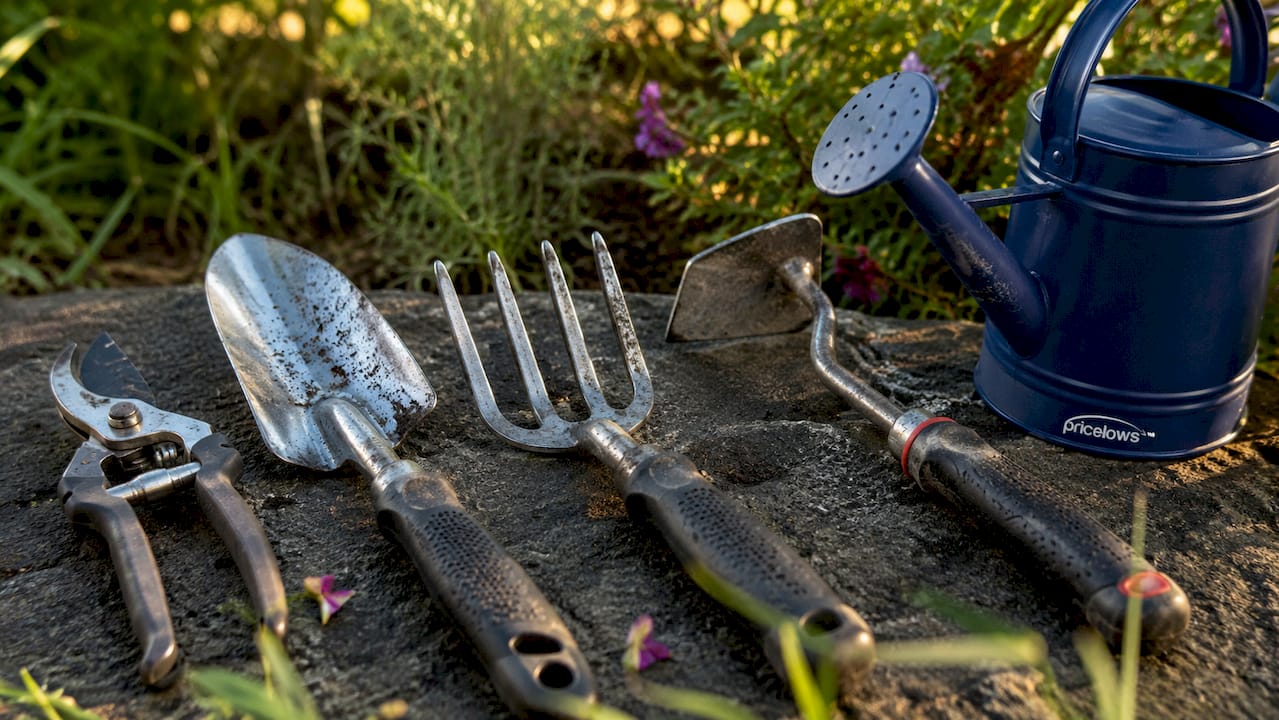
Pro Tip: Check the handle material before you buy. Fiberglass and solid ash handles outlast hollow plastic by years, especially on spades and forks you use weekly.
Pruners deserve special attention. Cheap pruning shears crush plant stems rather than cutting them cleanly, which invites disease and slows regrowth. Professional-grade pruners cost $40–$80 and outperform $10–$20 models on both plant health and longevity. That price gap closes fast when you factor in the cost of replacing a $15 pair every season.
Here is a quick cost comparison to guide your hand tool decisions:
| Tool | Budget pick | Premium pick | Best choice |
|---|---|---|---|
| Bypass pruners | $10–$20 | $40–$80 | Premium |
| Hand trowel | $8–$15 | $25–$40 | Budget |
| Spading fork | $20–$35 | $50–$80 | Premium |
| Stirrup hoe | $15–$25 | $35–$55 | Budget |
| Watering can (2-gal) | $10–$20 | $25–$45 | Budget |
Ergonomics matter as much as materials. Padded handles and balanced weight distribution reduce muscle fatigue and lower injury risk, especially for homeowners who spend an hour or more in the yard each week. A tool that hurts to use gets left in the shed.
How to optimize your outdoor power tool purchases on a budget
Battery-powered outdoor tools work best for yards under half an acre. They require far less maintenance than gas-powered equipment and cost less to run over time. The single most important power tool buying decision is choosing a battery platform and sticking with it.
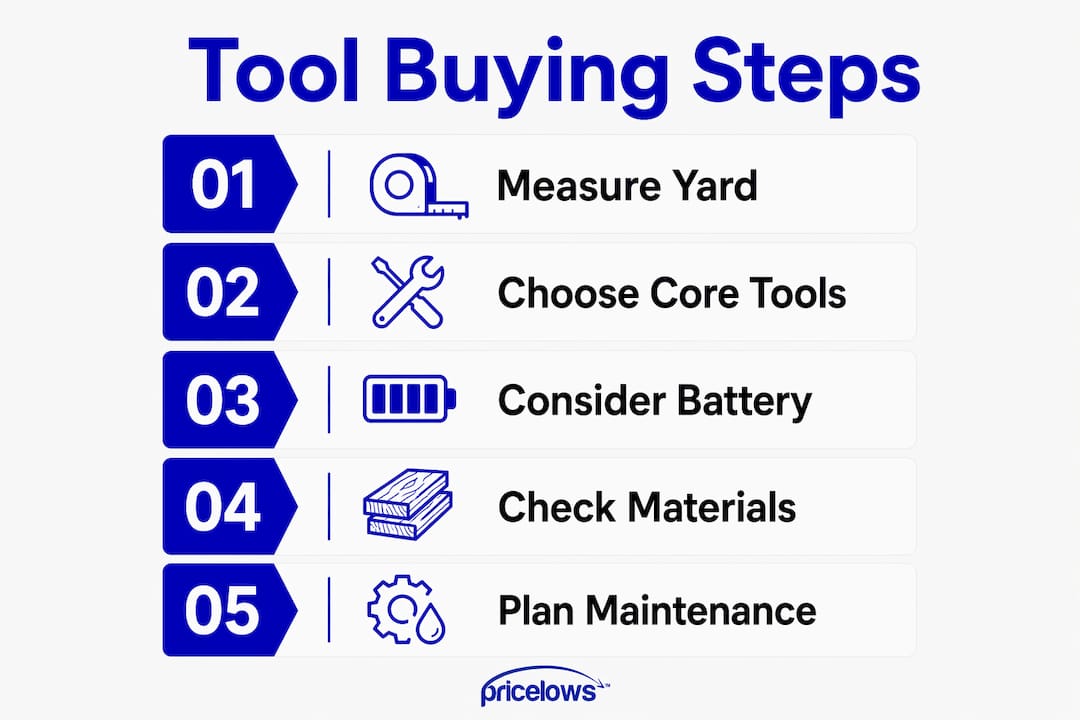
Systems like Ryobi 40V offer a wide range of tools that share batteries across the lineup, which cuts the total cost of ownership significantly. Buying a mower, string trimmer, and leaf blower from the same platform means one charger and one battery type covers all three. That is a real savings advantage over mixing brands.
Pro Tip: Measure your yard before buying any power tool. A yard under 5,000 square feet rarely needs more than a 40V battery mower. Oversizing costs money upfront and adds weight you do not need.
Avoid the bare tool trap. Buying bare tools without batteries adds hidden costs that erase any upfront savings. Starter kits that include a battery and charger deliver better value and get you working the same day.
Battery vs. gas at a glance:
- Battery: Lower maintenance, quieter, no fuel costs, ideal for under half an acre
- Gas: Higher power output, better for large properties, higher maintenance and fuel costs
- Kit purchase: Includes battery and charger, best value for first-time buyers
- Bare tool purchase: Lower sticker price, but requires a compatible battery you may not own
Balancing quality and affordability: when to splurge versus save
Cost per use is the right metric for every tool purchase, not the sticker price. A $60 spade you use three times a week costs far less per use than a $20 spade you replace every spring. Premium forged steel tools with ash handles last three to four times longer than budget options, making the higher upfront price the cheaper long-term choice.
Pro Tip: Before buying, ask yourself how many times per month you will use the tool. Daily or weekly use justifies a premium. Monthly or less, go budget or rent.
Tools used daily or weekly, like pruners and spades, justify premium investment. Tools used occasionally, like pole saws or edgers, are better bought at a budget price point or rented as needed. That split approach keeps your total spend low while protecting the tools that matter most.
| Tool | Recommended tier | Reason |
|---|---|---|
| Bypass pruners | Premium | Plant health, daily use |
| Spade or fork | Premium | Durability, heavy use |
| Garden hose | Premium | Leak resistance, longevity |
| Hand trowel | Budget | Light use, easy to replace |
| Watering can | Budget | Simple function, low stress |
| Gloves | Budget | Consumable, replace seasonally |
Ergonomic design belongs in the premium conversation too. Tools with padded grips and proper weight balance reduce strain on wrists and shoulders over long sessions. For homeowners over 50 or anyone with joint concerns, ergonomic features are not optional extras.
Smart buying strategies and maintenance tips to extend tool lifespan
Buying smart starts before you check out. Always verify the warranty terms and confirm that replacement parts, especially blades and handles, are available for the tools you buy. A tool you cannot repair becomes landfill the moment it breaks.
Proper maintenance including cleaning, sharpening, lubricating, and storing tools correctly extends lifespan and keeps performance consistent. This matters most for budget tools, which have less material tolerance for neglect. A $30 spade maintained well outperforms a $30 spade left to rust in two seasons.
Top maintenance habits every homeowner should adopt:
- Clean after every use: Remove soil and plant debris with a stiff brush before storing
- Sharpen blades seasonally: Pruners, hoes, and spades cut better and cause less plant damage when sharp
- Oil metal parts: A light coat of linseed or mineral oil prevents rust on blades and heads
- Check battery health: Store lithium batteries at partial charge in a cool, dry location to extend cell life
- Hang tools vertically: Wall hooks or a garden tool storage cabinet keep handles dry and prevent warping
- Inspect handles annually: Replace cracked or splintered handles before they fail mid-use
Pro Tip: A bucket of dry sand mixed with a cup of motor oil makes an excellent blade storage medium. Plunge tool heads into it after cleaning to condition and protect the metal between uses.
Avoid cheap all-in-one sets with thin stamped metal parts. They skip the material quality that makes maintenance worth doing in the first place. Two quality tools you maintain beat six disposable ones you replace every year. Check the yard maintenance tools checklist at PriceLows™ for a practical starting inventory.
Key Takeaways
The most cost-effective approach to yard tools is buying a small set of quality foundational tools, choosing a single battery platform for power equipment, and maintaining everything consistently to maximize lifespan.
| Point | Details |
|---|---|
| Start with five core hand tools | Bypass pruners, trowel, spading fork, stirrup hoe, and watering can cover most yard tasks. |
| Spend more on high-use tools | Pruners and spades used weekly justify premium pricing due to durability and plant health benefits. |
| Pick one battery platform | Shared batteries across a tool ecosystem lower total cost of ownership significantly. |
| Skip cheap all-in-one kits | Low-grade sets under $50 break quickly. Two or three quality individual tools deliver better value. |
| Maintain tools consistently | Cleaning, sharpening, and proper storage extend tool life and protect your investment. |
What I have learned building a yard kit on a real budget
I spent two seasons making the same mistake most homeowners make. I bought a $39 all-in-one garden set because the per-tool math looked good on paper. By the end of the first summer, the trowel had bent, one pruner blade had chipped, and the hoe handle had cracked at the collar. I replaced the whole set the following spring and spent more than I would have buying three solid individual tools from the start.
The lesson I took from that experience is simple. Start small and buy the tools you will actually use every week. A quality pair of bypass pruners and a forged spade will serve you for a decade with basic care. Everything else can wait until you know you need it.
The other thing I got wrong early on was ignoring ergonomics. I bought a spade with a straight handle because it was cheaper. After a few hours of digging, my lower back disagreed with that decision. The right grip angle and handle length make a real difference over a long session. Spend the extra $10 for a comfortable tool. Your body will thank you.
My honest advice: build your kit in phases. Phase 1 is five core hand tools. Phase 2 is a battery-powered mower and trimmer on the same platform. Phase 3 is everything else, bought only when a specific task demands it. That sequence keeps spending controlled and prevents the clutter of tools you rarely touch.
— Thane Holland
Affordable yard tools worth checking out at PriceLows™
PriceLows™ has been helping homeowners find quality yard and garage products at fair prices for 15 years. The selection covers everything from hand tools to outdoor power equipment, with free shipping and a 100% shipping protection plan on every order.

Homeowners building a tool collection from scratch will find solid options across the core categories covered in this guide. Keeping your tools organized is just as important as choosing the right ones. The Black Metal Storage Cabinet at PriceLows™ gives you a lockable, shelved storage solution that keeps tools dry, accessible, and protected year-round. A well-organized tool space makes maintenance easier and extends the life of every tool you own. Browse the full yard and outdoor selection at PriceLows™ to find the right fit for your space and budget.
FAQ
What is the minimum budget for a starter yard tool set?
A foundational set of five core hand tools, including bypass pruners, a trowel, a spading fork, a stirrup hoe, and a watering can, costs between $100 and $150 and covers the majority of routine yard maintenance tasks.
Are battery-powered yard tools worth it for small yards?
Battery-powered tools are the best value for yards under half an acre. They require less maintenance than gas-powered equipment and lower your total cost of ownership when you choose a shared-battery platform.
Why should I avoid cheap all-in-one garden tool kits?
Budget kits under $50 typically use stamped metal and hollow plastic handles that bend or break within one season. Buying two or three quality individual tools costs less over time.
Which yard tools justify spending more money?
Tools you use daily or weekly, like bypass pruners and spades, justify premium pricing. Frequency of use is the clearest signal for where to spend more and where to save.
How do I make budget yard tools last longer?
Clean tools after every use, sharpen blades each season, oil metal parts to prevent rust, and store tools in a dry, covered space. Consistent maintenance extends the life of even modestly priced tools by several seasons.