


Kitchen Organization Systems Explained for Home Cooks
TL;DR:
- Kitchen organization systems increase storage and improve workflow in the kitchen. Proper zoning and the right tools, like pull-out shelves and corner systems, maximize space and accessibility. Accurate measurements and gradual implementation are essential for effective and lasting organization.
Kitchen organization systems are structured methods and products designed to maximize storage, improve workflow, and make every inch of your kitchen work harder. The right system turns a cluttered, frustrating kitchen into a space where cooking feels natural and efficient. Functional zoning, pull-out shelves, vertical dividers, and shelf risers are the core tools professional organizers rely on. PriceLows™ carries affordable versions of all these solutions, so you can build a well-organized kitchen without overspending.
What are the main types of kitchen organization systems?
Pull-out shelves are the most effective solution for deep base cabinet accessibility. They bring everything stored at the back of a cabinet to the front with a single pull, eliminating the need to dig through stacked items. Shelf risers double vertical storage cost-effectively by creating a second level inside any cabinet without permanent modification.
Corner pull-out systems solve one of the most wasted spaces in any kitchen. Professional-grade corner pull-outs cost between $150 and $300 and can reclaim up to 70% of deep corner cabinet space. That recovery rate makes corner systems one of the highest-return investments in kitchen storage.
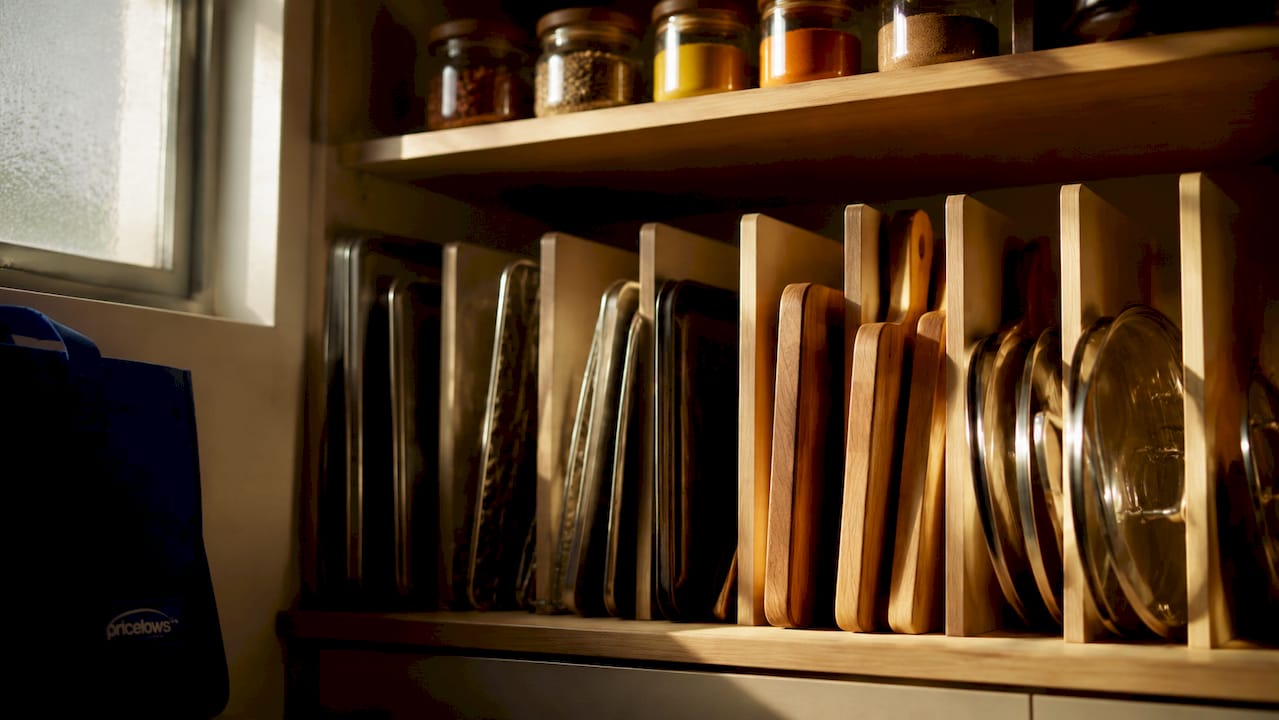
Vertical dividers handle baking sheets, cutting boards, and pot lids far better than stacking. Spacing dividers 2–3 inches apart for baking sheets and 1–1.5 inches for pot lids keeps items stable and easy to grab. Without those spacing standards, dividers create more frustration than they solve.
Advanced systems take organization further with tiered storage. Drawers within drawers effectively double utensil storage in small kitchens by using depth that would otherwise go to waste. Current trends also favor appliance garages and pocket door pantries, which reduce visual clutter while keeping appliances fully accessible.
Pro Tip: Before buying any organizer, measure the interior depth, width, and height of each cabinet. A pull-out shelf that binds against the door frame is useless, no matter how well-reviewed it is.
Here is a quick comparison of the main system types by use case:
| System Type | Best Use Case | Key Benefit |
|---|---|---|
| Pull-out shelves | Deep base cabinets | Full access to back of cabinet |
| Corner pull-outs | Corner dead zones | Reclaims up to 70% of lost space |
| Vertical dividers | Baking sheets, lids, boards | Stable, grab-and-go access |
| Shelf risers | Standard cabinets | Doubles vertical capacity cheaply |
| Tiered drawers | Utensils, small items | Maximizes depth in small kitchens |
How does organizing by functional zones improve kitchen workflow?
Organizing by workflow zones improves efficiency more than organizing by item category. The reason is simple: you cook in sequences, not categories. Grouping all your baking tools together by type sounds logical, but placing them near the oven and mixing bowls near the counter where you prep is what actually saves time.
The five standard functional zones in a well-organized kitchen are:
- Prep zone: Cutting boards, knives, peelers, and mixing bowls near the main counter workspace
- Cooking zone: Pots, pans, spatulas, and oils within arm’s reach of the stove
- Serving zone: Plates, bowls, and serving utensils near the dining area or island
- Storage zone: Pantry staples, canned goods, and dry ingredients grouped by frequency of use
- Cleaning zone: Dish soap, sponges, drying racks, and cleaning supplies under or near the sink
Each zone keeps related items together based on where you use them, not just what they are. A spice rack belongs in the cooking zone, not alphabetized in a pantry drawer across the kitchen.
“The most common kitchen organization mistake is buying containers before defining zones. You end up with beautiful bins full of items stored in the wrong place.”
Zoning also reduces unnecessary movement during cooking. When your prep tools are at your prep station and your cooking tools are at the stove, you stop making the same four-step trips across the kitchen every time you cook. That reduction in movement adds up fast during a busy weeknight dinner.
What practical tips improve kitchen organization installation?
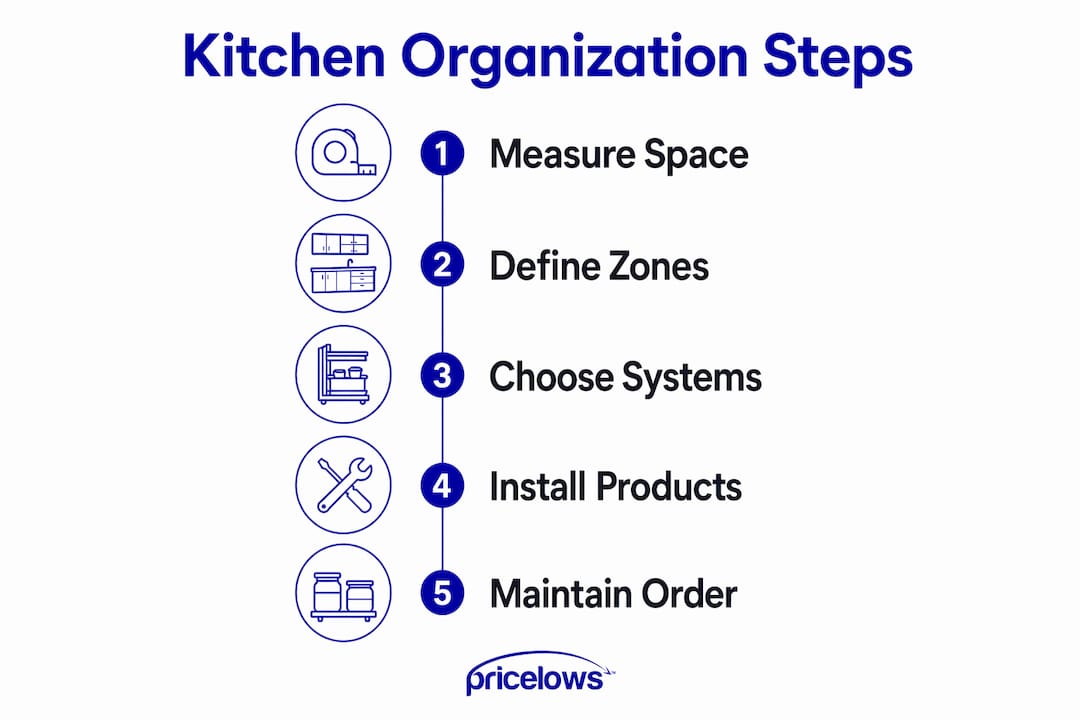
A kitchen organization audit comes before any purchase. Buying organizers before defining zones leads to reorganization within six weeks in most cases. Spend 30 minutes mapping your kitchen zones first, then buy only what each zone needs.
Follow these steps when installing pull-out shelves and organizers:
- Measure cabinet interiors precisely. Record depth, width, and height for every cabinet you plan to organize.
- Account for hardware clearance. Pull-out systems require 0.5–1 inch of extra clearance beyond the item size to prevent door binding. Skipping this step is the most common installation mistake.
- Customize shelf heights by item. Adjust shelf heights every 1.5–2 inches based on item height plus a 1-inch buffer. A pegboard jig makes this adjustment fast and repeatable.
- Start with high-traffic zones. Organize your prep and cooking zones first. Those two areas drive 80% of your daily kitchen movement.
- Add hidden storage last. Appliance garages and pocket door pantries are finishing touches, not starting points. Get your core zones working before adding aesthetic upgrades.
Pro Tip: Use painter’s tape to mark zone boundaries on your counters and cabinet fronts before installing anything. It lets you test the layout in real cooking conditions before you commit to hardware.
Corner cabinets and under-sink spaces are the two most neglected areas in most kitchens. A chrome pull-out shelf turns an under-sink cabinet from a jumbled mess into a functional cleaning zone in under 20 minutes.
What kitchen organization products does PriceLows™ offer?
PriceLows™ carries a full range of kitchen storage solutions built for real home cooks on a budget. Every product ships free with a 100% shipping protection plan, so there is no risk in trying a new organizer.
Key products available at PriceLows™ include:
- Pull-out cabinet organizers: Chrome steel expandable drawers for under-sink and base cabinet spaces, built for durability and easy installation
- Wall-mount wire rack organizers: Five-tier pantry shelving that adds vertical storage without permanent wall damage
- Pull-down upper cabinet shelves: Double-layer pull-down systems that bring high-cabinet items to eye level
- Freestanding spice rack organizers: Counter and cupboard options that keep your cooking zone spices accessible without drawer clutter
Each product integrates directly into a zone-based kitchen setup. The pull-out and pull-down systems work best in cooking and prep zones. The wire rack and spice organizers anchor your storage and pantry zones.
Key Takeaways
A well-organized kitchen requires workflow-based zoning, precise measurements, and the right storage systems installed in the right order.
| Point | Details |
|---|---|
| Zone before you buy | Define prep, cooking, serving, storage, and cleaning zones before purchasing any organizer. |
| Pull-outs for deep cabinets | Pull-out shelves are the most effective tool for accessing items stored at the back of base cabinets. |
| Measure for clearance | Pull-out systems need 0.5–1 inch of extra clearance beyond item size to avoid door binding. |
| Vertical dividers need spacing | Set dividers 2–3 inches apart for baking sheets and 1–1.5 inches for pot lids to keep items stable. |
| Corner systems pay off | Professional corner pull-outs reclaim up to 70% of deep corner cabinet space. |
What I have learned from years of kitchen organization
Most kitchen organization advice focuses on products. The real problem is sequencing. Home cooks buy beautiful bins and pull-out shelves, install them in whatever cabinet has space, and wonder why the kitchen still feels chaotic six months later. The product was never the issue. The zone layout was.
The single biggest shift I have seen is when cooks stop thinking about where things fit and start thinking about where they reach. Your most-used pan should be one motion from the stove, not two cabinets away because that is where pans “belong.” That mental shift changes everything about how you set up a kitchen.
I will also say this: clearance measurements are not optional. I have watched home cooks install pull-out shelves without accounting for hardware thickness, only to have the cabinet door bind on the first use. That 0.5-inch detail feels minor until it ruins a $200 organizer. Measure twice, install once.
Finally, do not try to organize the entire kitchen in a weekend. Start with the prep zone. Get that right, live with it for two weeks, then move to the cooking zone. Gradual implementation sticks. A full-kitchen overhaul done in one Saturday rarely lasts past the first grocery run.
— Thane Holland
Affordable kitchen storage solutions at PriceLows™
PriceLows™ has been helping families build better homes for 15 years, and the kitchen storage category is one of its strongest. Whether you need a pull-out shelf for a deep base cabinet or a wall-mount rack for your pantry, the selection covers every zone in a well-organized kitchen.

Every order ships free with full shipping protection, so you can try a new organizer without worry. Browse affordable kitchen storage essentials at PriceLows™ and find the right product for each zone in your kitchen. From pull-down upper cabinet shelves to expandable under-sink drawers, every solution is priced to fit a real family budget.
FAQ
What is a kitchen organization system?
A kitchen organization system is a structured combination of storage products and zoning methods designed to maximize cabinet space, improve workflow, and keep items accessible. Common components include pull-out shelves, vertical dividers, shelf risers, and zone-based item placement.
How do I start organizing my kitchen effectively?
Define your five functional zones (prep, cooking, serving, storage, and cleaning) before buying any products. Purchasing organizers before zoning leads to reorganization within six weeks in most cases.
What is the best storage solution for deep base cabinets?
Pull-out shelves are the most effective tool for deep base cabinet accessibility. They bring back-of-cabinet items to the front without requiring you to remove everything stored in front of them.
How much space do vertical dividers need between slots?
Set vertical dividers 2–3 inches apart for baking sheets and cutting boards, and 1–1.5 inches apart for pot lids. Those spacing standards keep items stable and easy to remove one at a time.
Are corner cabinet organizers worth the cost?
Yes. Professional corner pull-out systems cost between $150 and $300 but reclaim up to 70% of deep corner cabinet space, making them one of the highest-return storage investments in any kitchen.