


Types of Garage Storage Systems: Your 2026 Setup Guide
TL;DR:
- Garage storage systems consist of four main types: free-standing shelving, wall-mounted track and slatwall, overhead racks, and modular cabinets. Proper sequencing involves starting with free-standing shelving, then adding wall and overhead systems based on needs, with attention to load capacity and mounting methods for safety and durability. Zoning the garage into designated height-based areas helps optimize space, accessibility, and organization according to item usage frequency.
Garage storage systems are categorized into four primary types: free-standing shelving, wall-mounted track and slatwall systems, overhead racks, and modular cabinets. Each type handles a specific range of items and load demands. The right sequence for installing them matters as much as the products you choose. Free-standing shelving is the recommended first step because it handles bulk household goods and large totes with the most flexibility. From there, you layer in wall systems and overhead storage based on what you actually need.
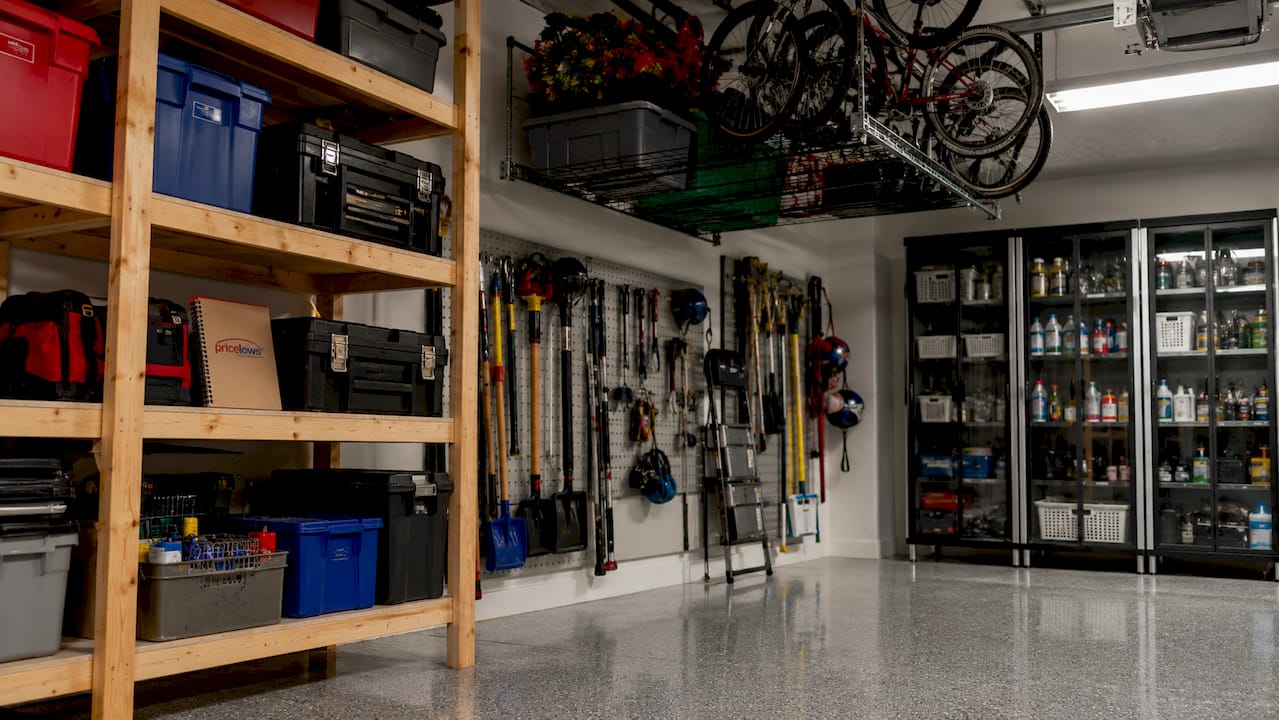
1. What are the main types of garage storage systems?
The four core types of garage storage systems cover every storage need from heavy bulk items to seasonal gear. Understanding what each type does best prevents wasted money and poor placement decisions.
- Free-standing shelving handles the heaviest loads. Units can support up to 3,000 lbs per unit, making them ideal for large totes, bulk supplies, and heavy equipment. They require no wall mounting and can be repositioned as your needs change.
- Wall-mounted track and slatwall systems are best for tools, bikes, and medium-weight gear. Slatwall panels support 50–75 lbs per linear foot, which covers most hand tools and sporting equipment with room to spare.
- Overhead ceiling racks work best for seasonal items you access only a few times per year. Fixed platforms hold up to 600 lbs per rack, but they require a ladder for retrieval.
- Modular wall cabinets provide secure, enclosed storage for chemicals, small power tools, and valuables. Steel cabinets hold 200–400 lbs per shelf, while polymer cabinets support 100–200 lbs. Wood cabinets look upscale but resist moisture poorly in garage environments.
Pro Tip: Start with free-standing shelving before buying anything else. It gives you a working system on day one while you figure out exactly where wall and ceiling storage makes sense.
2. How do load capacities and mounting methods affect your choices?
Load capacity is the single most important spec to check before buying any garage storage product. Choosing a system rated below your heaviest item is a safety risk, not just an inconvenience.
| System | Typical load rating | Best use |
|---|---|---|
| Pegboard | 15–25 lbs per hook | Light hand tools, small accessories |
| Slatwall | 50–75 lbs per linear foot | Medium tools, bikes, garden gear |
| Metal shelving | Up to 3,000 lbs per unit | Bulk items, heavy totes, equipment |
| Overhead racks | 450–600 lbs per rack | Seasonal bins, rarely used gear |
| Motorized lifts | Up to 250 lbs | Bikes, kayaks, lighter seasonal items |
Mounting method is equally critical. Stud-based mounting is required for wall track systems and cabinets. Drywall anchors fail under sustained loads in garage environments, especially when temperature swings cause materials to expand and contract. Always locate studs before drilling.
Material choice also affects long-term performance. Steel shelving and cabinets outlast polymer in high-use garages. Wire shelving allows airflow and visibility but offers less surface area for small items. Solid wood shelving looks clean but warps in humid or unheated garages.
Pro Tip: Before mounting anything, use a stud finder and mark every stud across the full wall. Doing this once saves you from remounting a cabinet that pulls away from the wall six months later.
3. How to plan garage storage zones to maximize space and accessibility
Garage storage zoning is the practice of assigning specific wall heights and floor areas to specific categories of items based on how often you use them. The standard framework uses a 48-inch cutoff as the dividing line.
Here is how to apply the 48-inch zoning rule step by step:
- Floor level (0–18 inches): Reserve this zone for vehicles, active projects, and wheeled equipment. Keep it clear of permanent storage.
- Lower wall zone (18–48 inches): Place daily-use tools, hooks for frequently grabbed items, and base cabinets here. This is your primary working zone.
- Upper wall zone (48–84 inches): Use this space for bulk items in totes, slatwall panels for medium-use tools, and wall-mounted cabinets for chemicals or valuables.
- Ceiling zone (above 84 inches): Reserve for seasonal storage only. Holiday decorations, camping gear, and rarely used sporting equipment belong here.
Zoning prevents the most common garage problem: items piling up in random locations until nothing is accessible. Organizing by access frequency reduces clutter and makes daily use of the garage faster and less frustrating. Add systems gradually. Fill the floor zone first, then walls, then overhead. This sequence avoids overbuying and lets you adjust placement before committing to permanent installs.
4. Pegboard vs. slatwall vs. French cleat: which wall system wins?
These three wall-mounted systems are the most popular options for organizing garage wall space, and they serve different users depending on budget, tool weight, and whether the installation is permanent.
| System | Load per hook/foot | Cost level | Best for | Renter-friendly? |
|---|---|---|---|---|
| Pegboard | 15–25 lbs per hook | Low | Light tools, small accessories | Yes |
| Slatwall | 50–75 lbs per linear foot | Medium | Heavy tools, bikes, gear | Moderate |
| French cleat | 50+ lbs per cleat | Low to medium | Custom layouts, heavy items | No |
Pegboard is the most affordable entry point and works well for screwdrivers, pliers, and small hand tools. Its weakness is load distribution. Each hook carries its own load independently, so heavy or bulkier tools require slatwall or a French cleat rail system that spreads weight across locking grooves.
Slatwall panels offer more accessory options and handle heavier loads without hook failure risk. French cleats are the favorite of serious DIYers because they allow fully custom layouts using shop-made or purchased brackets. For renters, pegboard mounted on a freestanding frame is the most practical option since it requires no permanent wall attachment. You can find pegboard panel ideas that work in nearly any garage layout, rented or owned.
5. What to consider when choosing overhead garage storage
Overhead storage is the last system you should install, not the first. Once your floor and wall zones are organized, ceiling space becomes a logical extension for items you rarely touch.
- Fixed ceiling platforms hold up to 600 lbs per rack and cost the least. The trade-off is that retrieval requires a ladder, which makes them practical only for items you access a few times per year.
- Motorized lifts hold up to 250 lbs and eliminate ladder use entirely. They cost significantly more but are worth the investment for bikes, kayaks, or cargo carriers you use seasonally.
- Pulley hoists also support up to 250 lbs and cost less than motorized systems. They work well for single large items like a canoe or a heavy bag.
- Wall-mounted overhead tracks extend storage from the upper wall into ceiling space and work well in garages with limited floor clearance.
The biggest mistake with overhead storage is installing it before the floor and wall systems are set. Starting with ceiling installs often leads to regret because you cannot see the full picture of what space remains. Confirm your wall and floor layout first, then measure ceiling clearance and vehicle height before purchasing any overhead system.
Key takeaways
The most effective garage storage setup builds in sequence: free-standing shelving first, wall systems second, and overhead storage last, with every zone assigned by access frequency.
| Point | Details |
|---|---|
| Start with free-standing shelving | It handles the heaviest loads and requires no permanent installation to be useful. |
| Match load ratings to your heaviest item | Pegboard suits light tools; slatwall and French cleats handle heavier gear safely. |
| Use the 48-inch zoning rule | Daily tools below 48 inches, bulk storage above, seasonal items at ceiling level. |
| Mount wall systems into studs | Drywall anchors fail under sustained garage loads and create safety hazards. |
| Install overhead storage last | Set floor and wall zones first so you know exactly what ceiling space remains. |
Why I always tell people to start smaller than they think
I have watched homeowners spend $800 on a full overhead rack system before they even owned a proper shelf. Six months later, half the rack holds things they could have stored on a $60 freestanding unit, and the items they actually reach for daily are still piled on the floor.
The sequential approach is not just theory. It reflects how garages actually get used. You discover your real storage needs after living with a basic system for a few weeks. Free-standing shelving with collapsible storage bins gives you that working baseline without locking you into a layout you will regret.
The other mistake I see constantly is skipping stud mounting. People use drywall anchors on a slatwall panel, load it with tools, and wonder why it pulls away from the wall in winter. Garages are not climate-controlled spaces. Materials move. Only studs hold.
My honest recommendation: spend your first $100 on a solid five-tier shelf and a set of quality wall hooks. Learn where you actually need storage before you commit to anything permanent. The best garage organization system is the one you will actually maintain.
— Thane Holland
Build your garage storage system with PriceLows™
Getting your garage organized does not require a massive budget. PriceLows™ carries the core products you need to build a practical, durable storage system from the floor up.

Start with an adjustable five-tier shelf that handles bulk items and totes without permanent installation. Add wall-mounted S hooks to your slatwall or track system for tools and gear. PriceLows™ offers free shipping and a 100% shipping protection plan on every order, so you can build your setup piece by piece without risk. Browse the full garage storage selection and find what fits your space and budget today.
FAQ
What are the four main types of garage storage systems?
The four main types are free-standing shelving, wall-mounted track and slatwall systems, overhead ceiling racks, and modular cabinets. Each type is designed for a different weight range and access frequency.
What is garage storage zoning?
Garage storage zoning is the practice of dividing wall and floor space into height-based zones assigned by how often you use items. The standard approach uses a 48-inch cutoff to separate daily-use storage from bulk and seasonal storage.
Which wall system is best for heavy tools?
Slatwall panels and French cleats handle heavier tools better than pegboard. Slatwall supports 50–75 lbs per linear foot, while pegboard is limited to 15–25 lbs per hook.
How much weight can overhead garage racks hold?
Fixed ceiling platforms typically hold up to 600 lbs per rack. Motorized lifts and pulley hoists are rated for up to 250 lbs and are better suited for bikes, kayaks, and lighter seasonal items.
Should renters install wall-mounted garage storage?
Renters are best served by pegboard mounted on a freestanding frame or free-standing shelving units, since both options require no permanent wall attachment and can move with you when you leave.