


Why Wall Storage Beats Floor Storage for Any Room
TL;DR:
- Wall storage saves space by mounting on walls, freeing 4 to 6 square feet in a room. It costs less, supports medium weights, and reduces trip hazards compared to floor storage. Proper installation into studs or using French cleats ensures safety and durability.
Wall storage is defined as any shelving, cabinet, or mounting system fixed to a vertical surface, freeing the floor entirely for movement and use. For homeowners trying to get more out of tight kitchens, garages, and laundry rooms, this distinction matters. Wall storage beats floor storage by reclaiming usable square footage, reducing trip hazards, and keeping frequently used items at eye level. The advantages of wall storage show up in your budget, your safety, and your daily routine.
Why wall storage beats floor storage for space efficiency
Wall-mounted storage increases usable floor area by 20–30%, freeing 4–6 square feet in a standard 10x10 foot room. That may sound modest, but in a garage or laundry room, 4–6 square feet is the difference between fitting a workbench or not. Floor units occupy permanent footprints. Wall units occupy none.
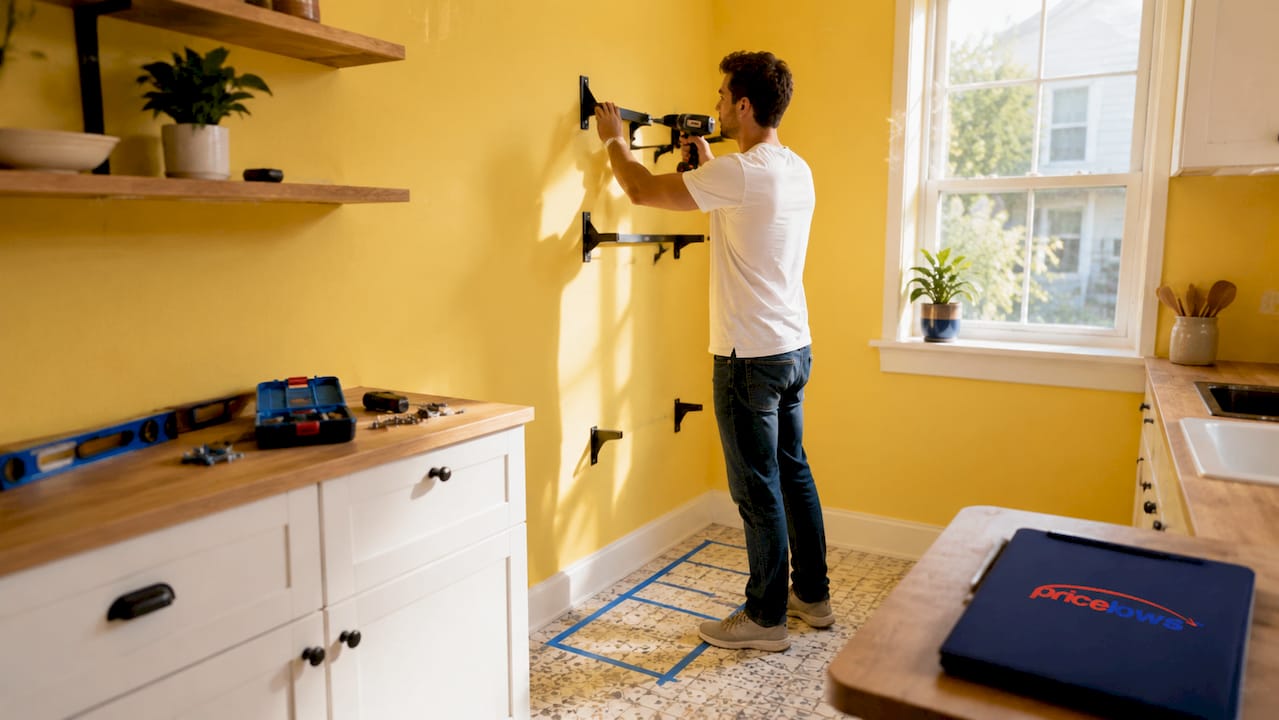
The spatial payoff extends beyond raw square footage. Open floor space improves the way a room flows. You can walk a straight path through a garage, pull a chair out fully in a kitchen, or open a dryer door without shuffling around a shelving unit. These are daily friction points that wall storage eliminates.
| Storage Type | Floor Footprint | Usable Floor Gain | Best Room Use |
|---|---|---|---|
| Wall-mounted shelving | 0 sq ft | 4–6 sq ft per unit | Garage, kitchen, laundry |
| Floor-standing shelving | 4–6 sq ft per unit | 0 sq ft | Basement, pantry, utility room |
| Wall-mounted cabinet | 0 sq ft | Up to 6 sq ft | Bathroom, mudroom, office |
| Freestanding cabinet | 4–8 sq ft per unit | 0 sq ft | Garage bulk storage |
Pro Tip: Before installing any wall unit, tape out its floor equivalent on the ground with painter’s tape. Seeing that rectangle on your floor makes the space savings concrete and helps you decide placement.
What do wall and floor storage systems cost to install?
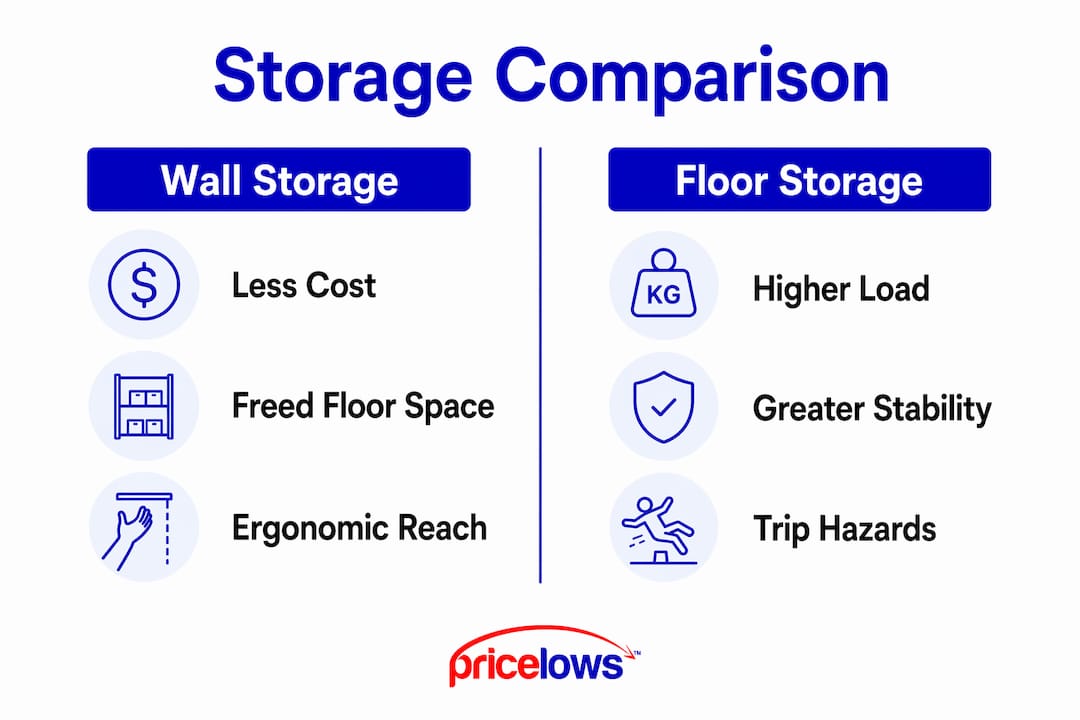
Wall-mounted systems for a 12x8 foot area cost roughly $600–$1,200. Floor systems cost $800–$1,500 for the same coverage, making wall storage 20–25% cheaper on average. That gap widens when you factor in floor-leveling hardware and anti-tip anchoring that freestanding units often require.
Installation complexity differs between the two. Floor units need a level surface and, in many garages, a concrete anchor or anti-tip strap. Wall units need stud location and the right fasteners. The single biggest installation mistake with wall storage is anchoring into drywall without hitting studs. Drywall-only anchors produce a 15% higher failure rate than floor systems. That failure rate drops to near zero when you mount into structural studs or use a French cleat system.
Key installation considerations for wall storage:
- Locate studs first. Use a stud finder and verify with a finish nail before committing to a drill pattern.
- Use lag screws, not drywall screws. Lag screws bite into wood framing and hold under shear load.
- Check for plumbing and wiring. Scan the wall with a multi-detector before drilling.
- Account for wood movement. Wood shelving expands about 1/8 inch in summer humidity. Leave a slight gap at shelf ends to prevent cracking.
Pro Tip: If your walls are metal studs, standard wood screws will not hold. Use toggle bolts rated for the load, or add a plywood backer panel spanning multiple studs before mounting.
How do load capacity and safety compare between wall and floor storage?
Floor-mounted storage supports 400–800 lbs. Properly installed wall-mounted storage supports 300–600 lbs, making it well suited for medium-weight household items. For bulk storage of concrete bags, engine parts, or full pantry loads, floor units still win. For tools, cleaning supplies, sports gear, and kitchen goods, wall units handle the weight without issue.
The safety case for wall storage is strong in high-traffic areas. Wall mounting reduces trip hazards by elevating tools and equipment off the floor in busy home zones like garages and kitchens. A floor unit in a garage walkway is a shin-level obstacle. A wall unit is not.
| Factor | Wall-mounted storage | Floor-mounted storage |
|---|---|---|
| Max load capacity | 300–600 lbs | 400–800 lbs |
| Trip hazard risk | Low | Moderate to high |
| Best for | Frequently used, medium-weight items | Heavy bulk storage |
| Hardware required | French cleats, lag screws, ledgers | Anti-tip straps, leveling feet |
| Failure risk | Low when stud-mounted | Low on level surfaces |
French cleats and ledger systems distribute shear stress across the mounting surface, supporting up to 50 lbs per square foot safely. That is the hardware standard for any serious wall storage installation in a garage or utility room.
What ergonomic and organizational advantages does wall storage offer?
Wall storage keeps items within ergonomic reach zones, meaning between hip and shoulder height. That range covers the most common retrieval movements without bending or reaching overhead. Floor units often stack items at ankle or knee level, which adds unnecessary strain to everyday tasks.
Visibility is a real organizational advantage. Items mounted on a wall are visible at a glance. You see what you have, which cuts down on duplicate purchases and time spent searching. A wall-mounted spice rack in a kitchen, for example, puts every jar in view rather than buried behind others in a cabinet.
Key ergonomic and organizational benefits of wall storage:
- Items at eye level are found faster and used more consistently.
- Vertical organization separates categories clearly, reducing clutter.
- Wall hooks and racks in garages keep frequently used tools off the floor and in reach.
- Multifunctional wall hooks work across kitchens, wardrobes, and garages without taking up counter or floor space.
One caution: overloading walls creates visual clutter and reduces the benefits of the system. The best wall storage setups mix open display with closed cabinets. Open sections hold frequently grabbed items. Closed sections hide seasonal or less-used goods. That balance keeps the room functional and visually clean. For kitchen storage in busy homes, this principle applies directly: not everything needs to be on the wall, just the things you reach for daily.
Key Takeaways
Wall storage beats floor storage by freeing floor space, lowering cost, reducing trip hazards, and keeping items at ergonomic reach in kitchens, garages, and laundry rooms.
| Point | Details |
|---|---|
| Space efficiency | Wall storage frees 4–6 sq ft per unit in a 10x10 room, improving room flow. |
| Cost advantage | Wall systems cost 20–25% less than floor systems for equivalent coverage. |
| Load capacity | Wall units handle 300–600 lbs; use floor units only for heavy bulk storage above that range. |
| Safety benefit | Wall mounting eliminates floor-level trip hazards in garages and kitchens. |
| Installation key | Always anchor into structural studs or use French cleats to prevent failure. |
The install detail most homeowners skip
I have helped set up storage in dozens of garages and kitchens, and the single most skipped step is wall integrity assessment before the first drill hole. People pick a spot, grab a stud finder, and go. What they miss is checking whether the wall has adequate blocking between studs for the specific load they plan to hang.
A French cleat solves most of this. It distributes weight across a wide horizontal band rather than concentrating stress on two or three screws. I have seen a properly installed French cleat system hold a full set of hand tools, a drill station, and a parts organizer without a single creak. The same load on drywall anchors would have pulled out within a year.
My honest advice: treat the wall assessment like a foundation check. Measure twice, locate every stud, and buy hardware rated for twice your expected load. Wall storage is worth every bit of the setup effort. The floor space you get back changes how a room feels and functions every single day. For small space storage strategy, this principle applies whether you are working with a 400 square foot apartment or a two-car garage.
— Thane Holland
Find wall storage solutions at PriceLows™
PriceLows™ carries a range of wall storage products built for real home use, from garage organization to kitchen efficiency.

The Black Metal Storage Cabinet with Lock is a top pick for garages and utility rooms. It combines secure locking shelves with a wall-compatible design that keeps heavy tools organized and off the floor. PriceLows™ also stocks wall-mounted shoe racks, stainless steel kitchen racks, and a full selection of hooks and organizers suited for every room. Every order ships free with 100% shipping protection, so you can stock up on your storage setup with confidence.
FAQ
Why does wall storage free up more space than floor storage?
Wall storage mounts directly to vertical surfaces, leaving the entire floor footprint open. A single wall unit can free 4–6 square feet in a 10x10 room compared to an equivalent floor unit.
Is wall storage cheaper than floor storage?
Wall-mounted systems cost roughly 20–25% less than floor systems for the same coverage area. A 12x8 foot wall system runs $600–$1,200 versus $800–$1,500 for a comparable floor system.
How much weight can wall-mounted storage hold?
Properly installed wall-mounted storage supports 300–600 lbs. French cleat systems can handle up to 50 lbs per square foot when anchored into structural studs.
What is the biggest installation mistake with wall storage?
Anchoring into drywall without hitting studs produces a 15% higher failure rate than floor systems. Always mount into structural studs or use a French cleat for load distribution.
When should you choose floor storage over wall storage?
Choose floor storage for very heavy loads above 600 lbs, such as bulk pantry goods, concrete, or large equipment. Wall storage is the better choice for frequently accessed, medium-weight items.