


Essential Yard Tools Every Homeowner Needs in 2026
TL;DR:
- A basic yard tool kit includes a mower, trimmer, edger, rake, spreader, and sprayer to cover essential lawn maintenance. High-quality steel tools last longer and perform better, while renting specialized equipment saves money. Proper cleaning, sharpening, and organized storage extend tool lifespan and ensure safety.
Essential yard tools are the core set of instruments that make lawn and garden maintenance manageable, affordable, and effective for homeowners at every skill level. Whether you are mowing a half-acre lot or tending a raised vegetable bed, the right tools determine how much time and effort you spend outdoors. According to Lawn Love, six tools cover basic lawn maintenance: a mower, string trimmer, edger, rake, spreader, and sprayer. That short list is the foundation every homeowner should build from. PriceLows™ carries many of these items at prices that make starting your tool kit straightforward.
What are essential yard tools every homeowner should own?
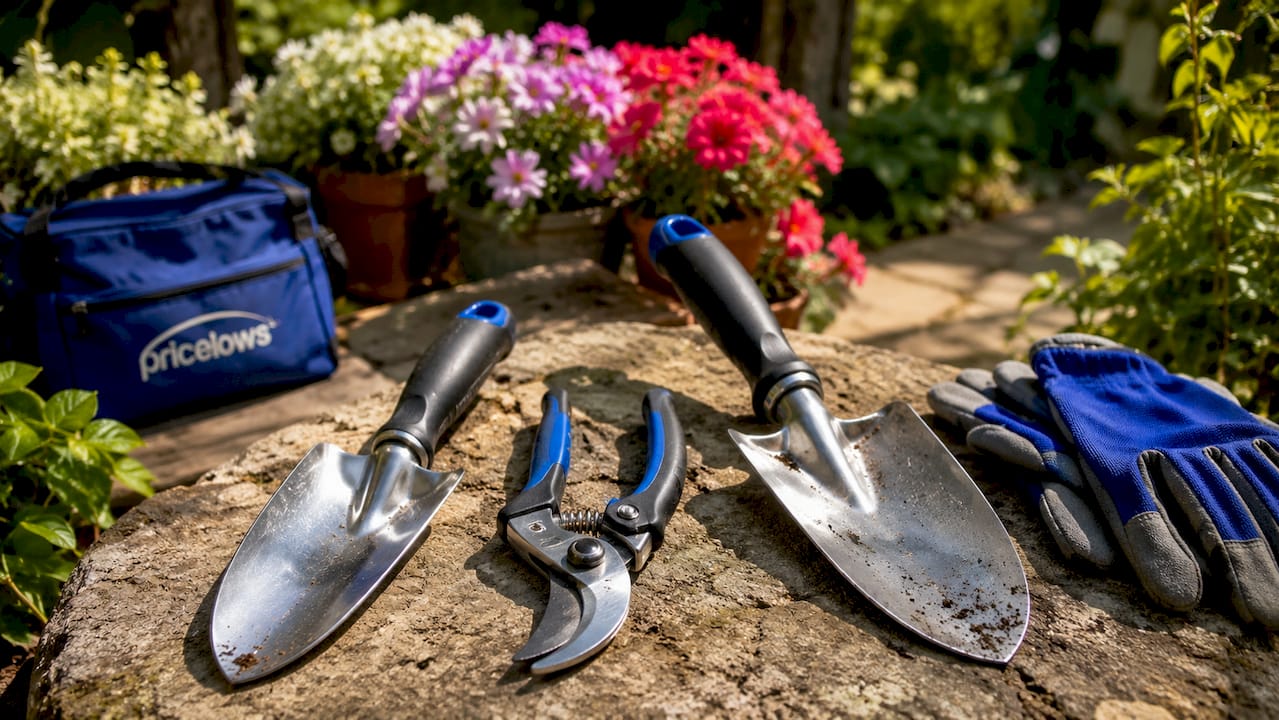
The six tools Lawn Love identifies as covering basic lawn maintenance form a complete system when used together. Each tool handles a specific task that the others cannot replace.
Power tools for lawn care
- Lawn mower. A push or self-propelled gas or battery mower handles the bulk of weekly yard work. Match the deck width to your yard size. A 21-inch deck suits most suburban lots.
- String trimmer. This tool cuts grass along fences, walkways, and garden beds where a mower cannot reach. Battery models are lighter and quieter than gas versions.
- Edger. An edger creates clean lines between turf and hard surfaces like driveways and sidewalks. Sharp edges make a yard look maintained even when the grass is slightly long.
- Leaf blower. Not strictly required, but a leaf blower saves significant time in fall cleanup. A handheld battery model handles most residential needs.
- Spreader. A garden spreader distributes seed, fertilizer, and lime evenly across a lawn. Uneven spreading causes patchy results that are hard to fix.
- Sprayer. A pump or battery sprayer applies herbicides, pesticides, and liquid fertilizers. A 1-gallon or 2-gallon model covers most home yards without fatigue.
Lawn Love recommends renting aerators and dethatchers rather than buying them. These tools are used once or twice a year, and rental costs far less than ownership for occasional tasks.
Pro Tip: Run your mower blade over a flat surface after each season. A dull blade tears grass instead of cutting it, which opens the plant to disease.
What are the must-have hand tools for gardening?
A beginner gardener can cover the vast majority of common tasks with just three core hand tools. Garden Ninja recommends a steel-headed trowel, a quality spade, and bypass secateurs as the starting point for any gardening kit.
The core hand tool list
- Trowel. A steel-headed trowel digs planting holes, moves seedlings, and scoops compost. Avoid plastic-headed trowels. They break under pressure and need replacing far sooner than steel versions.
- Spade. A full-size spade turns soil, edges beds, and divides perennials. Choose a handle length that matches your height so you do not strain your back.
- Bypass pruners (secateurs). Bypass pruners cut live green stems cleanly without crushing the tissue. Lee Burkhill of Garden Ninja specifically warns against anvil pruners for live stems because they crush rather than cut, slowing plant recovery.
- Garden fork. A fork aerates compacted soil and works compost into beds more effectively than a spade alone.
- Weeding tool. A long-handled weeder or hand weeder removes tap-rooted weeds like dandelions without disturbing surrounding plants.
Steel quality matters more than brand name. Clare Foster of House & Garden notes that high-carbon steel tools prevent the false economy of frequent replacement. Spending a little more upfront on steel saves money over several seasons.
Ergonomic handles reduce fatigue during long sessions. The Spruce experts highlight that padded, well-balanced handles improve comfort and extend tool lifespan by reducing the stress placed on joints and grip points.
Pro Tip: Bypass pruners are the single most misunderstood purchase for beginners. If the package says “anvil,” put it back. Bypass is always the right choice for live plants.
How do you choose yard tools based on budget and yard size?
Matching tools to your actual yard and budget prevents wasted spending. A homeowner with a 5,000-square-foot lawn has different needs than someone managing a quarter-acre with mixed garden beds.
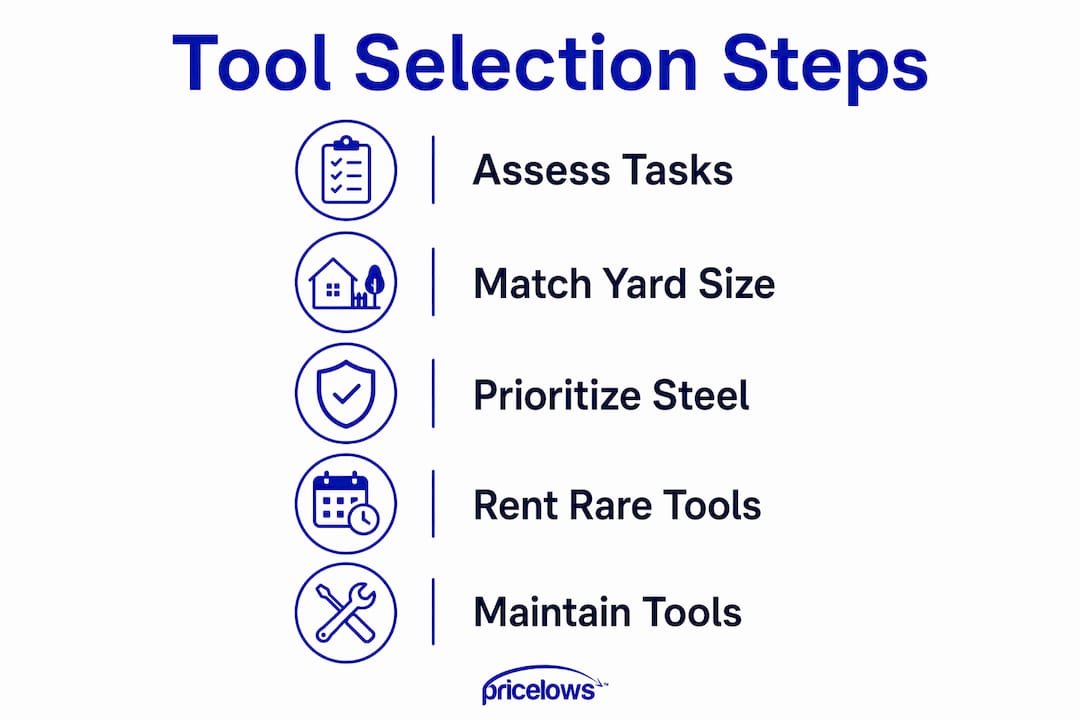
Assess your tasks first
List the three tasks you do most often. Mowing, trimming, and weeding cover the majority of time for most homeowners. Buy quality tools for those tasks first. Delay purchasing specialty items like edgers or aerators until you know how often you will actually use them.
Steel versus plastic: a clear choice
Plastic-headed tools may look similar on a shelf, but they break under load. Many marketing claims for “ergonomic” plastic designs do not deliver better comfort compared to a well-balanced steel tool. Steel costs more upfront and pays back over years of use.
Rent before you buy
Aerators, dethatchers, and tillers are used once or twice a year at most. Renting these from a local equipment supplier costs a fraction of ownership. Reserve your budget for the tools you use weekly.
Size matters for shovels
University of Georgia extension experts advise that shovel size and handle length should match the user’s height and the specific task. The largest shovel is not always the best choice. An oversized shovel causes fatigue faster and increases injury risk.
A useful yard tools checklist helps you track what you own versus what you still need, so purchases stay purposeful rather than impulsive.
Pro Tip: Buy your mower, trowel, and bypass pruners at full quality. Buy your rake and spreader at mid-range. Rent everything else until you know you need it.
How to maintain and store your yard tools for long-term use
Clean tools last years longer than neglected ones. Soil left on steel blades holds moisture and accelerates rust. Wipe blades with a dry cloth after every use and apply a light coat of oil before storing for the season.
A simple maintenance routine
- Sharpen blades regularly. A sharpening block or diamond file keeps cutting edges effective. Dull blades increase effort and harm plants by tearing rather than cutting cleanly.
- Clean after every use. Knock soil off with a stiff brush. Rinse metal parts and dry them completely before storage.
- Oil wooden handles. Linseed oil prevents cracking and splitting in wooden handles. Apply once per season.
- Store off the ground. Wall-mounted racks or cabinet storage keeps tools dry and prevents handle rot from floor moisture.
- Wear safety gear. Gloves protect hands during pruning and digging. Safety glasses matter when using string trimmers or blowers near gravel.
Organized storage also prevents accidents. A tool left leaning against a wall is a tripping hazard. A cabinet with labeled slots or hooks keeps every tool visible and accessible.
Key Takeaways
A complete yard tool kit built on quality steel, matched to your yard size, and properly maintained will outperform a garage full of cheap replacements every single season.
| Point | Details |
|---|---|
| Start with six core tools | A mower, trimmer, edger, rake, spreader, and sprayer cover basic lawn maintenance for most homeowners. |
| Choose bypass over anvil pruners | Bypass pruners cut live stems cleanly and support faster plant recovery than anvil designs. |
| Buy steel, not plastic | High-carbon steel tools resist breakage and prevent the cost of frequent replacement over time. |
| Rent specialty equipment | Aerators and dethatchers are used rarely; renting saves money compared to buying outright. |
| Sharpen and clean after every use | Regular blade sharpening and drying after use prevents rust and keeps tools performing at full capacity. |
What I have learned after years of building a yard tool kit
By Thane Holland
The biggest mistake I see homeowners make is buying too many tools too fast. They walk into a store, get excited, and come home with a cart full of items they use once and forget. The yard tool kit that actually works is a small one, built deliberately over time.
My personal rule is simple: steel first, always. I replaced two plastic-headed trowels in one spring before I learned that lesson. A single quality steel trowel has outlasted both of them by years. The same logic applies to pruners. Bypass pruners feel like a minor detail until you watch a plant struggle to recover from a crushed cut.
I also think the rental advice is underused. Most homeowners I know own an aerator they use once a year. That machine sits in a garage corner for 364 days. Rent it. Spend that money on a better mower or a set of ergonomic hand tools you will use every week.
PriceLows™ is where I point budget-conscious homeowners first. The selection covers the basics without pushing you toward overpriced upgrades you do not need yet. Start small, buy quality where it counts, and add tools as your yard and garden actually demand them.
— Thane Holland
Organize your tools with PriceLows™ storage solutions
Your yard tools represent a real investment. Protecting them with proper storage keeps them performing season after season.

PriceLows™ carries a range of garage storage options built for homeowners who take their tools seriously. The rolling steel tool cabinet features a powder-coated rust-resistant finish, lockable doors, and wheels for easy repositioning in your garage or shed. For a full setup, the 6-piece garage cabinet set includes a worktop, pegboard, rolling chests, and lockers. Every order ships free with a 100% shipping protection plan, so your storage arrives safely and ready to use.
FAQ
What are the six basic yard tools every homeowner needs?
A mower, string trimmer, edger, rake, spreader, and sprayer cover basic lawn maintenance for most homeowners. Lawn Love identifies these six as the foundation of any complete yard tool kit.
What hand tools do beginner gardeners need first?
A steel-headed trowel, a quality spade, and bypass pruners cover the majority of common gardening tasks at an affordable starting cost. Garden Ninja recommends these three as the core beginner kit.
Why are bypass pruners better than anvil pruners?
Bypass pruners cut live stems cleanly without crushing plant tissue, which supports faster recovery. Anvil pruners crush stems and are better suited for dead wood only.
Should I buy or rent an aerator?
Renting is the better choice for most homeowners. Aerators are used once or twice a year, and rental costs far less than purchasing a machine that sits unused most of the season.
How do I prevent my yard tools from rusting?
Clean and dry metal blades after every use, apply a light coat of oil before seasonal storage, and store tools off the ground on racks or in a cabinet to keep moisture away from steel surfaces.