


Moisture-Resistant Materials for Garages: A Homeowner's Guide
TL;DR:
- Moisture-resistant materials in garages prevent damage by stopping water absorption, vapor diffusion, and surface condensation.
- Succinctly, proper use of materials like PVC panels, fiber cement, and epoxy coatings, combined with correct vapor retarder placement and air sealing, enhances garage durability.
Moisture-resistant materials in garages are defined as building products that resist water absorption, vapor diffusion, and surface condensation to protect walls, floors, and structural components from long-term damage. The standard industry term for this category is “moisture control assemblies,” covering everything from PVC wall panels to polyethylene vapor retarders. Garages face moisture from three main sources: outdoor humidity, ground-level capillary action through concrete slabs, and condensation from temperature swings. The role of moisture-resistant materials in garages goes beyond surface protection. These materials work as part of a system that includes air sealing, vapor retarders, and ventilation to keep your garage dry and structurally sound.
What are moisture-resistant materials used in garages?
The best materials for wet garages share one key property: they do not absorb water. PVC panels are 100% waterproof and resist mold growth, making them a direct upgrade over standard drywall, which swells and grows mold when exposed to repeated moisture cycles. That difference matters because drywall damage is often invisible until mold colonies are already established behind the surface.
Water-resistant garage building materials fall into four main categories:
- PVC wall panels: Non-porous, fully waterproof, and easy to wipe clean. Ideal for walls near floor drains or in humid climates.
- Metal panels (galvanized steel or aluminum): Durable and non-absorbent, but require vapor barriers behind them to prevent condensation and rust.
- Fiber cement board: Low water absorption, resistant to rot and insects, and paintable. A good middle-ground option for garage walls.
- Epoxy floor coatings: Create a sealed, non-porous surface over concrete slabs that resists oil, water, and chemical penetration.
Each of these materials works differently from wood or standard drywall. Wood absorbs moisture and swells. Drywall wicks water and becomes a breeding ground for mold. Non-porous surfaces like PVC and epoxy-coated concrete give moisture nowhere to go, which stops rot and mold before they start. Choosing the right material depends on your garage’s specific moisture sources and how the space is used.
How do vapor retarders and vapor barriers work in garages?
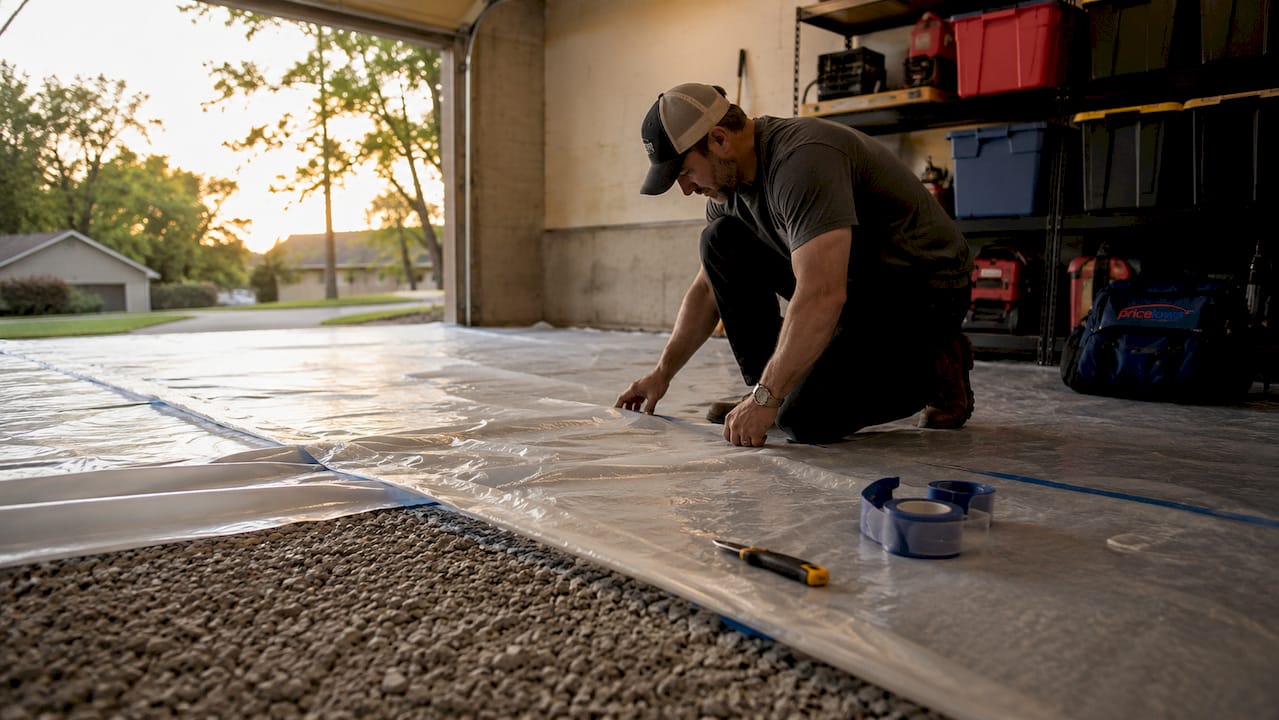
A vapor barrier and a vapor retarder are not the same thing, and confusing them leads to real installation mistakes. A vapor barrier blocks nearly all moisture vapor transmission. A vapor retarder slows it down. The U.S. Department of Energy classifies retarders by perm rating, and even a thick coat of high-solids paint can qualify as a vapor diffusion retarder when applied correctly.
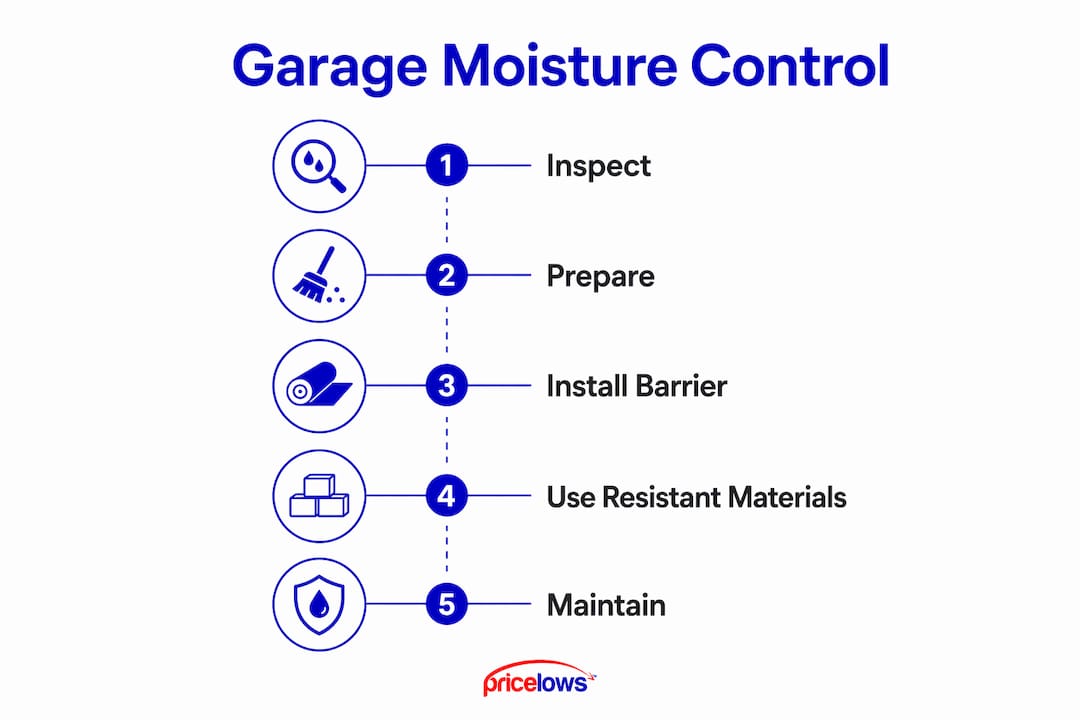
Moisture enters garage walls through three mechanisms: diffusion (vapor moving through materials), capillary action (liquid water wicking through pores), and air leaks. The DOE notes that vapor barriers only address diffusion, while most real-world moisture problems come from fluid water and vapor carried by air leaks. That means air sealing is not optional. It is the foundation that makes vapor retarders effective.
Placement of vapor retarders depends on your climate zone:
- Cold climates: Place the retarder on the warm interior side of the wall assembly to stop indoor vapor from reaching the cold exterior sheathing.
- Hot, humid climates: Place it closer to the exterior to block outdoor vapor from driving inward.
- Mixed climates: Use a smart vapor retarder that adjusts its permeability based on seasonal conditions.
For concrete slabs, the DOE recommends a 6–10 mil polyethylene retarder over a gravel capillary break, with seams overlapping 12 inches and sealed at the edges. This stops ground moisture from wicking up through the slab before it reaches your floor coating or finished surface.
Pro Tip: Never install two impermeable layers on opposite sides of a wall assembly. Trapping moisture between them prevents drying and accelerates rot inside the wall cavity.
What practical steps can homeowners take to prevent garage moisture damage?
Testing before coating is the single most overlooked step in garage floor projects. ASTM F1869 uses a calcium chloride test over 60–72 hours to measure moisture vapor emission rates from a concrete slab. ASTM F2170 uses in-situ relative humidity probes embedded in the slab. Skipping these tests and applying epoxy over a wet slab causes the coating to bubble, peel, and fail within months, regardless of how well the surface was prepared.
Beyond the slab, a practical moisture control plan covers four areas:
- Air sealing: Seal gaps around pipes, conduits, and the garage door frame with foam backer rod and caulk before installing any wall material.
- Ventilation: Install passive vents or a small exhaust fan to give moisture a path out. Stagnant air raises humidity and increases condensation risk.
- Material selection: Match the material to the exposure level. Use PVC or metal panels in areas near floor drains or exterior walls. Use fiber cement where you need a paintable surface.
- Maintenance: Inspect caulk and sealants annually. Reseal any gaps that open due to seasonal movement.
The DOE confirms that moisture-resistant surface materials work best as part of a complete system. A PVC panel on a wall with unsealed air gaps still allows moisture to accumulate inside the assembly. The material choice and the installation method must work together.
Pro Tip: Check your garage storage setup as part of your moisture plan. Storing items directly on a concrete floor blocks airflow and traps moisture underneath.
What are the benefits of moisture-resistant materials for garage durability?
The benefits of moisture-resistant garage materials extend well beyond keeping walls dry. Mold, mildew, rot, and corrosion all begin with uncontrolled moisture. Stopping moisture at the surface stops the chain reaction that degrades structural framing, metal fasteners, and stored belongings over time.
Metal garage components face a specific risk. Without proper vapor barriers and ventilation, condensation forms on metal panels and accelerates rust and corrosion. Closed-cell spray foam and correctly placed vapor barriers prevent this by keeping metal surfaces above the dew point. That protection extends the life of the structure and reduces repair costs significantly.
Moisture-resistant materials also protect indoor air quality. Mold spores released from damp drywall or rotting wood framing circulate through the garage and into attached living spaces. Non-porous surfaces give mold no food source and no foothold, which keeps spore counts low and the air cleaner for your family.
Corrosion protection matters for metal storage cabinets and shelving units too. A garage with controlled moisture keeps metal hardware, tools, and storage systems in better condition for longer, which means fewer replacements and lower costs over time.
Key takeaways
Moisture-resistant materials protect garages only when combined with air sealing, vapor retarders placed for your climate, and proper slab moisture testing before any coating is applied.
| Point | Details |
|---|---|
| Material selection matters | PVC panels, fiber cement, and epoxy coatings outperform drywall and wood in wet garage conditions. |
| Vapor retarders need correct placement | Place retarders on the warm side in cold climates and near the exterior in hot, humid climates. |
| Test slabs before coating | Use ASTM F1869 or ASTM F2170 to measure slab moisture before applying epoxy or other floor coatings. |
| Air sealing is non-negotiable | Vapor barriers address diffusion only; air sealing stops the majority of real-world moisture entry. |
| System approach wins | Combining moisture-resistant surfaces, vapor retarders, and ventilation delivers lasting protection. |
What I’ve learned from watching homeowners get this wrong
Most homeowners I talk to think moisture control means buying waterproof panels and calling it done. That single-material mindset is the most common and costly mistake in garage renovation.
The moisture sources that cause the most damage are the ones you cannot see. Ground vapor rising through a concrete slab, air carrying humidity through a gap around a conduit, condensation forming on the back of a metal panel at 2 a.m. None of these show up until the damage is already done. By the time you see a rust stain or smell mildew, the problem has been building for months.
My honest recommendation is to treat your garage like a building scientist would. Test the slab. Seal every air gap before you touch a wall panel. Choose your vapor retarder based on your actual climate zone, not a generic product label. The materials are the last step, not the first.
— Thane Holland
Moisture-resistant garage products at PriceLows™
Protecting your garage from moisture is a project worth doing right, and having the right products on hand makes the work faster and more affordable.

PriceLows™ carries a range of garage-ready storage and organization solutions built to hold up in demanding conditions. The black metal storage cabinet with lock and shelves is a solid choice for garages where moisture control is already in place. It keeps tools and supplies organized and off the floor, away from ground-level humidity. PriceLows™ offers free shipping and a 100% shipping protection plan, so your order arrives safely and your budget stays intact. Browse the full garage collection at PriceLows™ and find what your project needs.
FAQ
What are the best materials for wet garages?
PVC panels, fiber cement board, and epoxy-coated concrete are the top choices for wet garages. All three are non-porous or low-absorption, which prevents mold, rot, and swelling.
What is the difference between a vapor barrier and a vapor retarder?
A vapor barrier blocks nearly all moisture vapor transmission, while a vapor retarder slows it down. The U.S. Department of Energy classifies retarders by perm rating, and even high-solids paint can qualify as a retarder.
Do I need to test my concrete slab before applying epoxy?
Yes. ASTM F1869 and ASTM F2170 measure moisture vapor emission rates from slabs. Applying epoxy over a slab with high moisture content causes adhesion failure and peeling.
Where should I place a vapor retarder in my garage?
Place the retarder on the warm interior side in cold climates and near the exterior in hot, humid climates. Climate zone determines correct placement for effective moisture control.
Can moisture-resistant wall materials prevent mold on their own?
No. Non-porous materials like PVC remove mold’s food source, but air sealing and ventilation are also required. Without sealing air gaps, moisture still enters the wall assembly and causes damage behind the surface.