


Why Tool Organization Improves Workflow and Productivity
TL;DR:
- Organized tools save time by reducing search and retrieval efforts, boosting project efficiency.
- Proper system setup improves safety, minimizes errors, and enhances mental focus during work.
Tool organization is the systematic arrangement and storage of your tools to ensure quick access and efficient workflow in any project setting. Whether you work in a garage, garden, or home workshop, knowing exactly where every tool lives directly determines how fast and how well you complete projects. Poor organization is not just an inconvenience. It is a measurable drag on your time, your focus, and your results.
Why tool organization improves workflow: the core case
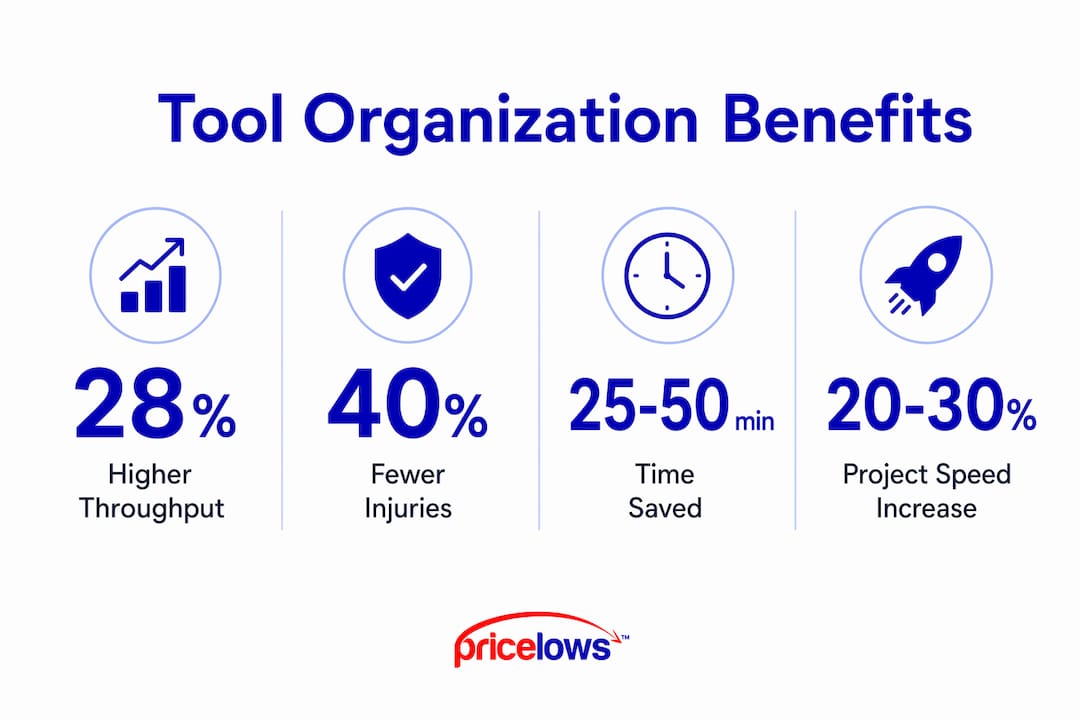
Organized tools cut project time by a significant margin. Professionals lose 25–50 minutes per project searching for misplaced tools. That lost time compounds across every task you tackle in a week. When you reduce retrieval time from 30 seconds to 5 seconds per tool grab, the savings add up fast across a full project day.
The numbers behind this are hard to ignore. Proper tool organization reduces project downtime by up to 25% and shaves 20–30% off total completion times. That means a weekend project that normally takes eight hours could realistically finish in under six. The time you recover goes back into doing the actual work, not hunting for a wrench.
Mechanics face this problem acutely. Mechanics can lose up to 30 minutes per shift searching for lost tools. Standardized, labeled toolboxes eliminate that loss entirely. The same principle applies to your garage or garden shed. When every tool has a fixed home, you stop wasting mental energy remembering where you last left it.
“Organization is a productivity multiplier that amplifies existing skills by removing logistical bottlenecks.” — How to Think AI
The benefits extend beyond speed. Organized workshops achieve 28% higher throughput and 40% fewer safety-related cuts than disorganized ones. Higher throughput means you finish more projects in the same amount of time. Fewer cuts means fewer interruptions and less risk of injury during routine work.
What are the key methods for effective tool organization?
The most effective tool organization systems share four core principles: zoning, shadowboarding, labeling, and modular storage. Each one targets a different source of workflow friction.
-
Zoning separates your workspace by process stage. Raw materials, assembly, and finishing each get their own area. Effective tool zones aligned with workflow stages reduce movement and increase efficiency by up to 20%. In a professional shop, zoning cuts unnecessary steps by 100–200 per day. In your garage, it means your drill and bits are always at the workbench, not across the room by the paint shelf.
-
Shadowboarding uses foam, paint, or plywood outlines behind tools to show exactly where each tool belongs. Shadowboarding reduces tool loss by up to 90% and gives you instant visual confirmation of what is missing. You can build a basic shadowboard in an afternoon with a sheet of pegboard and some foam inserts.
-
Labeling and containerizing removes all guesswork from shared workspaces. Label every drawer, bin, and shelf with the tool category it holds. Use clear bins for small parts so you can see contents without opening anything.
-
Modular storage maximizes wall space and adapts to changing project needs. Pegboards, wall-mounted rails, and stackable bins let you reconfigure your setup without a full overhaul. PriceLows™ carries pegboard cup organizers that fit this approach perfectly for garages and workshops.
| Method | Primary benefit | Best for |
|---|---|---|
| Zoning | Reduces movement between tasks | Larger garages and workshops |
| Shadowboarding | Instant visual inventory check | Shared or frequently used toolsets |
| Labeling | Eliminates search time for small parts | Drawers, bins, and shelving |
| Modular storage | Flexible layout for changing projects | Home garages and garden sheds |
Pro Tip: Start with one zone before tackling your entire workspace. Mastering one zone before scaling prevents burnout and keeps your new system from falling apart within a week.
What are the benefits of tool organization beyond time savings?
Organized tools do more than speed up your work. They reduce stress, improve safety, and sharpen your focus on the task at hand.
- Stress reduction: Disorganized workspaces increase cortisol, the body’s primary stress hormone. Clearing visual clutter lowers that stress response and puts you in a better mental state before you even pick up a tool.
- Fewer errors: Organized tools prevent grab errors that lead to material damage and rework. Reaching for the wrong screwdriver and stripping a screw costs you time and materials.
- Improved focus: Disorganized tools increase mental load and impair decision-making. When your brain is not tracking where things are, it has more capacity for the actual project.
- Safety gains: Workshops with organized tools see 40% fewer safety-related cuts. Tools left on floors or stacked randomly create trip hazards and accidental contact injuries.
“Tools act as throughput ceilings — poor tool organization limits frequency of use and project capacity.” — How to Think AI
Pro Tip: After each project session, spend five minutes returning every tool to its designated spot. This single habit prevents the slow drift back into disorganization that kills most systems.
How do you set up tool organization for home, garage, and garden?
A practical setup starts with an honest assessment of what you have and how you actually work. Walk through your garage or shed and note which tools you reach for most. Those go in the most accessible spots, at arm’s reach and at eye level.
- Audit your tools first. Group them by category: hand tools, power tools, garden tools, and hardware. Discard anything broken or redundant.
- Choose your storage system. Pegboards work well for hand tools. Shelving handles larger power tools and equipment. Toolboxes keep portable sets together. Garage shelving setups give you a clear framework for arranging tools by frequency of use.
- Create zones. Put garden tools near the garage door. Keep workbench tools at the bench. Store seasonal items on upper shelves.
- Build your shadowboard. Trace tool outlines on a pegboard panel with a marker. Fill the outlines with foam or paint. Hang it above your workbench.
- Label everything. Use a label maker or printed tags on every bin, drawer, and shelf. Consistency matters more than aesthetics here.
| Storage type | Best use case | Cost range |
|---|---|---|
| Pegboard with hooks | Hand tools, small power tools | Low |
| Metal storage cabinet | Secure storage for valuables | Medium to high |
| Stackable bins | Hardware, small parts, garden supplies | Low |
| Wall-mounted shelving | Larger tools, equipment, supplies | Low to medium |
For garden tools specifically, wall storage beats floor storage in nearly every scenario. Rakes, shovels, and hoes stored vertically take up far less space and are easier to grab without moving other items.
Key Takeaways
Organized tools directly reduce project time, lower stress, and improve safety by giving every tool a fixed, visible home.
| Point | Details |
|---|---|
| Time savings are measurable | Organization cuts project completion time by 20–30% by eliminating search delays. |
| Shadowboarding prevents loss | Foam or painted outlines reduce tool loss by up to 90% with instant visual checks. |
| Zoning reduces movement | Aligning tool zones with workflow stages cuts unnecessary steps and boosts efficiency. |
| Mental clarity improves | Removing visual clutter lowers cortisol and frees focus for the actual work. |
| Start small and build | Mastering one zone before expanding prevents system abandonment and burnout. |
The thing most people get backwards about tool organization
Thane Holland here. When I first set up my garage workshop, I treated organization as something I would get to after the “real” work was done. I told myself I would sort everything out once I finished the current project. That project ended. Another started. The pile grew.
What changed my thinking was timing a single task: finding my combination square before marking a cut. It took me four minutes. Four minutes for one tool, on a job that should have taken thirty seconds. That is when I understood that disorganization is not a background inconvenience. It is an active tax on every minute you spend working.
The shift I made was treating organization as part of the project, not separate from it. I zoned my bench, built a simple shadowboard from pegboard and foam, and labeled every drawer. The first week felt slow. By the second week, I was moving faster than I ever had. The tools I use most are now within arm’s reach. The ones I use rarely are stored clearly and retrievably.
My honest advice: do not wait for the perfect system. Pick one wall, one zone, or one toolbox and get it right. That small win builds the habit. The habit builds the system. The system builds the speed.
— Thane Holland
PriceLows™ has the storage gear your garage needs
A well-organized workspace starts with the right storage. PriceLows™ carries a range of durable, affordable options built for real home, garage, and garden use.

The black metal storage cabinet with lock and shelves is a standout choice for securing power tools and valuables while keeping everything visible and accessible. For smaller parts and hardware, the collapsible garage storage bins stack neatly and fold flat when not in use. PriceLows™ ships free with 100% shipping protection, so your storage setup arrives safely and at a price that makes sense for your budget.
FAQ
Why does tool organization improve workflow?
Organized tools eliminate search time, which accounts for 25–50 minutes of lost time per project. Faster tool access means more time spent on actual work and less time on frustration.
What is shadowboarding and how does it help?
Shadowboarding uses outlines on a pegboard or wall panel to mark where each tool belongs. It reduces tool loss by up to 90% and lets you spot a missing tool at a glance.
How does tool organization reduce errors?
When tools are stored by type and labeled clearly, you grab the right tool every time. Grab errors lead to material damage and rework, both of which cost time and money.
What is the best first step to organize a garage?
Audit your tools first by grouping them into categories, then assign each category a dedicated zone. Start with the area you use most and build outward from there.
Does tool organization really reduce stress?
Yes. Cluttered workspaces raise cortisol levels, which impairs focus and decision-making. Clearing that clutter creates a calmer environment and frees mental energy for the project itself.