


Ways to Dedicate Garage Space for Hobbies That Work
TL;DR:
- Dedicating garage space for hobbies involves creating distinct zones with accurate measurements and modular storage systems. Proper planning allows quick conversion between hobby activities and parking, using wall-mounted storage and foldable furniture. Organizing items with labels and routine maintenance prevents clutter and keeps the garage functional for both uses.
Dedicating garage space to hobbies means creating distinct activity zones that serve your craft without sacrificing parking or turning your garage into a permanent obstacle course. The most effective approach combines accurate measurement, clear zoning, and modular storage systems like pegboards, wall-mounted workbenches, and overhead racks. Done right, your garage becomes a workshop, fitness area, or craft studio that converts back to a parking bay in minutes. This guide covers the practical ways to dedicate garage space hobbies demand, from initial planning through daily organization habits.
How to measure and plan your garage space for hobby zones
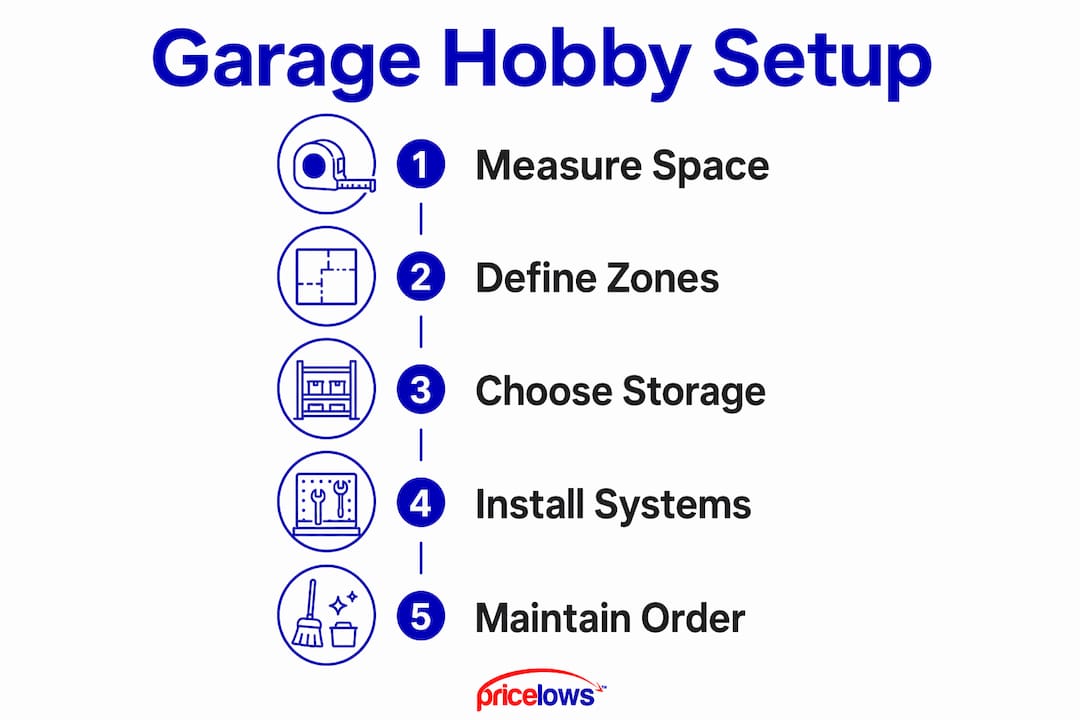
Accurate measurement is the foundation of every successful garage hobby setup. Measure total width, depth, and ceiling height before buying a single shelf or workbench. Also record door clearance, window positions, and the footprint of your largest hobby equipment.
Once you have those numbers, assign zones based on how often you use each activity. A parking zone stays fixed. A workshop or fitness zone gets the remaining wall space, organized by frequency of use.
Plan your zones in this order:
- Mark the parking footprint first, including door swing clearance.
- Identify the longest wall for a primary hobby zone.
- Assign overhead space to seasonal or infrequently used items.
- Reserve a short entry zone for drop-and-go convenience.
- Plan electrical outlet locations before placing workbenches or equipment.
Modular and retractable furniture changes the math entirely. Folding workbenches and mobile workstations let you reclaim floor space the moment a project wraps up. That flexibility is what separates a functional dual-purpose garage from a cluttered one.
Pro Tip: Measure your ceiling height in at least three spots. Garage floors and ceilings often slope, and a difference of even four inches affects overhead rack placement significantly.
What are effective zonal layouts and storage solutions for garage hobbies?
A well-zoned garage separates activities by wall, not by guesswork. Three core zones cover most hobby setups: a primary assembly or work zone, a stationary tool zone with clearance on all sides, and a storage zone built off the floor.
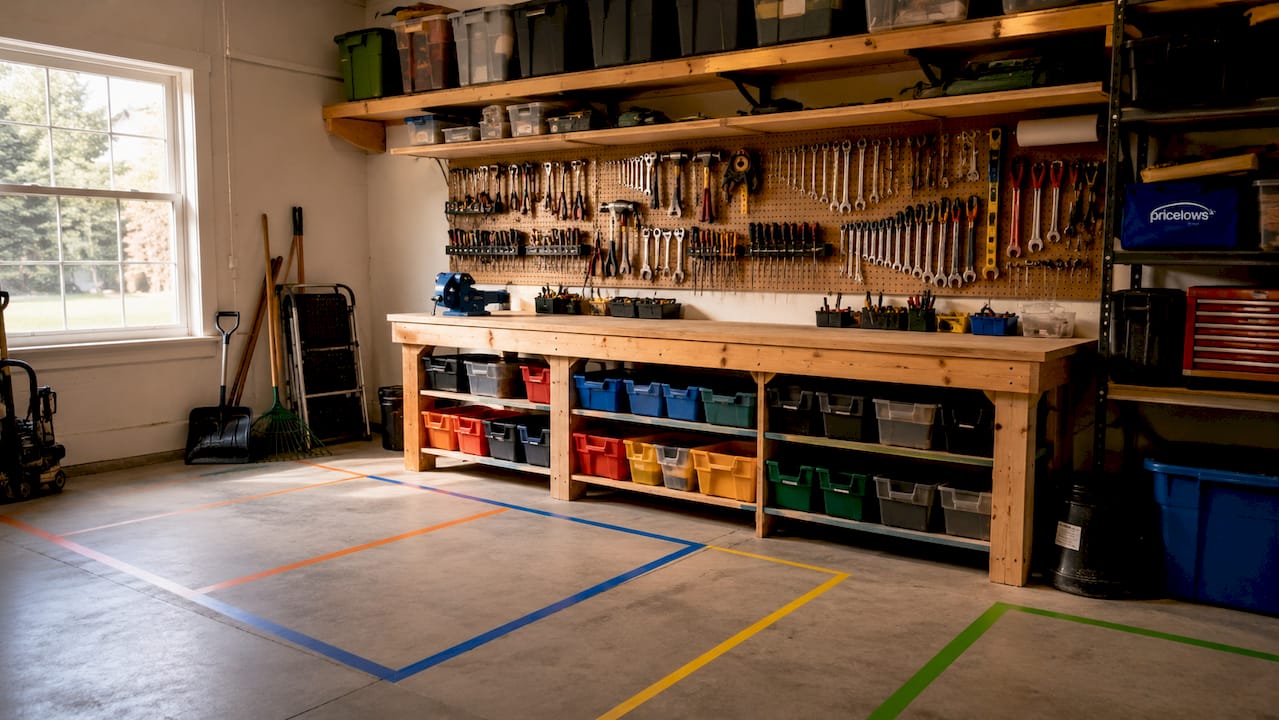
Floor markings using colored tape or painted lines make zone boundaries visible and enforce the habit of returning items to their correct area. Wall-mounted workbenches, pegboards, and slatwalls keep tools at eye level and off the floor, which protects both the tools and the parking surface.
| Storage solution | Best use | Space saved |
|---|---|---|
| Pegboard with hooks | Hand tools, small parts | Frees entire bench surface |
| Slatwall panels | Bins, baskets, accessories | Replaces floor shelving |
| Overhead platform rack | Seasonal gear, large bins | Uses otherwise dead ceiling space |
| Mobile workstation | Active project work | Rolls out of parking zone on demand |
| Wall-mounted fold-down bench | Compact hobby work | Folds flat when not in use |
Overhead storage platforms commonly hold 400–600 pounds, but they require careful clearance math. Measure the lowest ceiling point, then subtract your vehicle’s roof height plus a safety buffer before installing any rack.
Pro Tip: Avoid placing stationary power tools before you have finalized your zone layout. Tool placement is permanent. Zone design is not. Always design zones first.
A common mistake is treating the garage as one big room. Dividing it visually with wall storage systems creates psychological separation between zones, which makes each area feel purposeful and easier to maintain.
How to organize and maintain hobby tools and materials
Organized garages work because every item has a specific home, not because they have the most storage. Categorize hobby items by activity, then assign each category a fixed location on a shelf, pegboard hook, or drawer.
Label every bin, shelf, and drawer. Unlabeled storage becomes a miscellaneous pile within weeks. Use a label maker or printed tags on bins and totes for anything stored above eye level.
A reliable organization routine looks like this:
- Sort all hobby items by activity type before assigning storage locations.
- Place frequently used tools at arm’s reach, within the primary work zone.
- Store seasonal or rarely used items in overhead bins.
- Create a short-term drop zone near the garage entry for items that need sorting.
- Clear the drop zone every week before it becomes permanent clutter.
QR code labeled bins paired with a photographic inventory app solve the overhead storage problem directly. Scan the code on any bin to see exactly what is inside without pulling it down. This is especially useful for craft supplies, spare parts, and seasonal hobby gear stored out of reach.
Pro Tip: Use pegboard cup organizers for small parts like screws, drill bits, and paint brushes. They keep items visible and accessible without requiring a drawer cabinet.
The insight most garage setups miss is this: storage systems fail when they fight natural behavior. Make the return path for every tool as short and obvious as the path to pick it up.
Creative garage hobby ideas and setups for common interests
Popular garage hobbies include woodworking, car restoration, beer brewing, fitness training, and general crafting. Each benefits from a dedicated zone with purpose-built storage.
Here are proven setups for the most common garage hobby interests:
- Woodworking: Place a table saw in the center with outfeed clearance on both ends. Mount a garage shelving system on the back wall for lumber and finishing supplies.
- Car restoration: Keep one bay fully clear for the vehicle. Use a slatwall system on the adjacent wall for tools, fluids, and parts bins organized by project stage.
- Beer brewing: A back corner works well. Install a utility sink nearby if possible, and use a dedicated shelving unit for fermenters, kegs, and ingredients.
- Fitness zone: Rubber floor tiles define the area clearly. Wall-mounted racks for weights and resistance bands keep equipment off the floor and out of the parking zone.
- Crafting: A fold-down wall bench paired with collapsible storage bins creates a full craft station that disappears when not in use.
The side-by-side layout works best in two-car garages. One bay stays for parking; the other becomes the hobby zone. In a single-car garage, the back wall and both side walls become the workspace, with the center kept clear for the vehicle.
Key takeaways
The most effective garage hobby setup combines accurate zone planning, wall-mounted storage, and modular furniture that converts the space back to parking without effort.
| Point | Details |
|---|---|
| Measure before buying | Record width, depth, ceiling height, and door clearance before purchasing any storage or furniture. |
| Zone by activity frequency | Assign the most-used hobby the most accessible wall space, not the leftover area. |
| Go vertical with storage | Pegboards, slatwalls, and overhead racks free floor space and keep tools visible and reachable. |
| Label everything | Labeled bins and shelves prevent miscellaneous clutter from taking over organized zones. |
| Design for conversion | Folding benches and mobile carts let you switch between hobby use and parking in minutes. |
What I’ve learned about garage hobby spaces that most guides skip
Most garage planning advice focuses on products. Buy this shelf. Install that pegboard. The real problem is almost always sequencing, not storage.
Homeowners who plan their zones on paper first, before purchasing anything, end up with garages that actually work. Those who buy a workbench first and plan around it usually end up with a cramped, awkward layout they tolerate rather than enjoy.
The concept I find most useful is designing the “in-between state.” A dual-purpose garage needs to function well both when it is actively in use for hobbies and when it is just a parking spot. If converting from hobby mode to parking mode takes more than five minutes, the system will break down within a month.
Temporary clutter is the enemy of every garage hobby space. A drop zone near the entry solves this, but only if you clear it on a fixed schedule. Weekly is the minimum. The moment the drop zone becomes permanent storage, the whole system collapses.
One more thing: ceiling height is underestimated by almost everyone. Overhead racks that interfere with a vehicle roof cause real damage. Measure multiple spots, account for the vehicle’s highest point, and add a buffer. That math takes ten minutes and saves a costly mistake.
— Thane Holland
PriceLows™ has the garage storage gear you need
Setting up a dedicated hobby zone gets much easier when your storage tools are built for the job.

PriceLows™ carries a full range of garage organization products at prices that make the whole project budget-friendly. The black metal storage cabinet with lock and shelves is a strong anchor piece for any workshop zone, keeping tools secure and sorted. Pair it with small parts organizers for hobby workflow support that keeps your bench clear. PriceLows™ offers free shipping and a 100% shipping protection plan, so your garage gear arrives safely and on budget.
FAQ
What are the best ways to dedicate garage space for hobbies?
Define clear zones by activity, measure your space before buying storage, and use wall-mounted systems like pegboards and slatwalls to keep the floor clear. Modular and folding furniture lets you convert between hobby use and parking quickly.
How do I keep my garage hobby zone from becoming cluttered?
Assign every item a fixed home, label all bins and shelves, and maintain a weekly habit of clearing the entry drop zone. Consistent labeling and return paths matter more than the volume of storage you have.
Can I fit a hobby workspace and still park my car?
A side-by-side layout in a two-car garage dedicates one bay to hobbies and one to parking. In a single-car garage, folding workbenches and mobile carts let you reclaim the center floor space whenever the car needs to come in.
How much weight can overhead garage storage hold?
Overhead garage storage platforms commonly hold 400–600 pounds. Always measure ceiling clearance at multiple points and account for your vehicle’s roof height plus a safety buffer before installing any overhead rack.
What hobby setups work best in a small one-car garage?
Woodworking, crafting, and fitness zones all work in a one-car garage when you use the back wall and both side walls for storage and equipment. A fold-down bench and rubber floor tiles define the workspace without permanently occupying the parking footprint.