


Lawn DIY Made Easy: Proven Tips for Homeowners
TL;DR:
- Proper mowing, deep watering, and seasonal fertilization are essential for maintaining a healthy lawn through DIY practices. An effective lawn renovation takes about 8 to 12 weeks and includes soil prep, aeration, reseeding, and consistent watering. Using the right tools and following proven schedules help homeowners save money and achieve professional-quality results.
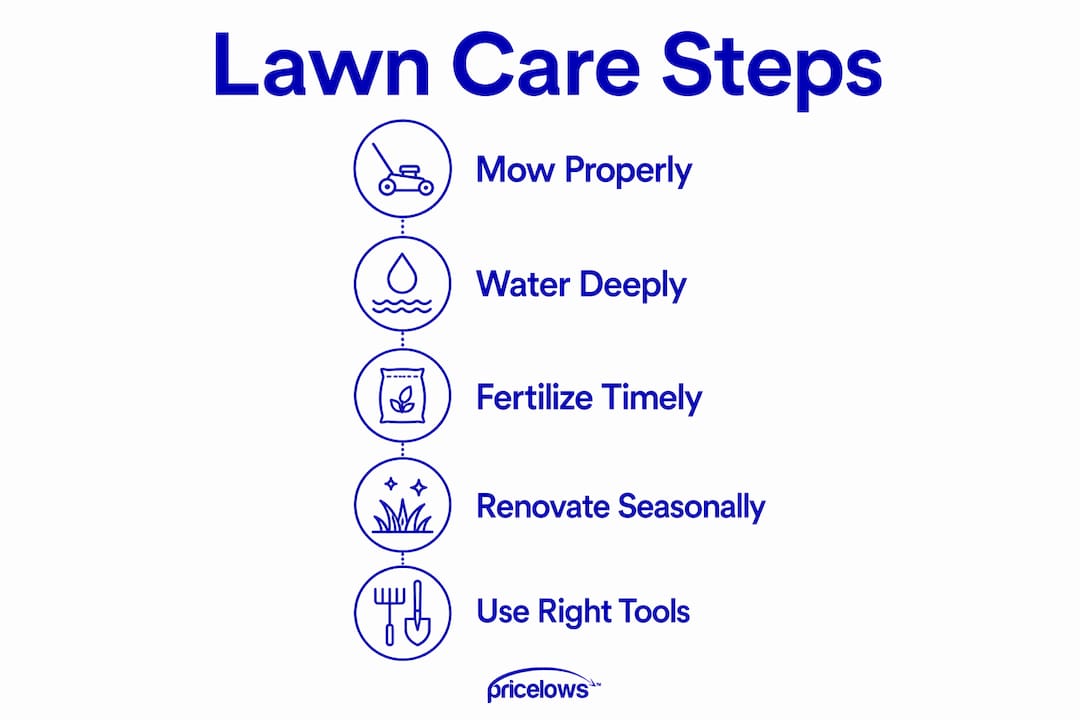
Lawn DIY is the practice of homeowners managing their own lawn maintenance and improvement projects using proven techniques, affordable tools, and seasonal planning. Done right, it saves hundreds of dollars annually compared to professional lawn services, and it gives you direct control over your turf’s health. The core of successful DIY lawn care rests on four pillars: mowing discipline, smart watering, timely fertilization, and seasonal renovation. Mastering these fundamentals, combined with the right tools, produces a lawn that stays healthy and green without a professional price tag.
What are the essential mowing techniques for a healthy lawn?
Mowing height is the single most impactful variable in DIY lawn care. Recommended heights vary by grass type: cool-season grasses like tall fescue and Kentucky bluegrass thrive at 3–4 inches, while warm-season varieties like Bermuda and Zoysia perform best at 1–2.5 inches. Cutting outside these ranges stresses the turf and opens the door for weeds.
The one-third rule is non-negotiable. Never remove more than one-third of the grass blade in a single mowing session. Cutting too much at once shocks the plant, forces it to redirect energy from roots to leaf recovery, and creates shallow root systems that struggle in heat or drought.
Blade sharpness matters more than most homeowners realize. Dull mower blades shred grass tips, leaving ragged white edges that invite fungal disease. Sharpen blades at least once per season, or after every 20–25 hours of use.
Key mowing habits that protect turf health:
- Mow every 5–7 days during active growth periods
- Change mowing patterns each session to prevent soil compaction and encourage upright growth
- Bag clippings when grass is long to prevent disease-spreading thatch buildup
- Avoid mowing wet grass, which clumps and spreads fungal spores
- Mow in the late afternoon to reduce heat stress on freshly cut blades
Pro Tip: Set your mower deck one notch higher than you think you need. Taller grass shades the soil, retains moisture longer, and crowds out weeds naturally.
How to water your lawn effectively with DIY schedules
Deep, infrequent watering builds drought-tolerant roots. A healthy lawn needs 1–1.5 inches of water weekly, including natural rainfall. Shallow daily watering trains roots to stay near the surface, making the lawn fragile during dry spells.
Timing is as critical as volume. Watering in early morning reduces fungal disease risk because the sun dries the blades quickly. Watering at night leaves grass wet for hours, creating the warm, damp conditions that fungal diseases love.
A DIY irrigation system removes the guesswork entirely. Irrigation kits cost $200–$500 and can be installed over a weekend. The key to an efficient system is designing separate zones for areas with similar water needs, such as shaded beds versus full-sun turf.
Smart watering practices to follow:
- Water 2–3 times per week rather than daily
- Run sprinklers long enough to deliver at least half an inch per session
- Use a rain gauge or empty tuna can to measure actual water delivery
- Adjust schedules seasonally as temperatures and rainfall change
- Consider a solar-powered water pump for small garden zones to cut electricity costs
Pro Tip: Push a screwdriver 6 inches into the soil after watering. If it slides in easily, you have reached the right depth. If it resists, water longer next session.
What are best practices for fertilizing your lawn DIY-style?
Fertilization timing determines whether you feed the lawn or feed the weeds. Over-fertilizing in early spring pushes weak top growth and fuels weed pressure. The most effective window for cool-season grasses is early fall, when roots are actively developing and storing energy for winter.
A soil test before any fertilizer application is the most cost-effective step a homeowner can take. Starting with a soil test eliminates guesswork, prevents over-application, and reduces the risk of nutrient runoff into local waterways. Most county extension offices offer soil testing for under $20.
Fertilizer type also shapes results. Slow-release granular fertilizers feed the lawn steadily over 6–8 weeks, reducing the risk of burn and minimizing the frequency of applications. Balanced formulas with equal nitrogen, phosphorus, and potassium ratios suit most established lawns.
Key fertilization guidelines by grass type:
- Cool-season grasses (fescue, bluegrass, ryegrass): fertilize in early fall and again in late fall
- Warm-season grasses (Bermuda, Zoysia, St. Augustine): fertilize in late spring through summer
- Avoid fertilizing dormant grass, which cannot absorb nutrients effectively
- Apply fertilizer with a garden spreader for even, controlled coverage
How to approach DIY lawn renovation step by step
A full lawn renovation follows a predictable timeline. DIY lawn renovation takes 8–12 weeks from start to a healthy, established lawn, with material costs running $0.10–$0.25 per square foot. For small areas under 1,000 square feet, sod installation is achievable in a single weekend.
Renovation steps in order
- Test and amend the soil. Address pH and nutrient deficiencies before seeding or sodding.
- Remove existing vegetation. Use a sod cutter or non-selective herbicide, then wait the recommended period before replanting.
- Rototill and level. Break up compacted soil to a depth of 4–6 inches and rake smooth.
- Apply starter fertilizer. Use a phosphorus-rich formula to support new root establishment.
- Seed or lay sod. Overseed in early fall for cool-season grasses. Lay sod in late spring for warm-season varieties.
- Top-dress thin areas. Apply a 70/30 sand and compost mix in layers no thicker than half an inch to level uneven spots without smothering grass.
- Water consistently. Keep the seed or sod moist for the first 2–3 weeks until roots establish.
Pro Tip: Aerating and overseeding in early fall is the highest-return renovation task for most homeowners. Core aeration relieves compaction and opens channels for seed-to-soil contact, which dramatically improves germination rates.
| Renovation task | Best timing |
|---|---|
| Core aeration | Early fall (cool-season) or late spring (warm-season) |
| Overseeding | Early fall for cool-season grasses |
| Sod installation | Late spring for warm-season varieties |
| Top-dressing | Spring or fall, in thin layers |
What essential tools support lawn DIY success?
The right tools reduce physical effort and produce better results. A yard maintenance checklist for most homeowners includes a reliable mower, a broadcast spreader, a garden hose with adjustable nozzle, a core aerator, and a landscape edger.
Ergonomic tool design matters on long work days. Lightweight spreaders with T-shaped handles reduce shoulder and back strain during fertilizer and seed applications. A landscape edging kit creates clean borders between lawn and garden beds without requiring power tools.
Essential tools by category:
- Mowing: rotary mower with adjustable deck height, blade sharpening file
- Seeding and feeding: broadcast or drop spreader for even fertilizer and seed distribution
- Watering: adjustable sprinkler heads, hose timer, rain gauge
- Edging and borders: no-dig landscape edging for clean, defined lawn perimeters
- Storage: a lockable tool cabinet keeps equipment organized and protected between seasons
Proper tool storage extends equipment life significantly. Mower blades, spreader mechanisms, and irrigation components corrode quickly when stored in damp or unprotected spaces. A dedicated budget yard tool guide helps homeowners prioritize purchases without overspending.
Key Takeaways
Consistent mowing, deep watering, timed fertilization, and seasonal renovation are the four practices that separate a thriving DIY lawn from a struggling one.
| Point | Details |
|---|---|
| Follow the one-third mowing rule | Never cut more than one-third of blade height to protect root depth and turf health. |
| Water deeply, not daily | Deliver 1–1.5 inches per week in 2–3 sessions to build drought-resistant roots. |
| Fertilize in fall, not early spring | Fall feeding drives root development; early spring fertilization feeds weeds instead. |
| Renovate with timing and soil prep | Aerate and overseed in early fall for the best germination and establishment results. |
| Invest in the right tools | A spreader, edger, and proper storage protect your investment and simplify every project. |
What I have learned from years of watching lawns succeed and fail
The biggest mistake I see homeowners make is treating lawn care as a single-season project. A lawn is a living system, and it responds to what you did three months ago, not just what you did last week. Homeowners who skip fall fertilization and then wonder why their lawn looks thin in spring are experiencing exactly that lag.
The second pattern I have noticed is overwatering. Homeowners see brown patches and immediately reach for the hose. Brown grass in summer heat is often dormant, not dead. Dormant grass recovers in fall without additional water. Watering it aggressively in peak heat encourages fungal disease and wastes money.
My honest advice: start with a soil test, commit to the one-third mowing rule, and resist the urge to over-fertilize in spring. Those three habits alone will put your lawn ahead of most neighbors. Add a core aeration session in early fall, and you will see a measurable difference within one season. Patience and consistency outperform any single product or treatment.
— Thane Holland
Affordable lawn care tools at PriceLows™
Getting your lawn in shape does not require a professional budget. PriceLows™ carries a focused selection of yard tools and storage solutions built for homeowners who want real results without overspending.

From garden spreaders for even fertilizer coverage to landscape edging kits that define clean borders, the product lineup at PriceLows™ covers the tools most homeowners reach for every season. Keeping those tools organized and protected between uses is just as important as the work itself. A 6-piece garage storage cabinet set gives you a dedicated home for every mower attachment, spreader, and hand tool you own. PriceLows™ offers free shipping and a 100% shipping protection plan on every order.
FAQ
What is the one-third mowing rule?
The one-third mowing rule means never cutting more than one-third of the grass blade height in a single session. Removing more than that stresses the plant and forces shallow root growth.
How much water does a lawn need per week?
A healthy lawn needs 1–1.5 inches of water per week, including rainfall. Water deeply 2–3 times per week rather than lightly every day to encourage deep root development.
When is the best time to fertilize a lawn?
The best time to fertilize cool-season grasses is early fall, when roots are actively growing. Warm-season grasses respond best to fertilization from late spring through summer.
How long does a DIY lawn renovation take?
A full DIY lawn renovation takes 8–12 weeks from initial soil prep to an established, healthy lawn. Small sod installations under 1,000 square feet can be completed in a single weekend.
What soil temperature triggers crabgrass germination?
Crabgrass germinates at soil temperatures of 50–55°F. Applying a pre-emergent herbicide before soil reaches that threshold is the most effective way to prevent crabgrass from taking hold.