


Homeowners: Safely Lower Pool pH by Starting with 75% of the Dose
The fastest way to lower pool pH is muriatic acid, with sodium bisulfate (dry acid) as the safer, slower alternative and aeration for minor drift. Keep the target range at 7.2 to 7.8. Before you add anything, test your water and turn on the pump. Then dose conservatively and retest before adding more.
TL;DR:
- Muriatic acid quickly lowers pool pH but requires careful handling and may damage surfaces if splashed; dry acid is safer but works more slowly.
- Aeration provides a gentle, gradual pH reduction and is suitable for minor drift when alkalinity is balanced, but not for large spikes.
- Always test both pH and alkalinity before dosing, and adjust pH incrementally, retesting after circulation to prevent overshooting.
- Low pH causes corrosion of surfaces and equipment, increases chlorine consumption, and can lead to skin irritation; gradual correction following proper safety protocols is essential.
- Frequent testing (at least twice weekly during swim season) helps maintain pH within the safe range and catch issues early before significant damage occurs.
Table of Contents
- How Do You Lower Pool pH? Comparing the Main Methods
- Step-by-Step: Testing, Calculating, and Dosing Correctly
- Handling Acid Safely: PPE, Storage, and Spill Response
- What Happens to Alkalinity When You Lower pH
- Why Won’t My Pool’s pH Move (or Why Does It Keep Bouncing Back)?
- How Often Should You Test Pool pH?
- What Low pH Does to Your Pool’s Surfaces and Equipment
- Signs Your Pool’s pH Has Dropped Too Low
- When a Homeowner Should Handle It and When to Call a Pro
- PriceLows™ Products That Support Safer Pool Chemistry
- Sources
How Do You Lower Pool pH? Comparing the Main Methods
Three approaches actually move pool pH, and each fits a different owner and a different level of urgency.
Muriatic acid (hydrochloric acid, typically sold at 31% strength in gallon jugs) is the fastest and cheapest option per dose. Pour it in near a return jet with the pump running, and you’ll often see measurable change within 15 to 60 minutes. The tradeoff is real: it’s a strong, fuming liquid that etches concrete if splashed, degrades a lot faster in storage, and demands more careful handling than most homeowners expect the first time they open the jug.
Sodium bisulfate, sold as dry acid, is a granular powder you dissolve in a bucket of water before pouring it in. It costs more per equivalent pH drop and works more slowly, sometimes taking several hours to a full day to show its final reading. What you get in return is a safer product to store and handle, according to Poolonomics’s comparison of muriatic acid and dry acid, with no sharp fumes and less risk if a container tips over near kids or pets.
Aeration and dilution work differently: instead of adding acid, you increase water movement (fountains, waterfalls, spillover features, or just running jets aggressively) to force dissolved carbon dioxide out of the water, which naturally nudges pH down over time, per Poolonomics’s guide to lowering pool pH. It’s slow and won’t rescue a pool that’s spiked to 8.2, but it’s the gentlest option when your alkalinity is already balanced and you just need a small correction.
A few notes on when to reach for each:
- Muriatic acid fits experienced handlers correcting a significant pH spike (above 7.8) who want speed and don’t mind the fumes.
- Dry acid fits most residential owners, especially first timers, according to Pool Care Authority’s breakdown of muriatic vs. sodium bisulfate, because it’s more forgiving of measurement error.
- Aeration fits small, gradual drift, or pools where alkalinity is already dialed in and acid would overcorrect.
- CO2 injection systems and professional service exist for large commercial pools or owners who want a hands-off, automated setup. They’re rarely worth the cost for a standard backyard pool.
Step-by-Step: Testing, Calculating, and Dosing Correctly
Skipping steps here is how people end up bleaching a liner or scrubbing calcium scale off tile six months later. Follow this order every time.
- Test pH and total alkalinity first. A liquid reagent kit or digital tester works better than strips alone for anything beyond a rough check, since alkalinity determines how much acid you’ll actually need.
- Confirm your pool volume. Multiply length by width by average depth by 7.5 for a rectangular pool in gallons, or check your builder’s spec sheet. Dosing math is meaningless if this number is wrong.
- Calculate your dose based on volume and current alkalinity. Higher alkalinity buffers pH changes, so the same pool can need noticeably more acid on a high-alkalinity day than on a balanced one.
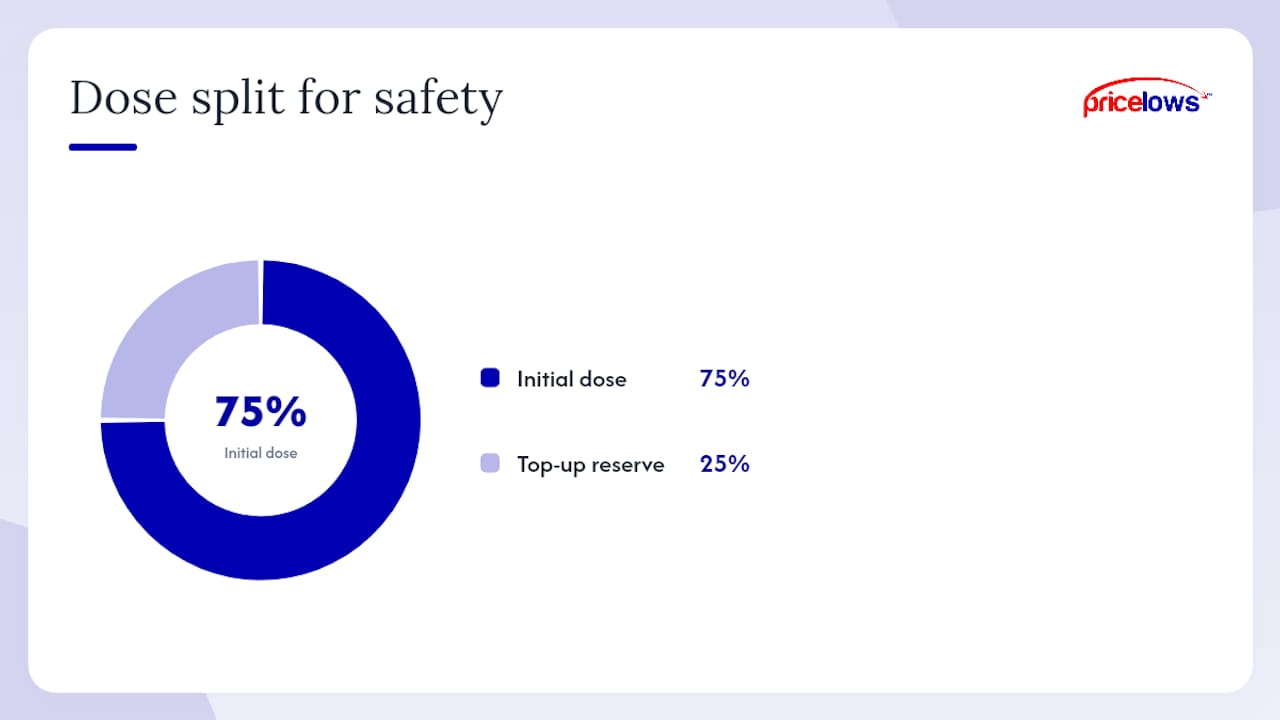
- Apply about 75% of the calculated dose first. This conservative rule protects you from overshooting into acidic territory that then requires a separate, more expensive correction.
- Add slowly near a return jet with the pump running, distributing the acid instead of dumping it in one spot where it can concentrate and damage plaster or vinyl.
- Let it circulate, then retest. Liquid acid often shows movement in 15 to 60 minutes; dry acid can take several hours to a full day, according to Poolonomics’s dosing timeline guidance.
- Top up only if needed, using the remaining 25% of your original calculation, then retest again before considering the job done.
Pro Tip: Keep a written log of your dose, the time you added it, and the retest reading. After two or three rounds, you’ll know almost exactly how your specific pool responds, which saves you from re-doing the math from scratch every time.
For a rough sense of scale: guides commonly cite roughly 5 to 12 ounces of muriatic acid, or about 7 to 16 ounces of dry acid, to shift pH by 0.1 to 0.5 in a 10,000-gallon pool. Treat that as a starting estimate, not gospel; alkalinity, water temperature, and product concentration all shift the real number for your pool. Always dose toward the high-end first and adjust from there.
Handling Acid Safely: PPE, Storage, and Spill Response
Pool acid isn’t dangerous when you respect it and genuinely dangerous when you don’t. The rules are simple and non-negotiable.
- Wear chemical-resistant gloves, safety goggles (not just glasses), and closed-toe shoes any time you’re handling muriatic acid or mixing dry acid.
- Work outdoors or in a well-ventilated space, since muriatic acid fumes irritate lungs and eyes fast, even in small amounts.
- Always add acid to water, never water to acid. Adding water to concentrated acid can cause a violent, splattering reaction; the reverse order is stable and predictable.
- Store both products in their original, sealed containers, away from direct sunlight and away from chlorine products, alkaline chemicals, and any metal shelving that acid vapor can corrode over time.
- If acid contacts skin or eyes, flush with cool water for at least 15 minutes and call Poison Control or seek emergency care immediately, especially for eye exposure.
- Never rinse a spill directly into a storm drain or onto grass; contain it and dispose of it per your local hazardous-waste guidelines, since concentrated acid runoff can harm soil and waterways.
Pro Tip: A lockable garage cabinet keeps pool acid out of reach of kids and pets and away from metal tools that corrosive fumes can pit over time. It’s a five-minute fix for a real household risk.
What Happens to Alkalinity When You Lower pH
Total alkalinity is your water’s buffer. It’s what keeps pH from swinging wildly every time something (rain, sunscreen, a pool party) disturbs the water, and the target range most guides point to is roughly 80 to 120 ppm.
Here’s the catch: every acid dose that lowers pH also lowers total alkalinity, sometimes significantly. If alkalinity was already borderline low before you started, an aggressive pH correction can push it below 80 ppm, which then makes your pH unstable and prone to swinging in the opposite direction. That’s why experienced pool owners check alkalinity first and prioritize whichever number is further outside its range before touching the other.
Once pH is corrected, restoring alkalinity is straightforward: sodium bicarbonate (baking soda) raises total alkalinity with only a minor effect on pH, according to Arm & Hammer’s guide to balanced pool pH. Dosing charts vary by brand, but the principle holds across all of them:
- Add baking soda gradually, following the product’s ppm-per-dose chart for your pool volume.
- Circulate for several hours, then retest before adding more; alkalinity moves slower than pH and overcorrecting wastes product.
- Retest both pH and alkalinity again 24 hours later to confirm both numbers have settled where you want them.
- Build a habit of testing both together weekly, since they influence each other constantly.
Why Won’t My Pool’s pH Move (or Why Does It Keep Bouncing Back)?
If you’ve added acid twice and the reading barely budged, the acid usually isn’t the problem. High total alkalinity is the most common culprit: it buffers against pH changes, so a pool sitting at 150+ ppm alkalinity can absorb dose after dose without much pH movement until the alkalinity itself comes down.
Salt chlorine generators add their own wrinkle. Salt cells naturally push pH upward as they operate, which means salt pools often need more frequent, smaller acid corrections than chlorine-tablet pools rather than one big dose.
New plaster is another common trap: fresh plaster releases lime into the water for its first 30 days, driving pH and alkalinity both upward no matter how much acid you add, until curing settles down. Scale buildup on older plaster does something similar over time, which is often where a professional inspection pays for itself.
- If pH resists correction after two properly calculated doses, check alkalinity before adding more acid.
- If you run a salt system, expect to test more often, not less.
- If the pool is under a month old, expect elevated readings as normal, temporary chemistry.
- Always correct gradually. Big single doses cause bigger rebounds than small, repeated ones.
How Often Should You Test Pool pH?
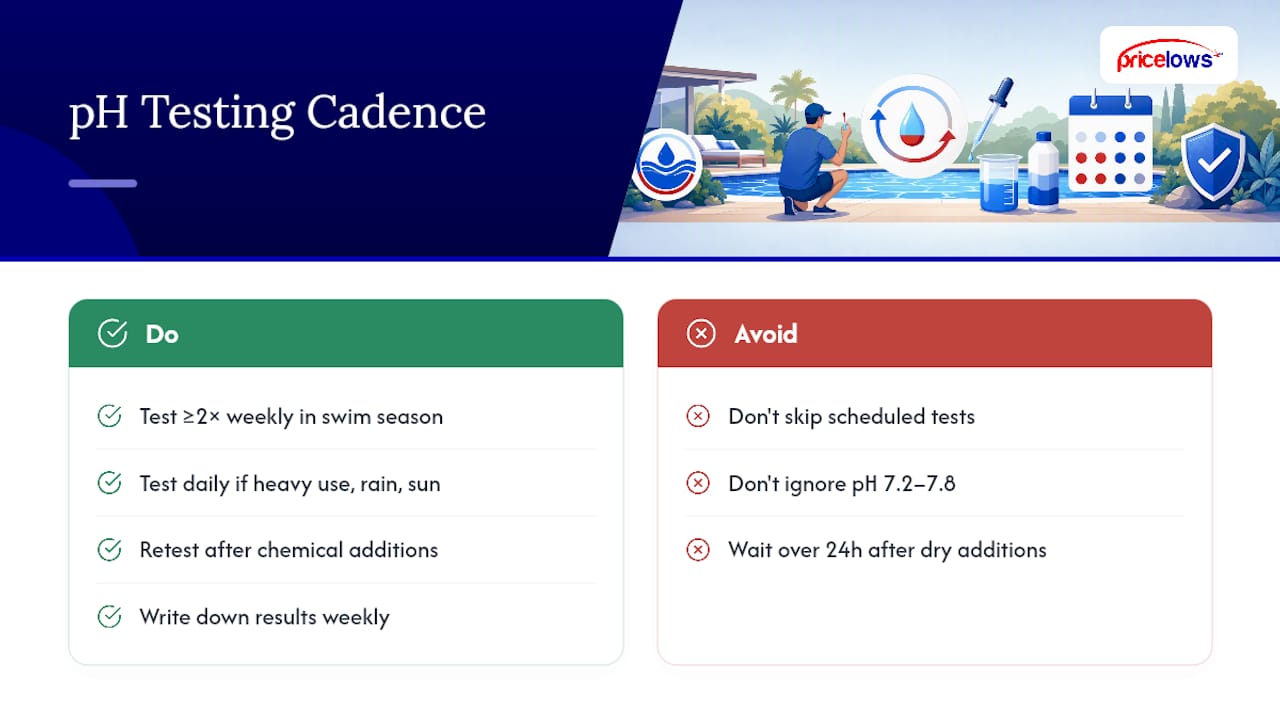
Test pH at least twice a week during active swim season, and daily if the pool sees heavy use, rain, or direct sun exposure that accelerates chemical breakdown. Bather load matters more than most people assume. Sweat, sunscreen, and urine are all mildly acidic or alkaline depending on the compound, and a pool hosting a weekend pool party can drift noticeably by Monday.
Outside of peak season, twice-weekly testing is still the baseline most pool professionals recommend, dropping to once a week if the pool is covered and unused. After any chemical addition, from acid to shock to algaecide, retest within the window appropriate to that product (minutes to an hour for liquid acid, up to 24 hours for dry acid or granular products) before making further adjustments.
The CDC’s healthy swimming guidance frames this testing cadence around a real health stake: sanitizer effectiveness depends on pH staying in the 7.2 to 7.8 range CDC recommends, because chlorine loses much of its killing power outside that window even at full concentration. Skipping tests doesn’t just risk cloudy water. It risks swimmers being exposed to sanitizer that isn’t doing its job.
A simple rhythm works for most backyard pools: test before you swim on the weekend, test again midweek, and test immediately after any chemical addition or heavy rain. Write the numbers down. Patterns show up fast once you have three or four weeks of data.
What Low pH Does to Your Pool’s Surfaces and Equipment
Pool water below 7.0 turns corrosive, and it doesn’t discriminate between the parts you can see and the parts you can’t. Plaster and pebble finishes etch and roughen, losing their smooth texture and turning chalky over months of exposure. Vinyl liners lose flexibility and can wrinkle or crack sooner than they should. Metal fittings, ladder anchors, heater cores, and pump housings all corrode faster in acidic water, and heater exchangers are especially vulnerable since they combine metal and constant water contact.
Low pH also eats into your chemical budget indirectly. Acidic water degrades chlorine faster and irritates skin and eyes at the same time, which means you end up adding more sanitizer to compensate for water that’s working against you rather than with you. It’s a quiet cost that shows up on the chemical bill before most owners connect it back to a pH problem.
None of this happens overnight. A single low reading for a day won’t damage anything. It’s sustained exposure, weeks of water sitting below 7.0, that turns into real repair costs on plaster, heaters, and pump seals. That’s the real argument for routine testing over reactive testing: catching a dip early costs a bag of baking soda, while catching it late can cost a resurfacing job.
Signs Your Pool’s pH Has Dropped Too Low
Low pH announces itself, usually to your skin before your test kit. Swimmers report burning eyes and dry, itchy skin after time in acidic water, which is often the first clue something’s off before anyone’s even pulled out a test strip.
Metal surfaces are the next tell. Corroded ladder rails, pitted pump fittings, or a heater that suddenly needs more frequent servicing all point toward water that’s been running acidic for a while. Vinyl liners that feel stiff or show early wrinkling, and plaster that’s gone rough or chalky underfoot, tell the same story from the surface side.
Chlorine behaving strangely is another signal. If you’re adding sanitizer at the normal rate but water still clouds or algae creeps in faster than usual, low pH may be degrading your chlorine’s effectiveness before it can do its job. And low total alkalinity often rides along with low pH, since acid pulls both numbers down together, so a pH crash is frequently an alkalinity crash in disguise.
The fix is rarely dramatic. Small, calculated additions of baking soda (sodium bicarbonate) bring both numbers back up gradually, with a retest between doses to avoid overshooting into high-alkalinity territory instead.
When a Homeowner Should Handle It and When to Call a Pro
If pH keeps bouncing back after two or three correctly calculated doses, or alkalinity is reading well above 150 ppm, or you’re seeing actual corrosion on ladder rails or heater fittings, that’s your signal to call a pool professional rather than keep adding acid. Repeated bounce almost always means an underlying chemistry or equipment issue, not a dosing mistake.
For everything else, DIY correction is safe within clear limits: dose conservatively, store acid properly, and never mix products. Keep a log of every test and every addition. It sounds tedious the first week and becomes second nature by the third, and it’s the single habit that separates owners who fix small problems early from owners who discover a big one in July.
PriceLows™ Products That Support Safer Pool Chemistry
Lowering pH and keeping it stable depends on more than the acid you pour in. Good circulation and debris control cut down on the guesswork, and PriceLows™ carries the gear that makes both easier.
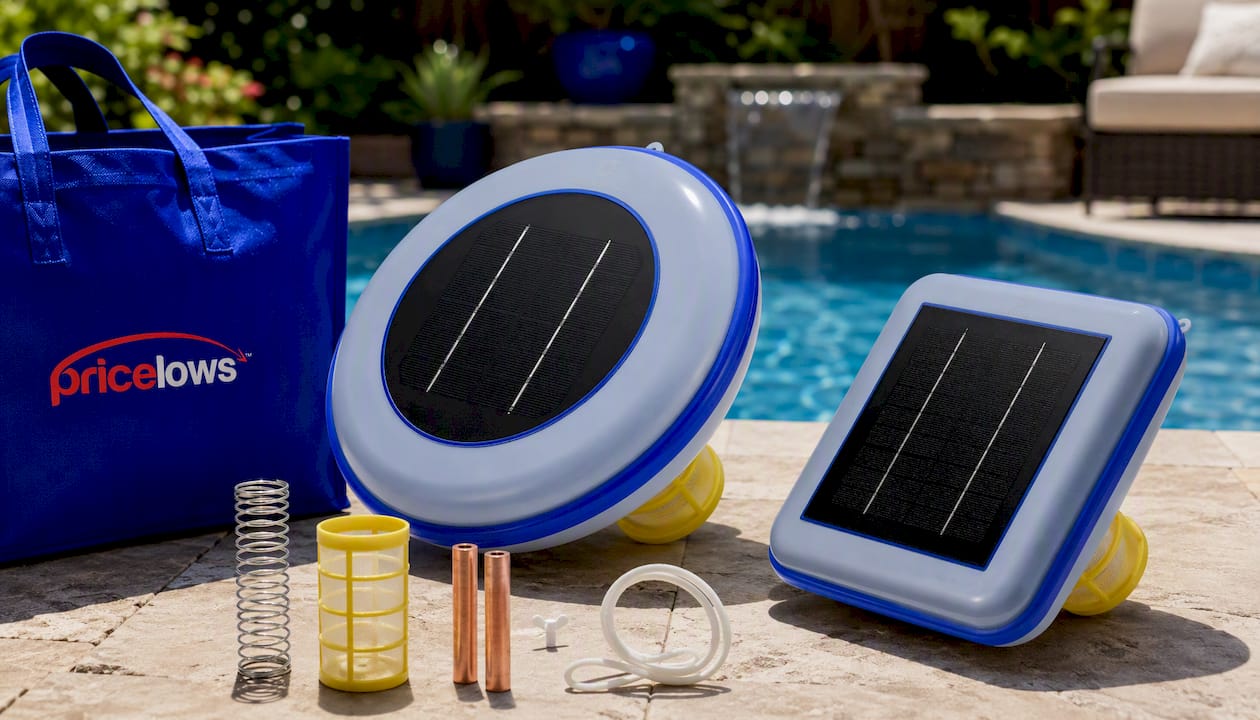
A 30W solar fountain pump kit adds gentle aeration that helps disperse chemicals evenly after a dose and gives you a nonchemical way to nudge pH down slightly between treatments. A pool mesh strainer keeps debris out of your filter so your pump runs efficiently during the circulation window right after dosing, when even mixing matters most. And if you’re storing muriatic acid or dry acid at home, a rolling lockable steel storage chest keeps it sealed, ventilated, and out of reach of kids and pets, exactly the storage setup the safety guidance above calls for.
None of these replace the acid itself. They remove the friction around using it correctly: better circulation for faster, more even dosing, and safer storage so the product stays where it belongs between treatments. Browse PriceLows™'s pool and garage storage selection to find the setup that fits your backyard, and get free shipping on most orders.
Sources
For verification beyond this guide, see CDC’s healthy swimming materials and EPA’s drinking-water regulations and contaminants page for public health context on water quality standards.
- Muriatic Acid vs Dry Acid: Which One Should You Use in a Pool? — Poolonomics
- Muriatic acid vs dry acid — Pool Clarity