


4 Fast Ways to Remove Pet Hair from Furniture, Matched to Fabric
The four fastest ways to remove pet hair from furniture are vacuuming with an upholstery or pet-hair attachment, running a slightly damp rubber glove or squeegee across the fabric in one direction, working a reusable roller over the surface, and switching to washable covers paired with regular grooming. Fabric type decides which of these work best, so match the tool to the material. Vacuum weekly, but keep a glove or roller nearby for frequent touch-ups between deeper sessions.
TL;DR:
- Use a vacuum with a motorized attachment weekly to remove embedded pet hair from upholstery, especially for tightly woven or durable fabrics.
- A damp rubber glove or squeegee is highly effective for surface hair on microfiber, leather, or faux leather, working best when rubbed in one direction.
- Regular grooming and washable covers significantly reduce pet hair buildup, with microfiber and leather requiring less frequent deep cleaning than velvet or chenille.
- Focus on cleaning seams and crevices with a crevice tool and stiff brush to remove hair packed into tufted or piped areas that vacuum alone cannot reach.
- Apply a consistent cleaning routine, including daily touch-ups and monthly deep cleans, to prevent hair accumulation from reaching difficult or embedded levels.
Table of Contents
- Pet Hair Removal Furniture Shortlist: Touch-Up vs. Deep Clean
- Which Cleaning Method Works Best for Each Fabric?
- How Do You Use a Vacuum, Glove, or Roller Correctly?
- What’s a Realistic Weekly Routine for Pet Hair?
- How Can You Prevent Pet Hair From Piling Up in the First Place?
- What Should You Buy If You’re Starting From Scratch?
- Do Homemade Sprays and Lint Removers Actually Work?
- How Do You Keep Furniture Fresh After a Cleaning Session?
- What Actually Removes Hair Stuck Deep in Cushion Seams?
- Balancing Cost and Convenience: An Honest Take on Pet Hair Tools
- Shop PriceLows™ for Budget-Friendly Pet Hair Tools
- Sources
Pet Hair Removal Furniture Shortlist: Touch-Up vs. Deep Clean
Not every hair problem needs the same tool. A quick touch-up handles loose surface hair before it settles in. A deep clean goes after hair that’s already worked its way into the weave.
Touch-up tools (use daily or as needed):
- Lint roller for a fast pass before guests arrive
- Reusable, non-adhesive roller for high-traffic cushions
- Slightly damp rubber glove for a quick one-hand swipe
Deep-clean tools (use weekly or when buildup is visible):
- Vacuum with a motorized pet or upholstery attachment, which remains the most effective first step for embedded hair
- Upholstery brush for lifting hair before vacuuming
- Fabric-safe pumice stone for tightly woven, durable materials
Surface hair lifts with almost any dry tool. Embedded hair, the kind woven into the fabric weave itself, usually needs a two-step approach: loosen it first, then vacuum. Before trying a damp or abrasive method on anything delicate, test it on a hidden patch first, like the underside of a cushion, to make sure it won’t leave a mark.
Which Cleaning Method Works Best for Each Fabric?
Fabric is the single biggest factor in how stubborn pet hair gets. Leather and tightly woven microfiber resist embedding, while velvet, chenille, and open weaves like bouclé and linen grab onto hair and hold it.
Microfiber: Hair sits mostly on the surface. A damp rubber glove or squeegee, rubbed in one direction, works fast here, and it’s one of the most effective methods across fabric types generally. Follow with a vacuum pass on the crevices.
Leather and faux leather: Hair barely clings. A microfiber cloth or a light vacuum pass usually clears it in under a minute. Skip anything abrasive; leather scratches easily.
Velvet and chenille: These trap hair in the pile. A rubber glove works, but go with the nap, not against it, or you’ll create noticeable streaks. A fabric-safe pumice stone can help on chenille specifically.
Bouclé and linen: These open weaves grab hair down at the fiber level. A vacuum with a motorized brush attachment is close to essential here; gloves alone won’t reach embedded strands.
Removable, washable covers: Check the fabric care code before doing anything else. A “W” tag means water-based cleaners are fine, “S” means solvent-only, “WS” allows either, and “X” means vacuum only, no liquid or solvent. Always test an inconspicuous spot first regardless of the code.
Frequency depends on the fabric: microfiber and leather can go a few weeks between deep cleans, while velvet, chenille, and open weaves benefit from more frequent cleaning since they accumulate hair faster.
How Do You Use a Vacuum, Glove, or Roller Correctly?
Technique matters as much as the tool itself. Here’s how to get real results from each one.
- Vacuum: Remove cushions first and vacuum the seams, undersides, and crevices, not just the visible top surface. Use slow, overlapping passes with a motorized pet attachment. Skip high-speed agitation on delicate weaves like velvet, it can pull threads loose.
- Rubber glove or squeegee: Dampen the glove slightly, not soaked, then drag it across the fabric in one direction only. Hair gathers into small clumps. Pick those up by hand or vacuum them once you’re done.
- Reusable roller: Roll in overlapping strips across the cushion. Empty the collected hair into the trash between passes rather than letting it build up on the roller, or it stops picking up new hair.
- Pumice-style fabric stone: Reserve this for durable, tightly woven fabrics only, and always test a hidden spot first. Drag it in one consistent direction, never back and forth, then vacuum up what it loosens.
Pro Tip: Apply moisture to the glove itself, never directly to the cushion. Excess water can soak into the padding underneath and create a mold risk that takes days to show up.
What’s a Realistic Weekly Routine for Pet Hair?
You don’t need a strict system, just a rhythm that keeps hair from building past the point of easy removal.
- Daily: Run a roller or damp glove over armrests and cushion seats, the spots your pet actually lounges on. Two minutes, done.
- Weekly: Vacuum the whole piece, cushions included, with an upholstery or pet-hair attachment covering seams and undersides.
- Monthly or bi-monthly: Wash removable covers according to their care code, and check cushion seams for embedded hair that daily touch-ups miss. That’s where a two-step loosen-then-vacuum approach earns its keep.
- After a heavy shedding event: Spring and fall molts can dump weeks’ worth of hair onto a couch in days. Run the glove method first to break up the mass, then vacuum immediately after rather than waiting for the weekly slot.
How Can You Prevent Pet Hair From Piling Up in the First Place?
Prevention beats cleanup every time, and it’s the cheapest fix available. Regular grooming, washable covers, and smart fabric choices compound over time to cut your cleaning workload dramatically.
- Brush shedding breeds regularly, increasing frequency during seasonal molts.
- A proper deshedding treatment removes loose undercoat before it ever reaches your couch.
- Use washable slipcovers, throws, and a dedicated pet bed placed wherever your pet already prefers to lounge.
- Favor tight-weave fabrics, leather, or machine-washable removable covers when choosing new furniture.
- Groom outdoors or on a mat whenever the weather allows it.
What Should You Buy If You’re Starting From Scratch?
Building a basic pet-hair kit doesn’t require an expensive haul. A cordless handheld vacuum covers spot cleaning between full vacuum sessions, washable pet-hair remover gloves handle daily touch-ups, and washable slipcovers protect the fabric underneath from ever needing a deep clean at all.
When shopping, check for:
- Stated suction power, not just marketing language
- Included upholstery or crevice attachments
- Machine-washable components
- A clear return policy in case the fit isn’t right
Testing across product categories shows performance varies by surface more than by brand name, which is exactly why matching the tool to your fabric matters more than chasing a specific model.
Do Homemade Sprays and Lint Removers Actually Work?
Some homemade tricks genuinely help, others are mostly folklore. A light mist of water mixed with a few drops of fabric softener, sprayed onto a cloth rather than the couch directly, loosens static cling and makes hair easier to sweep off with your hand or a dry glove. It’s a decent stopgap between real cleanings, not a replacement for one.
Dryer sheets rubbed across cushions work on the same principle, cutting static so hair stops clinging to the fibers. Balloons and packing tape wrapped sticky-side-out around your hand are two more low-cost tricks that lift surface hair in a pinch, though neither reaches embedded hair the way a vacuum or glove does.
Skip anything involving vinegar concentrations strong enough to smell overpowering, or DIY mixtures with essential oils, near pets that groom themselves by licking their fur. What looks like a clever homemade solution can leave residue that irritates skin or gets ingested during grooming.
The most reliable DIY approach stays simple: a barely damp cloth or glove, applied in one direction, does more real work than most spray concoctions circulating online. Save the sprays for freshening fabric between deeper cleans, not for tackling actual embedded hair.
How Do You Keep Furniture Fresh After a Cleaning Session?
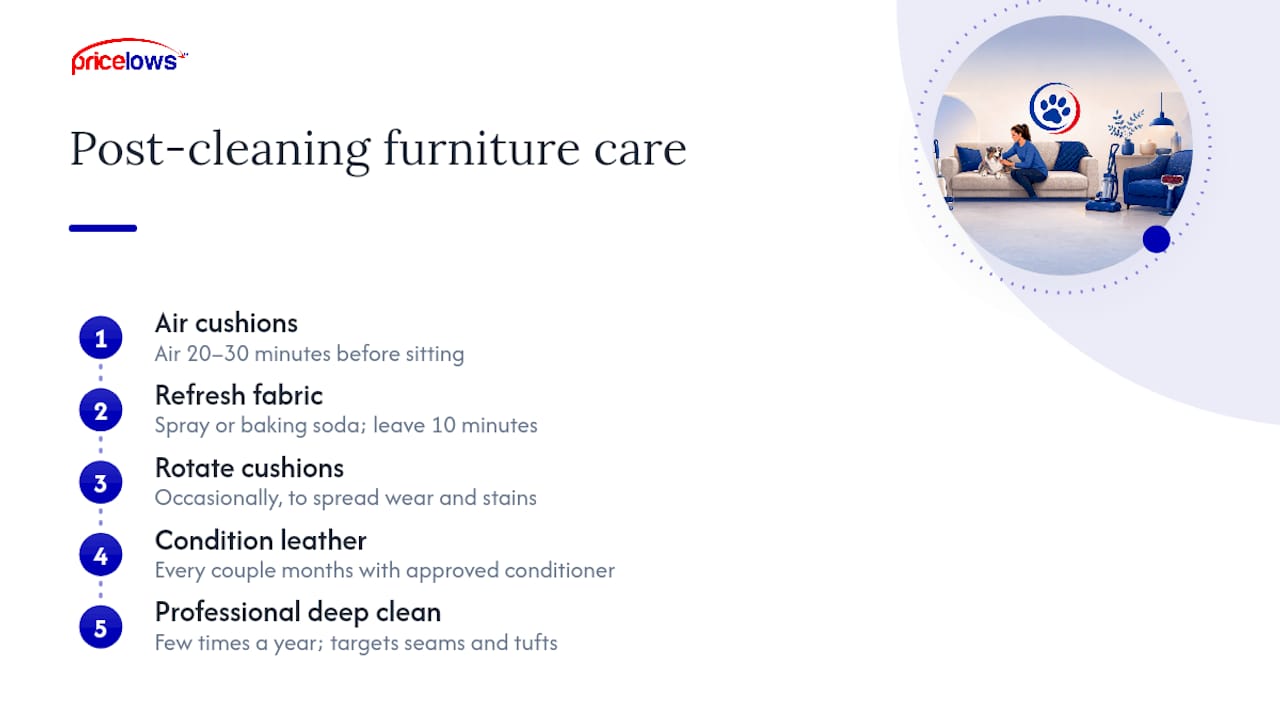
Removing the hair is only half the job. Once you’ve vacuumed and picked up loose clumps, let cushions air out for twenty to thirty minutes before sitting back down, especially if you used any damp method.
A light fabric refresher spray, or a baking soda dusting left for ten minutes then vacuumed off, pulls out trapped odor without soaking the material. This matters more than people expect. Pet dander and oil buildup on fabric can hold onto smells long after the visible hair is gone.
Rotate cushions occasionally so wear and staining happen evenly rather than concentrating on one favorite spot. If you’re dealing with a leather or faux leather piece, wipe it down with a manufacturer-approved conditioner every couple of months to keep the surface from drying out and cracking, which creates texture that traps even more hair going forward.
For a deeper reset a few times a year, a professional couch cleaning service can reach buildup that home tools miss, particularly in seams and tufted areas.
What Actually Removes Hair Stuck Deep in Cushion Seams?
Seams and tufted crevices are where pet hair goes to hide. Standard vacuum passes glide right over these spots because the nozzle can’t reach into the stitching.
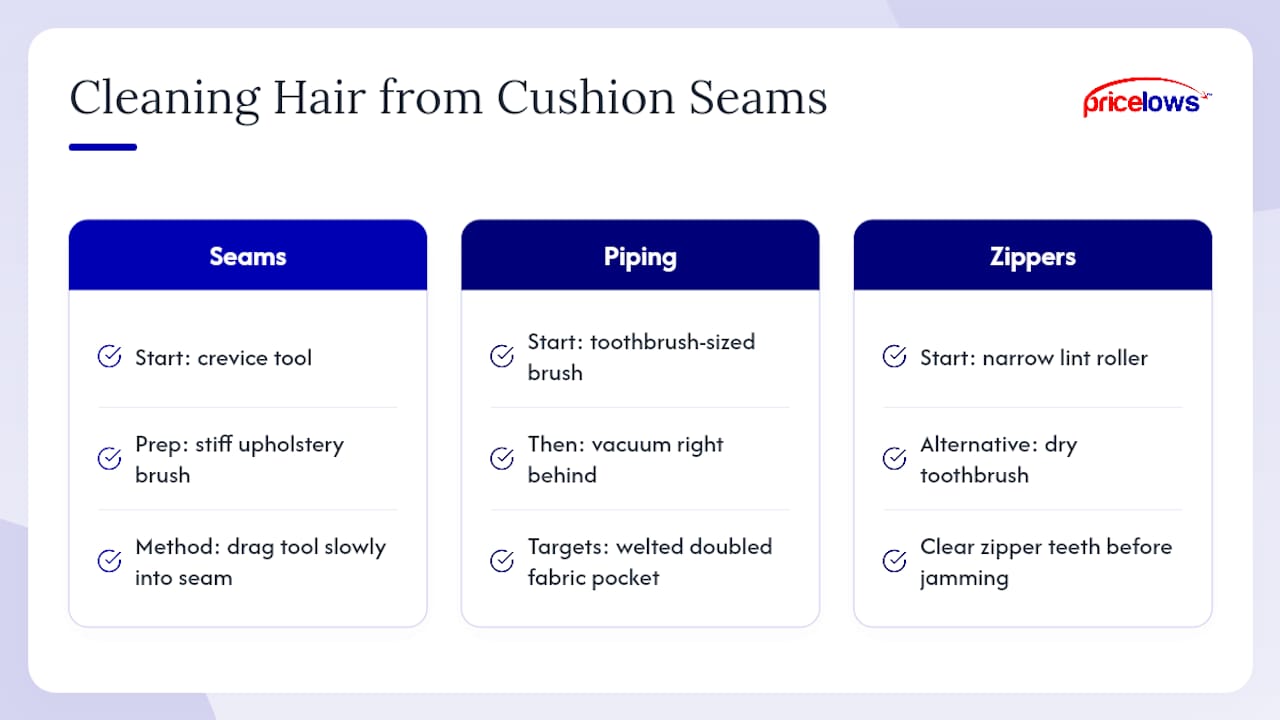
A crevice tool attachment is the starting point, angled directly into the seam line and dragged slowly rather than swept. For hair packed in tight, work a stiff-bristled upholstery brush along the seam first to break the mass loose, then follow immediately with the crevice tool. This two-step method matches the loosen-then-vacuum approach that works so well on open surfaces, just scaled down for tight spaces.
Piping and welted seams trap the most hair because the doubled fabric creates a natural pocket. Running a toothbrush-sized brush along the piping edge, then vacuuming right behind it, clears out what a full-size brush attachment can’t reach.
Zippers on cushion covers deserve a look too. Hair works into the zipper teeth and track over time. A quick pass with a lint roller cut down to a narrow width, or even a dry toothbrush, clears it out before it jams the zipper shut.
Balancing Cost and Convenience: An Honest Take on Pet Hair Tools
The handheld vacuum versus upright debate misses the point. Buy a handheld for spot work between sessions and lean on your existing upright, or an upholstery attachment, for the weekly deep clean. Spend the extra few dollars on a reusable roller over disposable sticky sheets; it pays for itself within a couple of months. Everything else on this list, gloves, sprays, covers, works fine at the budget end. Don’t overthink the routine. Consistency beats any single gadget.
— Thane Holland
Shop PriceLows™ for Budget-Friendly Pet Hair Tools
The catalog is built around exactly this kind of problem: real household needs, priced so you’re not choosing between a decent tool and rent. For pet hair specifically, that means a cordless handheld vacuum for the couch and car both, washable pet-hair remover gloves for daily touch-ups, and if your current sofa fabric is fighting you every week, a linen sectional with a removable ottoman built for exactly the washable, low-embedding setup this article recommends.

Browse the vacuum and grooming tool categories now, and if a fabric upgrade is on your radar for the year, that sectional page is worth a look before your next shedding season hits.
Sources
- How to Clean Your Couch: A Complete Guide for Pet Owners
- How to get dog hair off your couch: 5 hacks from an expert | PetsRadar
- The 10 Best Pet Hair Removers, Tested by Real Pet Owners
- How to Remove Pet Hair from a Couch | Coleman Furniture
- How safely clean your furniture