


Small Parts Organizers: Boost Your Hobby Workflow
Small parts organizers are dedicated storage systems that keep tiny hobby components sorted, labeled, and immediately accessible so you spend more time building and less time searching. The role of small parts organizers in hobbies goes well beyond tidiness. They directly determine how much of your session goes toward actual work versus hunting for a missing screw, bead, or resistor. Whether you work with Akro-Mils compartment cases, portable tackle-style boxes, or modular drawer cabinets, the right storage system changes how your workspace feels and functions. Poor small parts management causes lost productivity that compounds over every session you sit down to work.
How small parts organizers improve hobby productivity
The most direct benefit of using dedicated storage is time recovery. Adopting small parts storage can save up to 30 minutes daily by cutting the time you spend searching for misplaced components. Over a week of hobby sessions, that adds up to hours you get back for actual building, painting, or crafting.
Reduced clutter also improves focus. When your workspace is clear and every part has a home, your brain stops tracking the visual noise and starts concentrating on the project. This is especially noticeable in detail-heavy hobbies where mental bandwidth matters.
Here is where the benefits show up most clearly across different hobby types:
-
Model building: Sprues, decals, and tiny hardware pieces are easy to lose on a cluttered bench. Compartment cases with removable dividers, like those from Akro-Mils, keep each part type separated and visible.
-
Electronics and Arduino projects: Resistors, capacitors, and jumper wires look nearly identical. Labeled drawer organizers prevent costly mix-ups and wasted troubleshooting time.
-
Crafting and beadwork: Seed beads, clasps, and findings are small enough to vanish into carpet. Secure-lid cases keep them contained between sessions.
-
Miniature painting: Washes, contrast paints, and basing materials multiply fast. Dedicated organizers for crafting supplies prevent the “where did I put that pot” delay that breaks creative momentum.
The importance of hobby organizers is not just about neatness. It is about protecting your most limited resource: the time you actually have to enjoy your hobby.
What types of small parts organizers should you use?
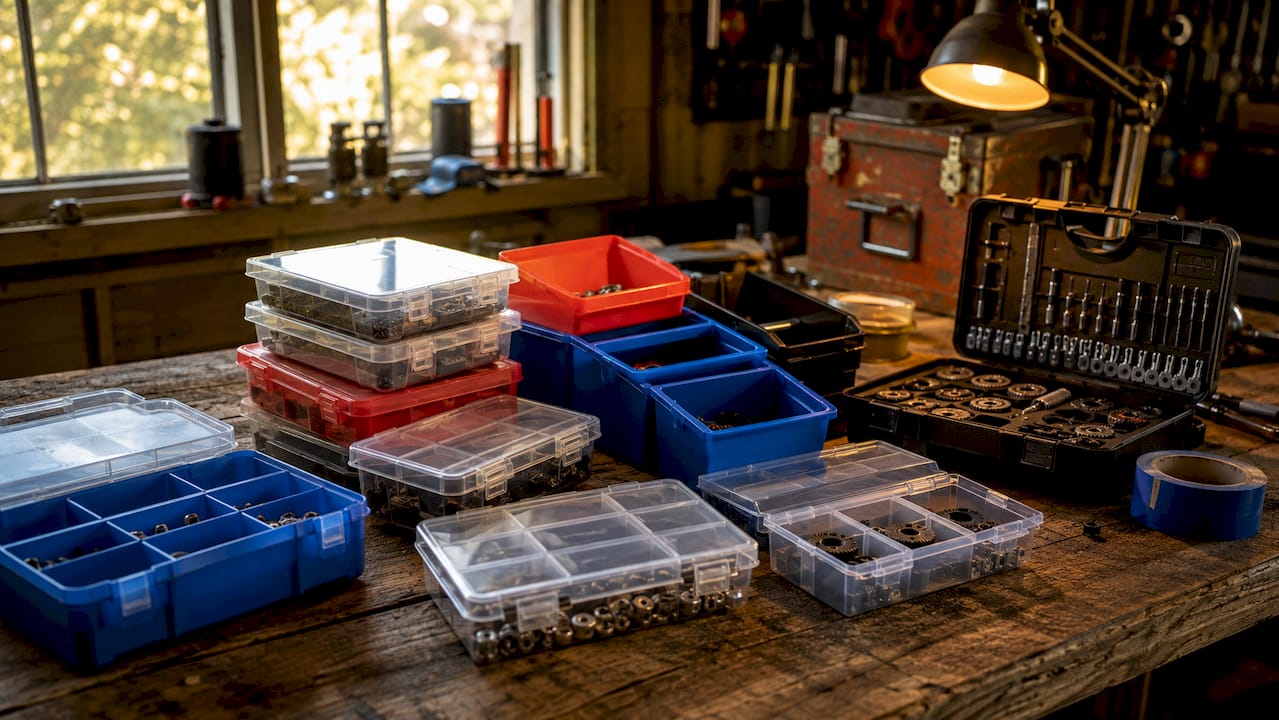
Choosing the right organizer depends on your hobby’s scale, your available space, and how often you move your setup. The four main categories cover most hobbyist needs.
| Organizer Type | Best For | Key Feature | Portability |
|---|---|---|---|
| Portable compartment case | Beads, small hardware, miniature parts | Removable dividers, secure latch | High |
| Drawer cabinet | Electronics, fasteners, mixed parts | Multiple labeled drawers | Low |
| Tackle box style | Fishing gear, mixed craft supplies | Deep compartments, rugged build | Medium |
| Heavy-duty storage cabinet | Workshop, serious collectors | Up to 96 bins, holds up to 650 lbs | None |
For most hobbyists, a portable compartment case is the right starting point. Entry-level quality cases cost under $10, and multi-packs run from $17 to $37. That price range makes it easy to start organizing without committing to a full system.
When selecting any organizer, check for these features before buying:
-
Secure closures: Latch-down lids prevent part migration when you move the case. This is the single most common complaint with budget organizers.
-
Compartment count and size: More compartments are not always better. Match the compartment size to your smallest part type.
-
Transparent lids or fronts: Visibility eliminates the need to open every drawer or case to find what you need.
-
Modular compatibility: Cases that stack or connect to each other let your system grow without replacing what you already own.
Pro Tip: Buy one size larger than you think you need. Collections grow faster than expected, and a half-empty organizer is far more useful than one you have already outgrown.
How to set up a small parts organization system
A good system does not require a weekend overhaul. The most durable organization habits are built incrementally, and incremental modular upgrades produce more sustainable results than trying to organize everything at once.
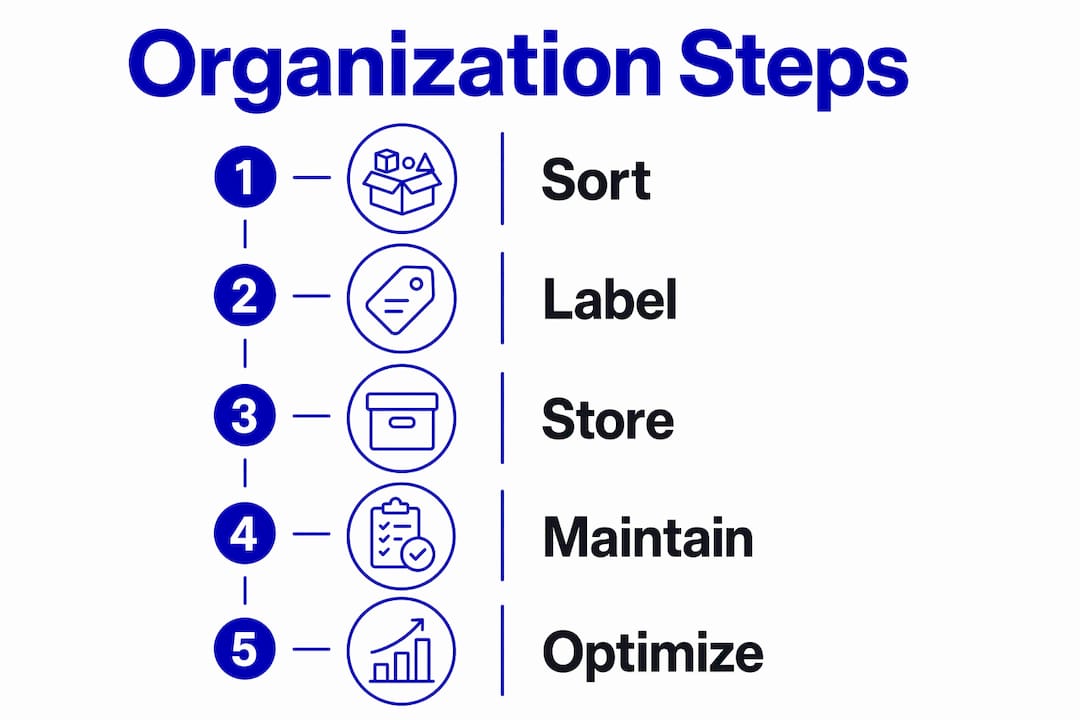
Follow these steps to build a system that actually sticks:
-
Sort by frequency of use first. Pull out everything you touch every session and give those items the most accessible spots. Parts you use once a month can live in the back of a drawer.
-
Group by project stage, not just part type. Keep in-progress project parts together in one case. Backstock and future project materials go in a separate container. This prevents active work from getting buried under supplies you are not using yet.
-
Label everything immediately. Use a label maker or even masking tape and a marker. Transparent containers help, but labels eliminate guesswork entirely.
-
Establish a five-minute reset habit. At the end of every session, return parts to their designated spots. Lasting organization comes from repeatable routines, not one-time cleanups.
-
Start with one modular piece. A single paint rack, tool caddy, or compartment case is enough to begin. Expand the system only when you feel the need.
Pro Tip: Use color-coded labels or tape for different project phases: red for active, blue for backstock, green for finished. You will find what you need without reading a single label.
The goal is a system you will actually maintain. A simple setup you use consistently beats a complex one you abandon after two weeks.
What are the biggest challenges in small parts organization?
Part migration is the most common technical problem hobbyists face. This happens when small parts shift between compartments during transport or storage. Secure latch-down designs prevent this, and spring-loaded compartment dividers add another layer of protection. If you move your organizer frequently, prioritize cases with positive-locking latches over simple snap closures.
Over-organization is the second major pitfall. Overly complex systems waste time and are harder to maintain than simple ones aligned with your natural habits. If your system requires 10 steps to put something away, you will stop using it. Every layer of complexity you add is a reason to leave things on the bench instead.
Here are the most common challenges and their fixes:
-
Expanding collections: Use modular organizers that stack or connect. Akro-Mils and similar brands offer cases designed to link together, so your system scales without starting over.
-
Limited space: Most workspace crowding comes from mismatched storage and frequency of use, not actual lack of space. Move rarely used items to deeper storage and free up surface area for active work.
-
Accessibility vs. space-saving tension: Wall-mounted magnetic strips, pegboards, and tiered shelving let you store more without sacrificing reach. Keep your most-used tools and parts at arm’s length and push everything else back.
-
Identical-looking parts: Use printed labels with part numbers or color-coded dots. For electronics hobbyists, a printed resistor color code chart taped inside the drawer lid saves time every session.
The fix for most organization problems is not more storage. It is better placement of what you already have.
How do organizers fit into a complete hobby workspace?
Small parts storage works best as one layer of a broader workspace setup. Organizers handle the tiny components, but you also need tool holders, paint racks, and shelving to create a workspace that supports actual project flow.
The most effective hobby spaces divide into three zones. The active zone sits directly in front of you and holds only what you are using right now. The reference zone sits within arm’s reach and holds tools, paints, and parts for the current project. The backstock zone lives on shelves or in cabinets behind you and holds everything else.
Keeping frequent-use supplies within reach is the single biggest factor in workspace efficiency. A miniature painter who keeps their most-used contrast paints in a front-row rack and their basing materials in a labeled drawer behind them will work faster than someone with the same supplies scattered across a table.
For electronics hobbyists, a tiered shelf unit holding labeled drawer cabinets creates a vertical storage wall that keeps the bench surface clear. For crafters, a combination of a portable compartment case for active beads and a fabric storage bin for bulk supplies covers most needs without taking over the room. Combining these storage layers with clear acrylic containers on your desk gives you instant visibility without opening anything.
The workspace setup is not a one-time project. Adjust it as your hobby evolves, your collection grows, and your workflow changes.
Key takeaways
Small parts organizers improve hobby productivity by reducing search time, preventing part loss, and creating a workspace that supports consistent creative work.
| Point | Details |
|---|---|
| Time savings are real | Organized storage can recover up to 30 minutes per session otherwise lost to searching. |
| Start with one modular piece | A single compartment case or drawer unit is enough to begin; expand only as needed. |
| Secure lids prevent part migration | Choose latch-down cases to stop parts from mixing during transport or storage. |
| Frequency of use drives placement | Keep your most-used parts at arm’s reach and move backstock to deeper storage. |
| Simple systems outlast complex ones | Low-friction habits you repeat every session beat elaborate systems you abandon. |
Why i think most hobbyists organize backwards
Most hobbyists I have talked to approach organization the same wrong way. They wait until the chaos is unbearable, then spend a full Saturday building an elaborate system with color-coded bins, printed labels, and dedicated zones for every sub-category. Two weeks later, the system is half-abandoned because it takes longer to put something away than to just leave it on the bench.
The real lesson I have learned is that the best organization system is the one that requires the least effort to maintain. That means starting with one case, one rack, or one drawer unit and building the habit of returning things to it before adding more structure. The habit comes first. The system follows.
I have also noticed that hobbyists consistently underestimate how much part migration costs them. It is not just the time spent searching. It is the frustration that breaks your creative flow and makes you less likely to sit down for the next session. A $10 compartment case with a proper latch solves that problem completely. You do not need a $200 cabinet to get 80% of the benefit.
The other thing worth saying: do not organize for the hobby you wish you had. Organize for the one you actually practice. If you paint miniatures twice a week on a small desk, a two-case system and a paint rack will serve you better than a full workshop cabinet setup. Match the system to your real habits, not your aspirational ones.
Organized Workspaces will increase your productivity…period. - Thane Holland
Build your hobby workspace with Pricelows
Getting your small parts under control does not require a big investment. Pricelows carries affordable storage solutions built for exactly this kind of practical, everyday use. Whether you need a tiered shelf to hold your drawer cabinets or a compact organizer for your active project parts, the right product is already there at a price that makes sense.

The five-tier adjustable storage rack from Pricelows is a strong starting point for hobbyists who want vertical storage without taking over their workspace. Pair it with a set of collapsible garage storage bins for backstock and bulk supplies, and you have a complete two-layer system at a fraction of what specialty hobby retailers charge. Pricelows offers free shipping and a 100% shipping protection plan on every order.
FAQ
What is the main role of small parts organizers in hobbies?
Small parts organizers keep tiny components sorted and accessible so you spend session time on your project rather than searching for parts. Their core function is reducing friction between you and the work.
How much time can hobby organizers actually save?
Organized storage saves up to 30 minutes daily in active workshop environments. Over a week of regular hobby sessions, that recovery adds up to several hours.
What should i look for when buying a small parts organizer?
Prioritize secure latch-down closures, transparent lids or compartments, and modular compatibility. These three features solve the most common problems: part migration, poor visibility, and collections that outgrow a single case.
How do i stop my organization system from falling apart?
Build a five-minute end-of-session reset habit rather than relying on periodic overhauls. Returning parts to their spots after every session is the single habit that keeps any system working long-term.
Are DIY small parts organizers worth building?
DIY solutions work well for custom-sized compartments or unusual part shapes, but entry-level commercial cases cost under $10. For most hobbyists, buying a quality case is faster and more reliable than building one from scratch.