


Two Zone Spice Organization Home Cooks Can Start Today, PriceLows Picks
The best spice organization system for most kitchens is a two-zone setup: a dozen or so daily spices live in an angled drawer insert or wall-mounted rack within arm’s reach of the stove, and everything else moves to a labeled backup bin nearby. Start with a 30-minute audit to toss expired jars and sort what’s left. From there, several affordable organizers exist that are built for exactly this kind of setup.
TL;DR:
- Using a two-zone system with a daily accessible drawer or wall rack and a labeled backup bin prevents clutter and ensures quick access to frequently used spices.
- Measure drawer depth, height, and shelf clearance, and match jar sizes and labels to avoid fitting issues and ensure readability when organizing spices.
- For small kitchens or renters, DIY solutions like mounting shelves, using tension rods, or repurposing pegboards cost less than $20 and take less than an hour to set up.
- Regularly purge expired spices, consolidate duplicates, and assign your most-used spices to the primary zone to maintain organization and freshness.
- Avoid overloading cabinet risers and pull-outs, and always measure available space before buying organizers to prevent returns and ensure a proper fit.
Table of Contents
- Spice Organization Ideas: A Quick Method Shortlist
- How to Organize Spices in a Drawer for Fast Access
- Cabinet and Pantry Storage: Risers, Pull-Outs, and Lazy Susans
- Magnetic and Vertical Storage for Small Kitchens
- DIY Spice Storage You Can Build Today
- The 30-Minute Spice Audit (And How to Keep It That Way)
- PriceLows™ Products That Match These Spice Rack Ideas
- Start Small, Measure Twice
- Where to Buy Spice Organizers That Fit These Layouts
- Sources
- FAQ
Spice Organization Ideas: A Quick Method Shortlist
Not every kitchen needs the same fix. A galley kitchen with two drawers needs something different than a pantry with dead cabinet space. Here’s how the six most common methods stack up:
- Angled drawer insert: Best for cooks with a spare drawer near the stove; low-cost, high visibility, ready-made inserts run cheap.
- Tiered cabinet riser: Best for shallow cabinet shelves where jars hide behind each other; DIY or store-bought both work.
- Lazy Susan (rotating organizer): Best for corner cabinets or countertops; a rotating set turns dead space into fast access.
- Magnetic tins: Best for tiny kitchens with no drawer space; sticks to the fridge side or an under-cabinet strip.
- Wall or door-mounted rack: Best for renters or anyone maximizing vertical wall space instead of cabinets.
- Rolling cart: Best for kitchens with zero built-in storage left; doubles as extra counter space.
Before buying anything, grab a tape measure. The next section walks through exactly what to measure and why it matters more than the product you pick.
How to Organize Spices in a Drawer for Fast Access
Drawer conversions tend to save the most time per meal because they remove the guesswork of digging through a cabinet. The Kitchn notes that drawer inserts with angled dividers are considered the gold standard for collections of 30 or more jars, mainly because every label stays readable at a glance instead of stacked three deep.
Here’s how to set one up correctly:
- Measure first. Check drawer depth, interior height, and usable width with the drawer fully extended, not just cracked open.
- Pick your insert style. Lid-up angled racks work best for jars under 3 inches tall; tilted risers fit taller bottles without crowding.
- Standardize your jars. Uniform round or square jars fit inserts far more predictably than a mismatched collection from ten different brands.
- Label the lids, not the sides. Since you’re looking down into the drawer, waterproof printed labels on top beat handwritten side labels every time.
- Choose a layout. Frequency-first (your daily dozen or so spices) works for most cooks; cuisine blocks or strict alphabetical order suit larger, more specialized collections — see these helpful holiday meal prep tips for busy home cooks to plan efficiently.
Pro Tip: Buy jars before you buy the insert. Matching container height to the rack’s row spacing prevents the classic mistake of an insert that’s technically installed but only half full because your jars don’t fit the slots.
Cabinet and Pantry Storage: Risers, Pull-Outs, and Lazy Susans
Cabinets solve a different problem than drawers: visibility. A shelf riser only works if you follow the two-row rule. Stack no more than two rows deep per tier, or the back row disappears the moment you close the door.
A few sizing notes that prevent most returns:
- Tiered risers need at least 2 inches of clearance between tiers to read labels without tilting jars forward.
- Lazy Susans work best with a lip or raised edge; without one, jars slide off during the spin and end up on the cabinet floor.
- Slim pull-out racks fit narrow gaps (as little as 3 inches) beside a fridge or cabinet wall, but only after you’ve confirmed the gap with a tape measure and checked for hinge interference.
- Common mistakes include overcrowding a single tier, mixing wildly different jar heights on one riser, and mounting a pull-out too close to a door hinge so it can’t swing open fully.
Savvy & Sorted’s step-by-step guide recommends measuring jar height, lid clearance, and usable depth before buying any cabinet organizer. That one habit avoids the most common purchase mistake: an organizer that looks right online but doesn’t clear your shelf.
Magnetic and Vertical Storage for Small Kitchens
When there’s no drawer or cabinet space left, the wall (or the fridge) becomes real estate. Magnetic tins stuck to the side of a refrigerator or an under-cabinet strip work well, but only with strong enough magnets and lightweight jars. Weak magnets on heavy glass jars is a recipe for a floor full of paprika.
A few things to check before you commit to a magnetic setup:
- Test magnet strength with your heaviest full jar before mounting the whole set.
- Clean and dry the surface first; grease film near a stovetop weakens adhesion over time.
- Under-cabinet strips need enough ventilation clearance from the stove to avoid grease buildup on the tins.
- Door-mounted racks should be weight-checked against the door hinge; an overloaded rack sags and eventually pulls the hinge out of alignment.
The trade-off is visibility versus exposure. A wall-mounted rack keeps spices out in the open where you can grab them fast, but it also means more dust and more light hitting the jars.
DIY Spice Storage You Can Build Today
If you rent, or you just want a fix before the weekend’s over, DIY spice storage solutions require almost no tools. Community threads on sites like Reddit’s r/Cooking consistently favor these low-cost, creative fixes over expensive built-ins, and for good reason: most take under an hour.
- Mount a picture ledge shelf at eye level near the stove; a single 3-foot ledge holds 15 to 20 jars standing upright.
- Decant into mason jars, then mark the fill date on masking tape on the lid so you always know how fresh a spice is.
- Use a tension rod inside a cabinet to create a hanging rack for small packets and pouches without drilling anything.
- Hang a pegboard on an open wall with S-hooks for small baskets. This works especially well in a kitchen with high ceilings and unused wall space.
- Use non-drill door hooks rated for a few pounds each to hang a small rack on the inside of a pantry door.
Most of these run under $20 in materials and take less than an hour, aside from the pegboard build, which is closer to a weekend afternoon project.
The 30-Minute Spice Audit (And How to Keep It That Way)
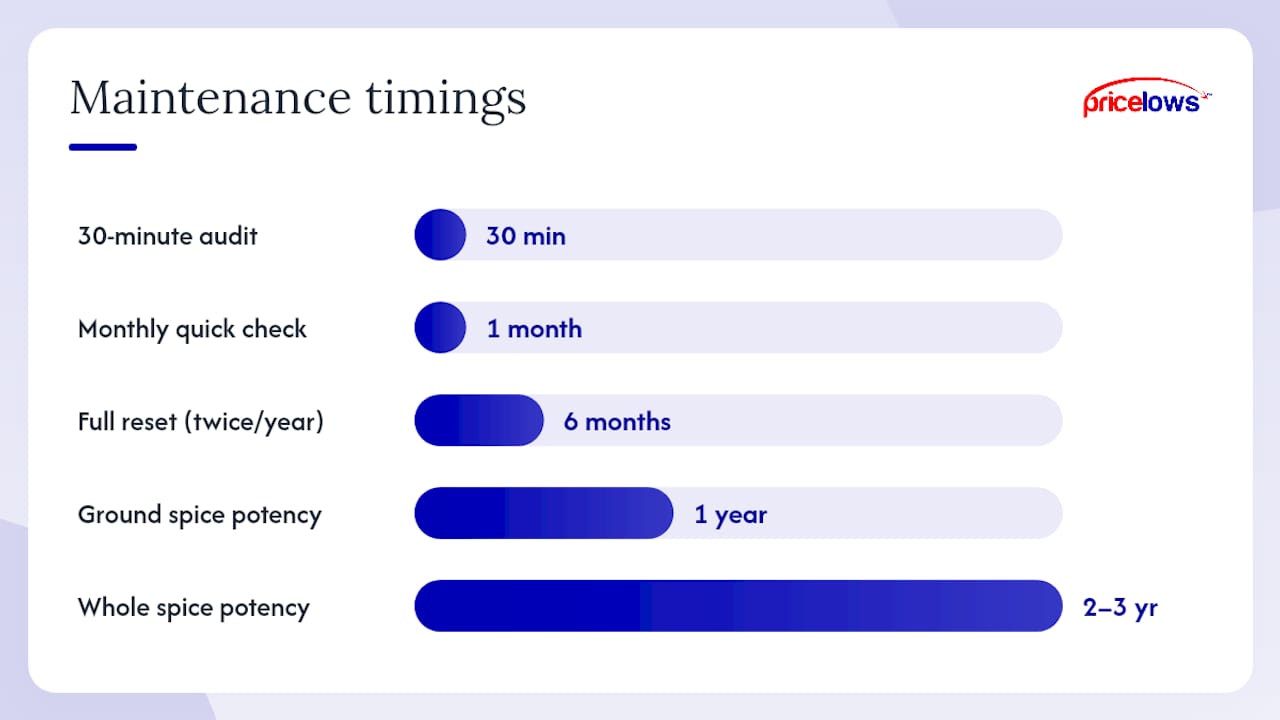
A clean system falls apart within weeks unless you build a maintenance habit. The Solo Cook’s approach starts with a 30-minute purge: toss anything expired, combine duplicate jars of the same spice, and settle on a primary home for your dozen or so most-used spices.
- Empty everything onto the counter so you can actually see what you own.
- Toss expired spices. Ground spices lose potency after about a year; whole spices last two to three years.
- Consolidate duplicates into a single jar instead of three half-empty ones.
- Assign your daily 12 to 15 to the primary zone; everything else goes to a labeled backup bin.
Pro Tip: Write the purchase date on the bottom of every new jar with a paint pen. It takes five seconds and settles the “is this still good?” debate every time.
For larger collections of spices, Apartment Therapy’s two-zone method cuts down on duplicate buys and decision fatigue by keeping the rarely used stuff out of your daily sightline entirely. Do a quick check monthly and a full reset twice a year.
PriceLows™ Products That Match These Spice Rack Ideas
Once you know which zone you’re building, matching a product to the method takes minutes.
- A rotating countertop organizer works well as a lazy-Susan-style solution for corner counters or small pantries.
- A 4-tier bamboo countertop shelf doubles as a tiered riser or a wall-mounted rack, depending on your counter space.
- A large wall-mounted rack holds up to 50 jars for cooks with big collections and open wall space.
Before ordering, measure your target zone and check that your jars match the shelf spacing.
Start Small, Measure Twice
The biggest mistake I see home cooks make isn’t picking the wrong organizer. It’s trying to build the perfect system in one afternoon instead of starting with the drawer or wall space they already have. A two-zone setup works because it’s forgiving: your daily spices stay close, everything else waits its turn.
Buy one product if you need it. Measure before you order. And build the put-back habit before you worry about alphabetizing anything. Consistency beats a perfect system every time.
— Thane Holland
Where to Buy Spice Organizers That Fit These Layouts
There are plenty of ways to sort spices without spending much, but if you’re ready to buy instead of building something from a tension rod and a prayer, Some online retailers offer organizers suitable for this kind of weekend project, often with free shipping and shipping protection plans to protect against transit damage.
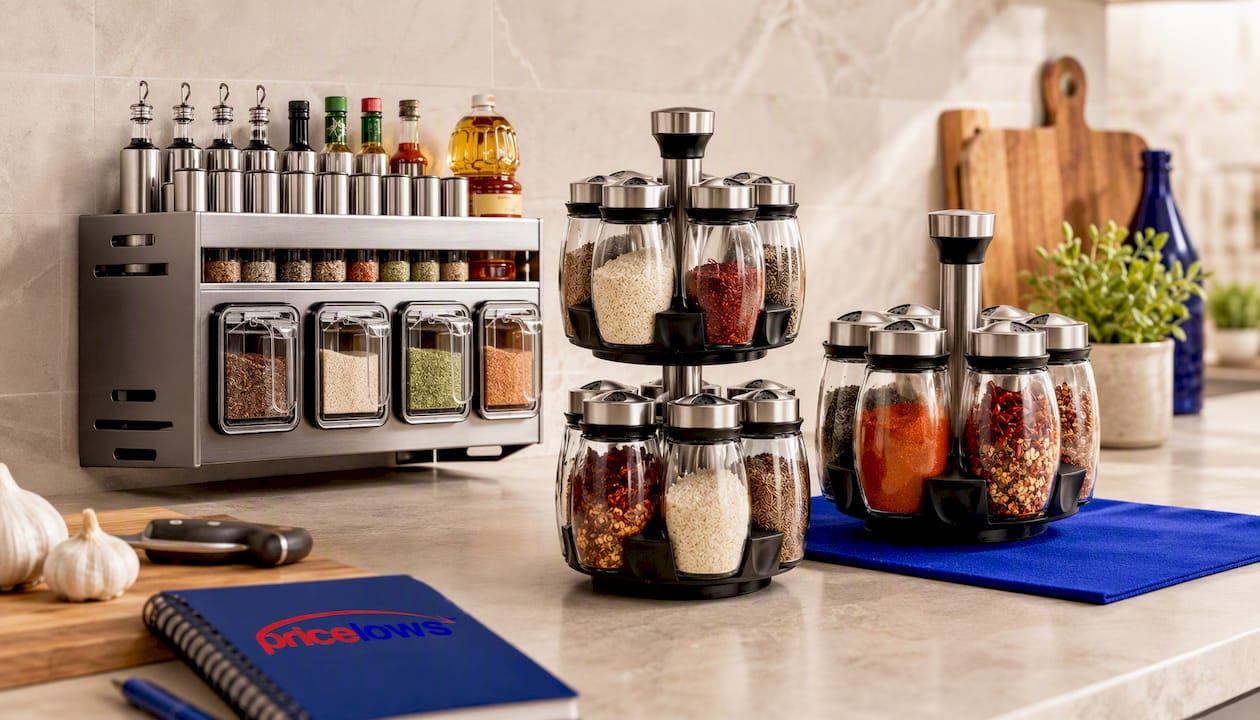
For a countertop rotating setup, the 7-piece rotating glass jar set gives you uniform jars and a rotating base in one purchase, which solves both the “mismatched containers” problem and the corner-cabinet visibility problem at once. If your collection is smaller, the single rotating jar set covers a starter daily zone without overbuying. And for kitchens where wall space beats counter space, the double-layer stainless steel wall rack keeps jars visible and off the counter entirely.
Measure your zone first, then browse the full kitchen and dining catalog to match a product to the method that actually fits your kitchen.
Sources
- Cooking herbs & spices (The Solo Cook)
- The Kitchn — Best ways to organize spices
- Apartment Therapy — organizing large spice collections
FAQ
What Is the Best Way to Organize a Lot of Spices?
For collections over 40 jars, split them into two zones: a primary set of a dozen or so daily spices in a drawer or wall rack, and a labeled backup bin for the rest, as recommended by organization experts. This cuts down on duplicate purchases and keeps your everyday cooking spot from getting cluttered.
What Are the Best Spice Organizers?
Angled drawer inserts, tiered cabinet risers, rotating lazy Susans, and magnetic tins each solve a different space problem, so the “best” one depends on whether you have drawer space, cabinet shelves, or none of the above. PriceLows™ carries rotating countertop organizers and wall-mounted racks that cover most of these needs.
How Do I Make a DIY Spice Organizer?
Mount a picture ledge shelf near the stove, decant spices into uniform mason jars, and mark the fill date on each lid. A tension rod inside a cabinet or a pegboard with S-hooks works just as well for renters who can’t drill into walls.
What Should Every Spice Rack Have?
A functional spice rack needs consistent jar sizes, readable labels facing forward or up, and enough spacing between rows to see every label at a glance. Clear containers also help you spot low supplies and light exposure, though opaque jars protect potency better if the rack sits in direct sunlight.
How Often Should I Redo My Spice Organization?
Do a quick check monthly to restock anything running low, and a full 30-minute audit twice a year to toss expired spices and consolidate duplicates. A full purge resets the system before clutter builds back up.