


Torx vs Phillips for DIY Pros: Buy Torx, T10 through T30 Fit Most Jobs
Pick Torx for anything structural, high-torque, or exposed to vibration. Pick Phillips for light-duty, field-serviceable jobs where a common driver matters more than raw grip. Phillips was engineered to cam out under too much force; Torx was engineered not to. Most toolboxes need both, but if you’re buying one new bit set this year, buy Torx first.
TL;DR:
- Torx bits are better suited for high-torque, vibration-prone, or structural applications because they offer superior grip and eliminate cam-out.
- Phillips bits are cheaper, more widely available, and still effective for light-duty tasks like furniture assembly and household repairs, but tend to wear faster under repeated high torque.
- For professional or repeated-use projects, investing in impact-rated Torx bits in the T10 to T30 range provides higher durability and performance.
- A complete bit kit should include both Phillips and Torx bits, with attention to high-quality, impact-rated materials to ensure reliability over time.
- If a screw head strips, using a rubber band, a removal bit, or cutting a new slot can often save the fastener before drilling it out entirely.
Table of Contents
- Torx vs Phillips: What Actually Separates Them
- Phillips Screws: Design, Strengths, and Limitations
- Torx Screws: Design, Strengths, and Limitations
- Torx vs Phillips Side by Side: The Axes That Actually Matter
- When to Choose Torx vs Phillips: A Decision Checklist
- Building a Bit Kit That Covers Both Drives
- Choosing Drives in Real Projects
- Get the Right Bits Without the Guesswork
- Sources
- FAQ
Torx vs Phillips: What Actually Separates Them
The short version: geometry decides everything else. Phillips uses a tapered, cross-shaped recess that lets the driver slip out once torque hits a certain threshold. Torx uses a six-lobed star that grips the full depth of the recess and refuses to slip until something breaks. That single design difference explains almost every complaint you’ve ever had about a stripped screw head.
Neither drive is objectively “better” in a vacuum. Phillips still dominates consumer electronics, furniture kits, and household repairs because it’s cheap to manufacture and every driver on the planet fits it. Torx has taken over automotive, appliance, and cabinet hardware because manufacturers got tired of warranty claims from stripped heads. The rest of this guide breaks down why, and where each one belongs in your own project list.
Phillips Screws: Design, Strengths, and Limitations
Henry Phillips patented the cross-head screw in the 1930s with one deliberate flaw built in: the tapered recess lets the screwdriver cam out at a set torque, popping free before the fastener or the assembly line tool could be damaged. That was a feature on early production lines running powered drivers with no torque control. It’s a liability everywhere else.
Phillips still makes sense for a lot of everyday work:
- Consumer electronics and small appliances (PH1 for tiny screws, PH2 for most household hardware)
- Furniture assembly and general household repairs
- Light wood screws where torque demands stay low
- Anything where “everyone has this driver in a drawer” beats performance
The weakness shows up the moment you push torque higher. Cam-out chews up both the screw head and the bit tip, and worn Phillips bits accelerate that damage fast. A stripped head with a power drill is one of the most common DIY frustrations there is.
Pro Tip: If a screw calls for Pozidriv (PZ) rather than Phillips, use the actual Pozidriv bit. The added ribs on a Pozidriv recess mean a Phillips bit fits loosely and will cam out almost immediately. Magnetize your bit holder, and if you’re using a power driver, dial in torque control with something like a torque-limiting driver rather than relying on feel.
Torx Screws: Design, Strengths, and Limitations
Torx arrived in 1967 with a six-lobed star recess, officially classified as hexalobular internal drive under ISO 10664. The lobes contact the bit through vertical walls instead of angled ramps, so torque transfers straight down the shaft instead of pushing the driver upward and out. That’s the whole trick: no upward force, no cam-out.
The practical payoff is significant:
- Far higher resistance to cam-out under sustained or repeated torque
- Better torque transfer, which matters for structural screws and lag bolts
- Longer bit life in production and high-volume settings
- Variants for specific jobs: Torx Plus for tighter tolerances, tamper-resistant pin-in Torx for security hardware, and external Torx (E-sizes) for fasteners like automotive wheel bolts
For DIY and professional work, T10 through T30 cover the overwhelming majority of jobs, from small electronics to deck screws and cabinet hardware. Because Torx tolerates real torque, run it with hardened S2 steel or impact-rated bits, especially if you’re driving with an impact driver rather than a standard drill.
Torx vs Phillips Side by Side: The Axes That Actually Matter
Cam-out resistance is the headline difference, but it’s not the only one that decides which drive wins a given job.
| Factor | Phillips | Torx |
|---|---|---|
| Cam-out resistance | Low by design; slips under torque | High; grips through vertical walls |
| Torque capacity | Limited before slip | Handles high torque cleanly |
| Bit wear / service life | Wears faster from repeated cam-out | Lasts significantly longer |
| Field availability | Nearly universal | Common, but less ubiquitous on old jobsites |
| Best-for example | Cabinet hinge screws, electronics | Deck screws, machine panels, automotive |
| Tooling cost | Lower; bits are cheap and everywhere | Slightly higher; full T-size sets cost more |
A cabinet hinge screw driven by hand doesn’t need Torx. A deck screw driven repeatedly into pressure-treated lumber, or a machine panel bolt that gets removed and reinstalled dozens of times over its life, absolutely does.
In production and repeated-use settings, Torx bits can outlast Phillips bits by roughly 5 to 10 times because there’s no cam-out grinding away the tip with every pass. Manufacturing and fastening specialists generally recommend Torx for high-torque or vibration-prone applications specifically because it eliminates the engineered cam-out that Phillips relies on. If you’re stripping heads more than once on the same project, that’s your signal to switch, not push harder.
When to Choose Torx vs Phillips: A Decision Checklist
Run through these questions before you grab a bit:
- How much torque does the fastener need? Low torque, hand-driven work stays fine with Phillips. Anything power-driven at higher torque points to Torx.
- Will this screw get removed and reinstalled repeatedly? Repeated cycles wear out Phillips heads fast; Torx holds up.
- Is vibration a factor? Decking, automotive panels, and outdoor structures favor Torx for exactly this reason.
- What’s the substrate? Hardwood, metal, and stainless fasteners generate more resistance, another point in Torx’s favor.
- Do you (or whoever services this later) have the right bit on hand? Phillips wins on universal availability; Torx requires the correct T-size.
If you’ve already stripped a Phillips head once on this job, that’s a red flag worth acting on. Field advice from experienced tradespeople is consistent here: when you hit repeated cam-out, switch drive types rather than leaning harder into the same screw.
Pro Tip: A stripped screw isn’t always a lost cause. A rubber band pressed between the bit and the head, an extraction bit, or manually cutting a new flathead slot with a rotary tool can all save a stripped fastener before you resort to drilling it out entirely.
Building a Bit Kit That Covers Both Drives
A complete kit needs PH1 through PH3 for Phillips, T10 through T30 for Torx, a magnetic bit holder, and hardened S2 or impact-rated bits if you’re running a power driver. Bit material matters more than most people realize: S2 tool steel with proper heat treatment holds up to impact drivers, while titanium coating adds corrosion resistance but doesn’t replace core hardness.
Three sets cover nearly every DIY and professional scenario:
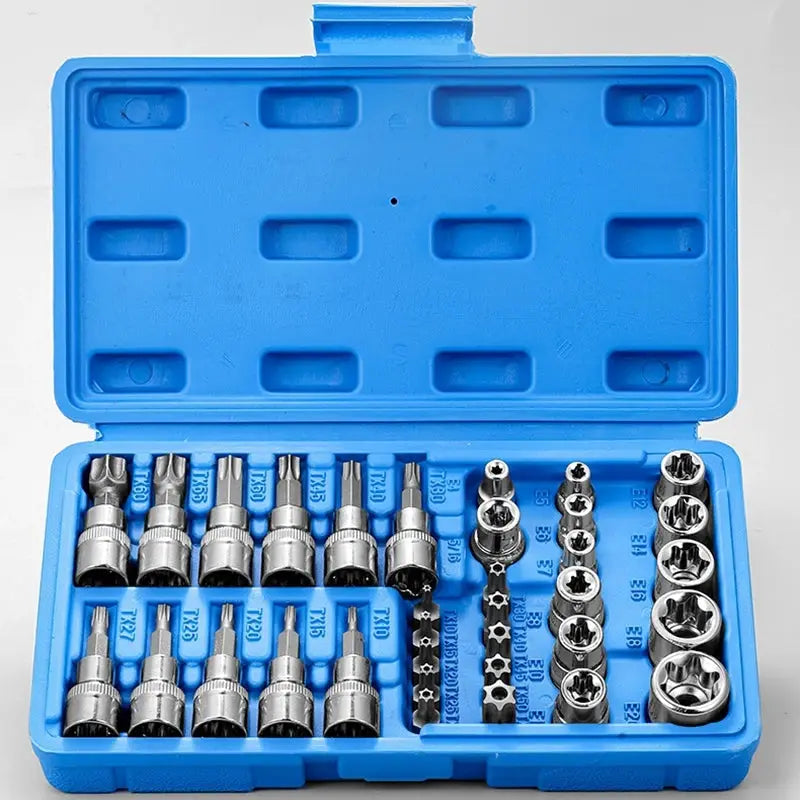
- The 34-piece Torx bit socket set covers quarter-inch, three-eighths, and half-inch drives for automotive and structural Torx work, all in one case.
- The 15-piece magnetic screwdriver bit set mixes PH2, PZ, and Torx bits in hardened S2 steel, which is the closest thing to a one-kit answer for mixed jobsites.
- The titanium-coated 65mm PH2 bits suit finish carpentry and repeat Phillips work where corrosion resistance extends bit life.
Check case organization and magnetization before buying. A labeled case saves more time than any single bit ever will.
Choosing Drives in Real Projects
Convenience wins arguments in the moment, but performance wins them over the life of a build. Standardizing on Torx for anything structural, then keeping a Phillips set for the small stuff, cuts down on stripped heads and last-minute hardware store runs. Mark your bit cases by size. You’ll thank yourself the third time you reach for T25 in a hurry.
— Thane Holland
Get the Right Bits Without the Guesswork
The bit selection advice here follows the logic outlined in the guide: buy for the torque you’ll actually put on a fastener, not the driver that happens to be in the drawer. That’s a meaningful edge over grabbing whatever mismatched bit set is on sale at a big-box store, because a mismatched kit means half your sizes are missing right when you need them.
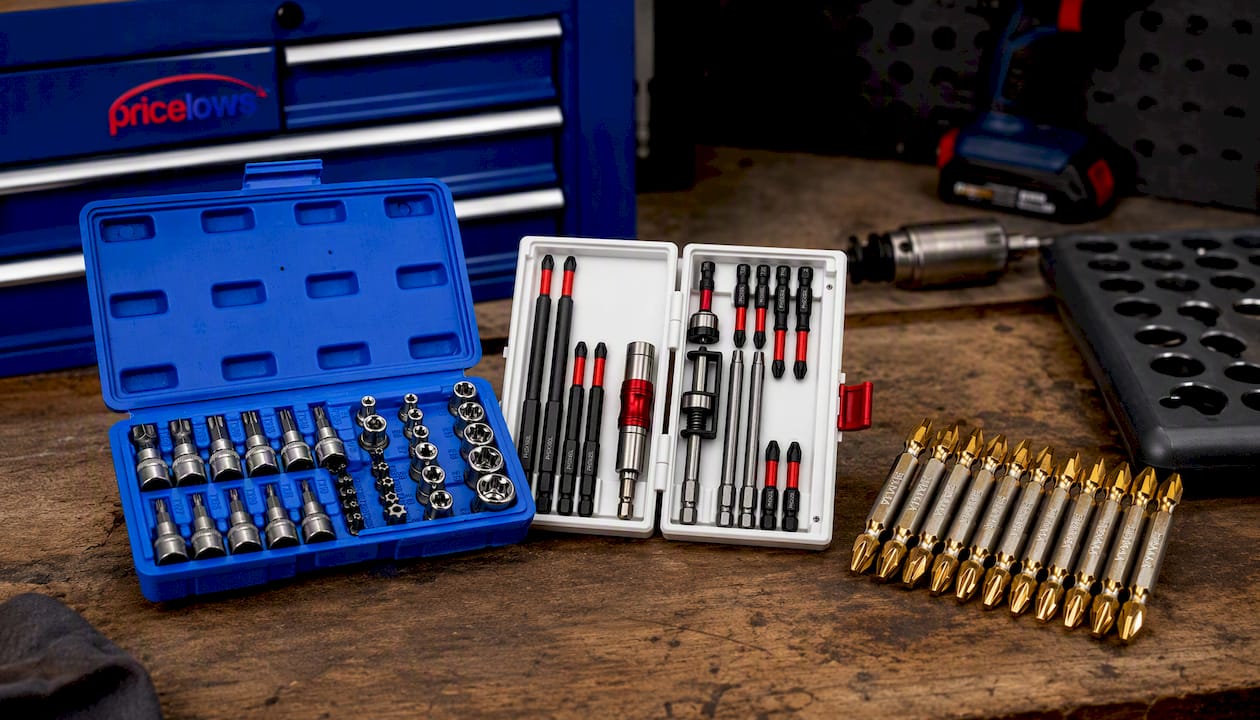
The 34-piece Torx bit socket set suits anyone standardizing on Torx for automotive or structural work. DIYers who want one kit that handles nearly everything should start with the 15-piece magnetic bit set, which mixes Phillips, Pozidriv, and Torx in hardened steel. For finish work that needs to resist rust over years of use, the titanium-coated PH2 bits are the better pick.
Browse the full tool and hardware selection and get the right bits on the way before your next project stalls out on a stripped screw.
Sources
- Torx screws vs. Phillips: benefits of high-torque drives — Component Solutions Group
- Driver bit selection for industrial fastening tasks — Industrial Monitor Direct
- Henry F. Phillips — Wikipedia
FAQ
Can I use a Phillips screwdriver on a Torx screw?
No. A Phillips bit doesn’t match the six-lobed Torx recess, so it will slip and likely damage the screw head. Use the correctly sized Torx bit, typically somewhere in the T10 to T30 range for household and automotive work.
Can you use an Allen key instead of Torx?
Not reliably. A hex Allen key only contacts a Torx recess at a few points instead of all six lobes, so it slips under torque and can round out the head. A properly sized Torx bit is the only fix that transfers force cleanly.
How do you remove a Torx screw without a Torx bit?
A flathead screwdriver wedged into one lobe, a rotary tool used to cut a new flat slot, or an extraction bit designed for stripped or unusual heads can all work in a pinch. None of these substitute for simply carrying a full Torx bit set on the next job.
Why are we still using Phillips screws?
Phillips remains cheap to manufacture, and nearly every screwdriver and drill bit set on the market includes it, which makes it the default for low-torque consumer goods. Its intentional cam-out behavior, designed in the 1930s, also still protects lightweight assemblies from over-torquing during manual or lightly powered assembly.
Is Torx better than Phillips overall?
Torx outperforms Phillips on torque transfer and cam-out resistance, making it the stronger choice for structural, high-torque, or vibration-heavy work. Phillips still holds its ground for light-duty, field-serviceable tasks where universal driver availability matters more than raw grip.