


Types of Meal Prep Kitchen Tools: 2026 Guide
TL;DR:
- Effective meal prep relies on leakproof storage containers, a digital scale, and versatile appliances to save time and reduce waste. Specialized utensils like garlic peelers and immersion blenders further streamline repetitive tasks, making batch cooking more efficient. Building your kit gradually based on space, cooking frequency, and routine helps avoid clutter and maximizes practicality.
Meal prep kitchen tools are devices and appliances designed to simplify, organize, and accelerate home cooking so you spend less time in the kitchen each day. The four core categories are storage containers, measurement tools, multi-functional appliances, and specialized utensils. Each category solves a different problem. Together, they form a complete meal prep equipment guide that covers everything from portioning raw ingredients to storing finished meals safely. Whether you are new to batch cooking or refining a system you have used for years, knowing which types of meal prep kitchen tools to prioritize will save you real time and money.
1. what are the key types of storage tools for meal prep?
High-quality leakproof storage is the foundation of any successful meal prep system. Without it, prepared food spoils faster, portions get lost in the fridge, and your effort goes to waste.
The main storage categories are:
- Leakproof glass containers with secure latch lids and transparent sides for food visibility
- Reusable silicone bags for flexible, freezer-safe storage of sauces, grains, and snacks
- Vacuum sealers for long-term storage and sous vide cooking. Brands like Nesco and Anova offer double-seal technology that extends shelf life significantly.
- Stackable bins and organizers to maximize fridge and pantry space
Material choice matters. Glass containers deliver superb oven-to-fridge versatility but are heavier and can break. BPA-free silicone and high-grade plastic containers suit commuters who need lightweight, leakproof transport. Stackability and size variety are non-negotiable. A set with three or four container sizes handles everything from a single portion to a full batch.
You can also add kitchen hooks and S-hooks to hang utensils and free up drawer space, which keeps your prep area clear and functional.
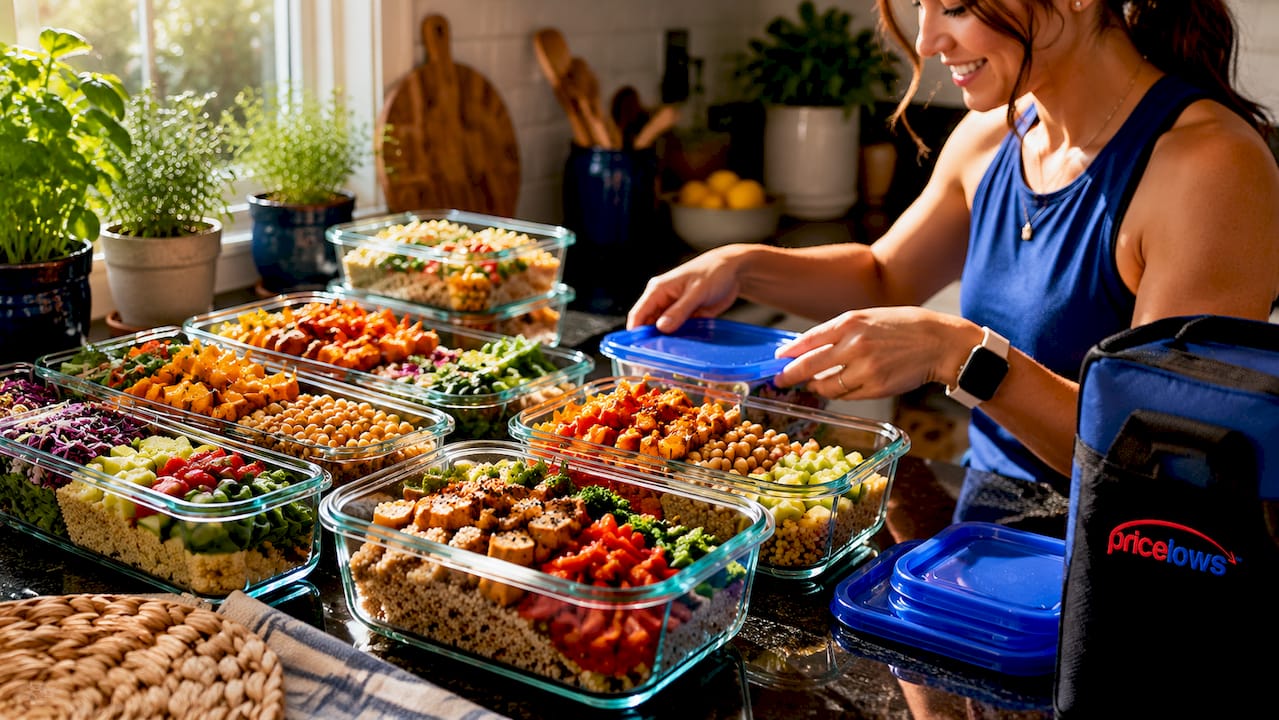
Pro Tip: Choose containers labeled both oven-safe and freezer-safe. That single feature eliminates the need to transfer food between dishes, cutting cleanup time in half.
2. which measurement tools improve accuracy and portion control?
A digital kitchen scale is the single most impactful measurement tool for meal prep. Digital scales improve recipe consistency and portion control accuracy by 15–20% compared to volumetric cups. That gap matters when you are cooking six portions of the same recipe and need each one to be identical.
The tare function is the feature to prioritize. It lets you zero out the weight of a bowl or container, so you measure only the ingredient. Scales with 1-gram increments handle both bulk grains and small spice quantities without switching tools.
Measuring spoons and cups still earn a place in the kit. They work well for liquids and quick volume estimates when precision is less critical. The best approach is to use a scale for proteins, grains, and produce, then reach for spoons for spices and extracts.
Pro Tip: Use your scale during batch prep to log the weight of each portion. This makes nutrition tracking accurate without any extra apps or guesswork.
3. how do multi-functional appliances optimize meal prep?
All-in-one cooking appliances combine pressure cooking, air frying, steaming, and slow cooking into a single unit. That combination cuts both countertop clutter and total cooking time for batch sessions.
All-in-one appliances range from budget $400 models to premium $1,699 systems in 2026. The difference is not just price. High-end models include built-in scales, recipe databases with over 100,000 recipes, and multi-level steaming. Bowl capacities run from 2.2 to 3.5 liters. For a family of four, a 3.5-liter capacity handles a full week of batch cooking in one session.
The feature count on multi-cookers can be misleading. A unit with 12 preset buttons is not automatically better than one with 6 if the 6 are deeply integrated with guided cooking and accurate temperature control. Focus on the functions you will actually use every week.
| Appliance Type | Best For | Price Range | Key Limitation |
|---|---|---|---|
| Multi-cooker/pressure cooker | Large batch cooking | $80–$230 | Requires counter space |
| All-in-one cooking system | Guided recipes, precision | $400–$1,699 | Higher cost |
| Personal blender | Single-serve smoothies, sauces | $60–$100 | Small capacity |
| Food processor | Chopping, slicing, pureeing | $50–$200 | Bulky to store |
4. what specialized utensils make meal prep faster?
Specialized gadgets reduce what cooking experts call micro-friction. Reducing micro-friction in small repetitive cooking steps forms the real advantage of targeted tools for sustaining a meal prep habit long-term. When peeling garlic or chopping vegetables takes 30 seconds instead of 3 minutes, you are far more likely to actually do it.
The most impactful specialized utensils include:
- Chef’s knives and boning knives for precise cuts on proteins and produce
- Vegetable choppers for uniform dicing without knife skills
- Immersion blenders for soups, sauces, and dressings directly in the pot
- Garlic peelers (silicone tube style) that cost as little as $7 per unit
- Silicone baking cups for portioning snacks, egg bites, and muffins without paper liners
Sharp knives and peelers reduce prep time dramatically and improve safety by reducing slips and uneven cuts. A dull knife requires more force, which increases the chance of the blade slipping. Keeping your knives sharp with a quality sharpener is not optional. It is the single maintenance task that protects both your food and your fingers.
Pro Tip: A stainless steel cutting board resists bacteria better than wood and cleans faster. Pair it with a sharp chef’s knife for the most efficient prep surface combination.
5. how to choose the best meal prep tools for your kitchen
The right meal prep accessories depend on three factors: your kitchen size, how often you cook in batches, and your budget. Getting this wrong leads to gadget clutter and tools you never use.
Start with these questions before buying anything:
- How much counter and cabinet space do you have? Large 8-quart multi-cookers need a permanent spot to justify the purchase. If you cannot leave it out, you will not use it.
- How many people are you prepping for? Solo cooks benefit from personal blenders around $80 and compact containers. Families need larger batch appliances and more storage volume.
- What is your weekly cooking frequency? If you prep once a week, invest in storage first. If you cook daily, a quality multi-cooker pays off faster.
| Tool Category | Budget Pick | Premium Pick | Best For |
|---|---|---|---|
| Storage containers | BPA-free plastic sets | Leakproof glass with latch lids | All meal preppers |
| Measurement | Basic digital scale | Scale with tare and backlit display | Batch cooking and nutrition tracking |
| Cooking appliance | Pressure cooker/air fryer combo | All-in-one guided cooking system | Weekly batch sessions |
| Cutting tools | Ceramic peeler and basic knife | German steel chef’s knife set | Daily prep cooks |
Build your kit progressively. Start with a solid set of storage containers and a digital scale. Add a multi-cooker once your prep habit is consistent. Then layer in specialized gadgets as specific friction points appear in your routine. This approach prevents overspending and keeps your kitchen functional rather than cluttered.
Key takeaways
The most effective meal prep kitchen setup combines leakproof storage, a digital scale, one versatile cooking appliance, and sharp cutting tools chosen to match your kitchen size and cooking frequency.
| Point | Details |
|---|---|
| Storage is the foundation | Leakproof, stackable containers in multiple sizes prevent spoilage and keep portions organized. |
| Digital scales beat cups | Scales improve portion accuracy by 15–20% and support consistent batch cooking results. |
| Match appliances to your space | Large multi-cookers only make sense if you have permanent counter space to keep them accessible. |
| Specialized gadgets reduce friction | Small tools like garlic peelers and immersion blenders remove repetitive steps that kill prep habits. |
| Build your kit gradually | Start with storage and measurement tools, then add appliances and gadgets as your routine grows. |
The tool that changed how i think about meal prep
I spent years chasing the wrong end of the meal prep problem. I bought a large multi-cooker, a high-end food processor, and a full set of glass containers before I had a consistent prep routine. Most of it sat unused for months. The multi-cooker lived in a cabinet because pulling it out felt like a project.
What actually moved the needle was starting small. A digital scale and two sets of leakproof containers changed my weekly cooking more than any appliance. Once I was prepping consistently, I added a personal blender for sauces and a silicone garlic peeler. Those two items cost under $30 combined and saved me more time per session than the $200 food processor ever did.
The uncomfortable truth about kitchen tools for meal prep is that most people overbuy before they have a routine. A gadget cannot create a habit. It can only support one that already exists. My advice: nail the storage and measurement side first. When you hit a specific friction point, like spending 10 minutes peeling garlic every Sunday, that is when you buy the targeted tool to solve it.
Sharp knives are the one exception to the “start small” rule. A quality chef’s knife and a reliable sharpener belong in your kit from day one. Everything else is negotiable.
— Thane Holland
Stock your kitchen with PriceLows™ meal prep essentials
PriceLows™ carries a focused selection of kitchen organization and prep tools built for home cooks who want real value without overpaying.

From adjustable five-tier storage racks that keep your containers and gadgets within reach, to durable knife sharpeners that keep your cutting tools performing at their best, PriceLows™ covers the tools that matter most. Every order ships free with a 100% shipping protection plan, so you shop with confidence. Browse the full range at PriceLows™ and build a kitchen setup that actually works for your life.
FAQ
What are the most important meal prep kitchen tools to start with?
Start with leakproof storage containers in multiple sizes and a digital kitchen scale. These two categories solve the most common meal prep problems: food spoilage and inconsistent portions.
Are glass or plastic containers better for meal prep?
Glass containers are better for oven-to-fridge use and long-term durability. BPA-free plastic and silicone containers are lighter and better suited for transport and on-the-go meals.
How much should i spend on a multi-cooker for meal prep?
Multi-functional pressure cooker and air fryer combos average around $230 and cover most batch cooking needs. Premium all-in-one systems run $400–$1,699 and add guided cooking features worth the cost only if you cook daily.
Do i really need a digital scale for meal prep?
A digital scale improves portion accuracy by 15–20% compared to measuring cups. For anyone tracking nutrition or cooking consistent batch recipes, it is the highest-value measurement tool you can buy.
What specialized gadgets save the most time during meal prep?
Garlic peelers, immersion blenders, and vegetable choppers remove the most repetitive steps in a typical prep session. These tools start at $7 and deliver time savings that far exceed their cost.