


What Does Modular Shelving Mean for Your Home?
TL;DR:
- Modular shelving uses interchangeable components to create flexible storage that can expand and adapt easily. It includes uprights, shelves, brackets, and connectors designed to fit together without custom tools, suitable for various spaces. These systems are portable, reconfigurable, and more sustainable than fixed units, making them ideal for changing storage needs.
Modular shelving is defined as a storage system built from standardized, interchangeable components that you can assemble, rearrange, and expand without replacing the entire unit. Unlike fixed built-in shelving, modular systems use uprights, brackets, shelves, and connectors that click or bolt together in multiple configurations. Consumer-grade systems typically handle 20–50 lbs per shelf, while professional-grade units exceed 100 lbs per shelf. That range makes modular shelving practical for everything from a home office bookcase to a garage tool wall. PriceLows™ carries storage solutions built around this same principle of flexibility and lasting value.
What does modular shelving mean in terms of components and types?
A modular shelving system has five core parts: uprights, horizontal shelves, brackets, connectors, and base feet or wall anchors. Each part is sized to a standard dimension so pieces from the same system fit together without custom cutting or special tools. Design experts characterize modular shelving as an architectural system, not just furniture, because it can adapt to sloped ceilings, corner nooks, and irregular wall layouts.
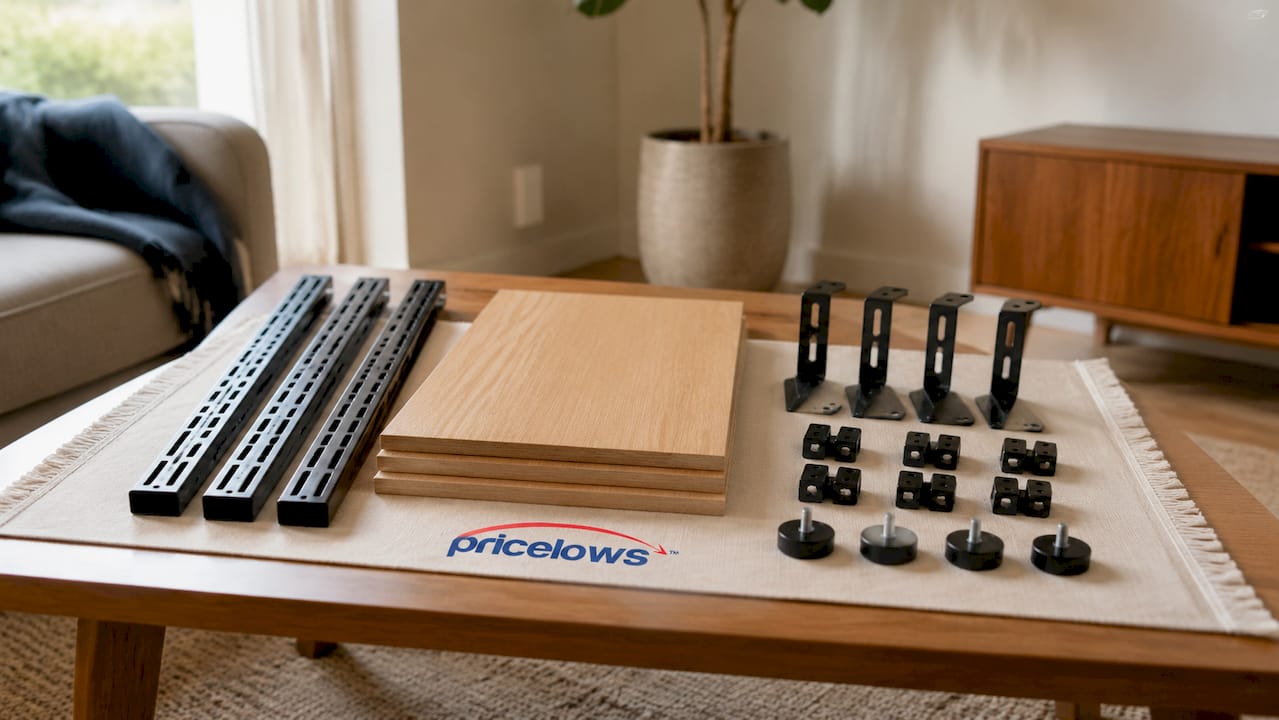
The three most common types are freestanding units, wall-mounted systems, and corner modules. Freestanding units stand on their own feet and move easily. Wall-mounted systems anchor to studs and free up floor space, which makes them a strong choice for small rooms. Corner modules connect two runs of shelving at a 90-degree angle, turning dead corner space into usable storage.
| Component | Function |
|---|---|
| Uprights | Vertical posts that set the height and anchor the structure |
| Horizontal shelves | The load-bearing surfaces where items rest |
| Brackets | Connect shelves to uprights at adjustable heights |
| Connectors | Join separate units side by side or at corners |
| Base feet / wall anchors | Stabilize the system on the floor or against a wall |
Pro Tip: Before buying, confirm that all pieces in a system share the same hole-pitch spacing. That single measurement determines whether you can mix shelf heights freely or are locked into fixed increments.
What are the key benefits of modular shelving systems?
Modular shelving beats fixed shelving on four practical measures: flexibility, cost over time, portability, and sustainability. You can reconfigure the layout as your storage needs change without buying a new unit. That adaptability is why renters and growing businesses consistently prefer modular systems over built-in alternatives.
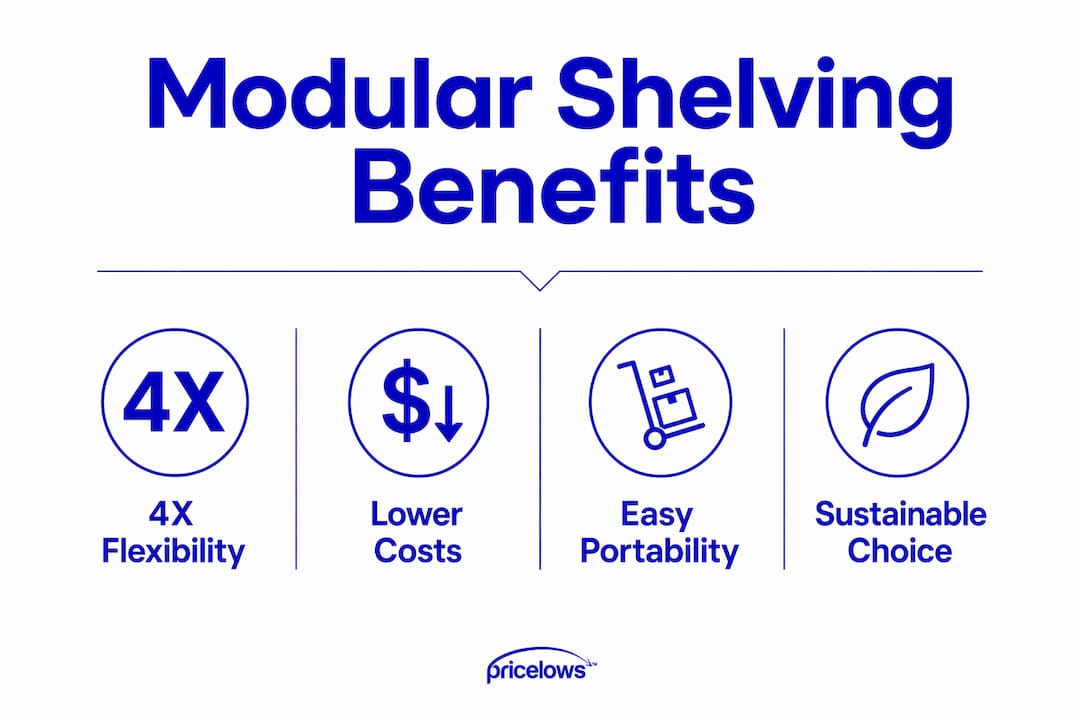
The portability benefit is real and often underestimated. Fixed shelving stays with the house when you move. Modular shelving moves with the owner, making it a personal asset that retains value across multiple homes or offices. That portability also reduces waste because you reuse the same components rather than sending a built-in unit to a landfill.
Key benefits at a glance:
- Reconfigurability. Adjust shelf heights or add new sections as your collection or inventory grows.
- Cost efficiency. Buy only the sections you need now, then expand later instead of paying for a full installation upfront.
- Portability. Disassemble and take the system with you when you relocate.
- Sustainability. Reusing components reduces material waste compared to replacing entire fixed units.
- Load capacity options. Match the system to the weight of your items, from lightweight books to heavy garage equipment.
Pro Tip: When comparing prices, calculate the cost per shelf rather than the total system price. A higher upfront cost per shelf often signals better load ratings and longer product life.
How do you use modular shelving effectively for space management?
Effective use of a modular system starts with measuring before you buy. Write down the room’s width, height, and depth, then sketch two or three possible layouts on paper. That 10-minute step prevents buying too many uprights or shelves that do not fit the wall run you had in mind.
Follow this sequence when setting up a new system:
- Map your storage needs. Group items by weight and frequency of use. Heavy items go on lower shelves; frequently accessed items go at eye level.
- Choose the right type. Wall-mounted systems work best for small spaces because they keep the floor clear. Freestanding units suit garages and utility rooms where you need to move the shelving occasionally.
- Assemble from the bottom up. Set base feet or wall anchors first, then build upward. This keeps the structure stable during assembly.
- Distribute weight evenly. Spread heavy items across multiple shelves rather than stacking them all on one. Industry guidance recommends derating the manufacturer’s weight limit by 20% to account for connector wear over time.
- Plan for expansion. Leave one or two bracket slots open on each upright so you can add shelves later without disassembling the whole unit.
Mixing components from different brands causes alignment problems and weakens structural integrity. Stick to one manufacturer’s ecosystem when expanding, and check connector compatibility before ordering additional parts. A DIY garage shelving guide can walk you through the full planning and build process if you are starting from scratch.
For small spaces specifically, a wall-mounted wire rack delivers five tiers of storage without consuming any floor area, which is the core advantage of modular shelving for small spaces.
What maintenance and care does modular shelving require?
Modular shelving needs only basic upkeep to stay functional and attractive for years. Clean shelves with mild dish detergent and a soft cloth, then rinse thoroughly to protect the finish. Avoid abrasive pads or harsh chemical sprays, which strip coatings and accelerate rust on metal components.
Beyond cleaning, run a quick structural check every few months:
- Tighten all connectors. Vibration from daily use gradually loosens bolts and push-fit joints.
- Inspect brackets for bending. A bent bracket signals overloading. Replace it before the shelf fails.
- Check uprights for plumb. A unit that leans puts uneven stress on connectors and reduces safe load capacity.
- Protect metal finishes. Apply a thin coat of paste wax to bare metal sections in humid areas like garages or basements to prevent corrosion.
Disassembly is straightforward on most systems. Work from the top down, removing shelves before brackets and brackets before uprights. Label each part with masking tape and a marker if you plan to store the unit for more than a few weeks. That small step saves significant time when you reassemble.
Key Takeaways
Modular shelving is the most adaptable storage investment you can make because it reconfigures, expands, and moves with you rather than staying fixed to one room or property.
| Point | Details |
|---|---|
| Core definition | Modular shelving uses interchangeable parts that assemble, expand, and rearrange without replacing the full unit. |
| Load capacity matters | Consumer systems handle 20–50 lbs per shelf; professional systems exceed 100 lbs. Match the system to your items. |
| Derate weight limits | Apply a 20% safety margin below the manufacturer’s rated capacity to account for connector wear over time. |
| Brand compatibility is critical | Mixing components from different brands causes alignment failures. Stay within one manufacturer’s ecosystem. |
| Portability adds value | Modular shelving moves with you when you relocate, unlike fixed built-ins that stay with the property. |
Why modular shelving changed how I think about storage
I spent years buying fixed shelving units for every room, convinced that a permanent solution was a better solution. The problem was that my needs kept changing. A bookcase became a media console, a media console became a craft storage wall, and each transition meant buying something new and throwing out something old.
Switching to a modular system was the decision that stopped that cycle. The same uprights I used in my home office now form the backbone of a garage storage wall. I added two extra shelf levels when I started a woodworking hobby, and the whole reconfiguration took about two hours on a Saturday morning. No contractor, no new purchase, no waste.
The one mistake I see people repeat is buying the cheapest system available and then being surprised when it sags under real-world loads. Spend a little more on a system with a documented load rating and steel connectors. That investment pays back every time you move or reorganize, because the system comes with you and holds up to the transition. Modular shelving is not a furniture purchase. It is a long-term organizational infrastructure decision.
— Thane Holland
Storage solutions worth pairing with your modular setup
Modular shelving creates the structure. The right storage accessories fill it out and make the system work harder for your space.

PriceLows™ carries a range of storage products built to complement modular shelving setups in garages, kitchens, and utility rooms. The rolling garage storage cabinet with a lockable steel chest pairs directly with open shelving runs, giving you secure enclosed storage alongside your open shelves. For adjustable, mobile storage that fits alongside any modular unit, the adjustable wire shelving unit with wheels moves where you need it. PriceLows™ offers free shipping and a 100% shipping protection plan on every order, so your storage investment arrives safely and at a price that makes sense for your budget.
FAQ
What does modular shelving mean exactly?
Modular shelving is a storage system made from standardized, interchangeable components such as uprights, brackets, and shelves that you can assemble, expand, and rearrange without replacing the entire unit.
How much weight can modular shelves hold?
Consumer-grade modular shelving typically holds 20–50 lbs per shelf, while professional-grade systems exceed 100 lbs per shelf. Always derate the manufacturer’s stated limit by 20% for long-term safety.
Can I mix components from different modular shelving brands?
Mixing brands causes alignment problems and weakens structural integrity. Stay within one manufacturer’s system to maintain connector compatibility and safe load distribution.
How long does it take to assemble a modular shelving system?
A moderately complex modular shelving configuration typically takes up to a weekend to complete, depending on your experience level. Most systems require no special tools.
Is modular shelving a good choice for small spaces?
Wall-mounted modular systems are the best option for small spaces because they keep the floor clear and use vertical space efficiently. A five-tier wall-mounted unit can store as much as a large freestanding unit while occupying zero floor area.