


Why Pegboards Suit Garage Walls for Smart Storage
TL;DR:
- Pegboards turn unused garage wall space into organized tool storage and are easy to install.
- They come in materials like hardboard, metal, and PVC, with metal offering the best durability in humid environments.
Pegboards are the most effective garage wall storage solution for homeowners who want to turn empty vertical space into a fully organized tool area. A standard pegboard system mounts directly to your garage wall, holds hooks, bins, and shelves, and keeps every tool visible and within reach. The core reasons why pegboards suit garage walls come down to three factors: they use space that would otherwise sit empty, they adapt to any tool collection, and they leave minimal damage when you move. Whether you rent or own, a pegboard system gives you a working garage without a major renovation.
Why pegboards suit garage walls better than other storage options
Pegboards win on garage walls because they convert dead vertical space into active storage without consuming floor area. A typical two-car garage has 8–10 feet of wall height, and most of that space goes unused. A single 4x8 foot pegboard panel reclaims 32 square feet of storage without touching the floor.
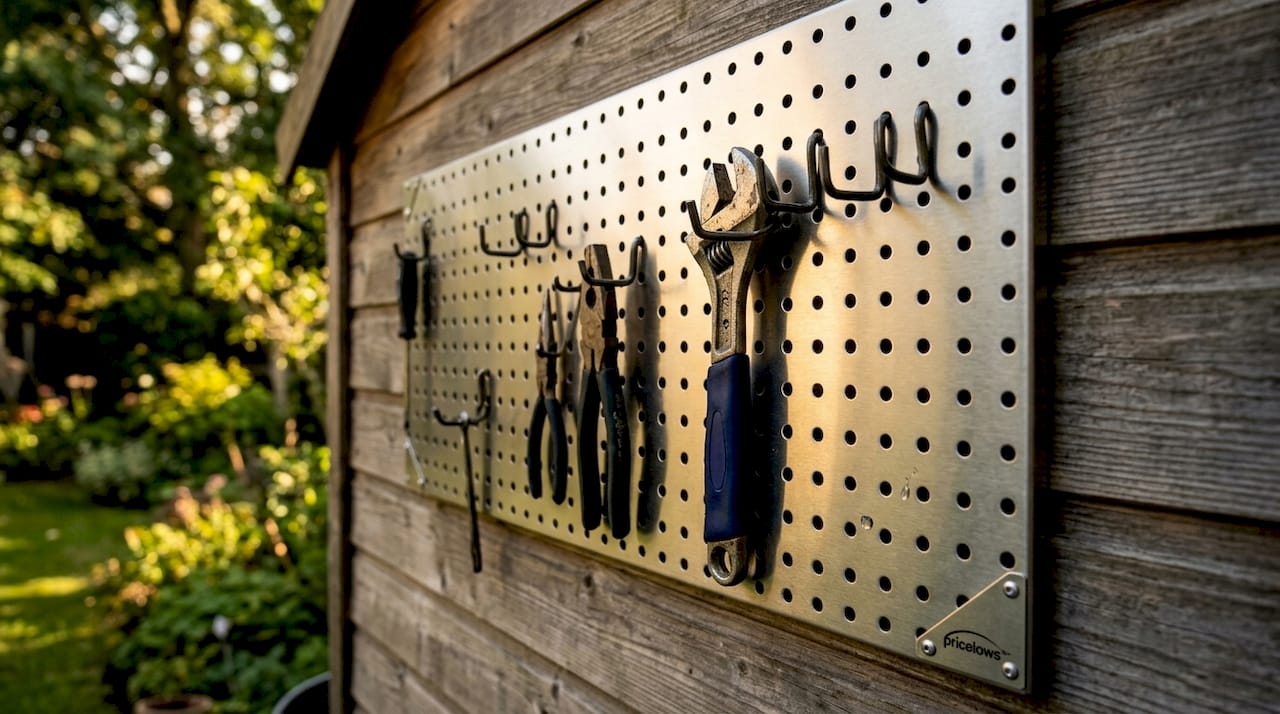
The renter-friendly advantage is real. Pegboards have the smallest screw-hole pattern among all wall storage systems, making them easy to patch with spackle on move-out. That means you get a full garage wall storage solution without voiding your lease or losing your deposit.
Pegboards also beat fixed shelving on flexibility. You can reposition hooks and bins in minutes without any tools, which matters when your project changes from woodworking to automotive work. No other wall storage system matches that level of adaptability at the same price point.
How pegboard materials affect suitability and durability in garages
Material choice is the single most important decision you make when selecting a pegboard. The three main options are hardboard, metal, and PVC, and each performs very differently in a garage environment.
Traditional hardboard (the tan or brown 1/8-inch panels sold at most hardware stores) costs the least upfront. The problem is moisture. Hardboard pegboards absorb garage humidity, swell, and warp, reducing hole strength by up to 60% within three years. That hole deformation causes hooks to pop out under load, which is a real safety risk when you hang heavier tools.
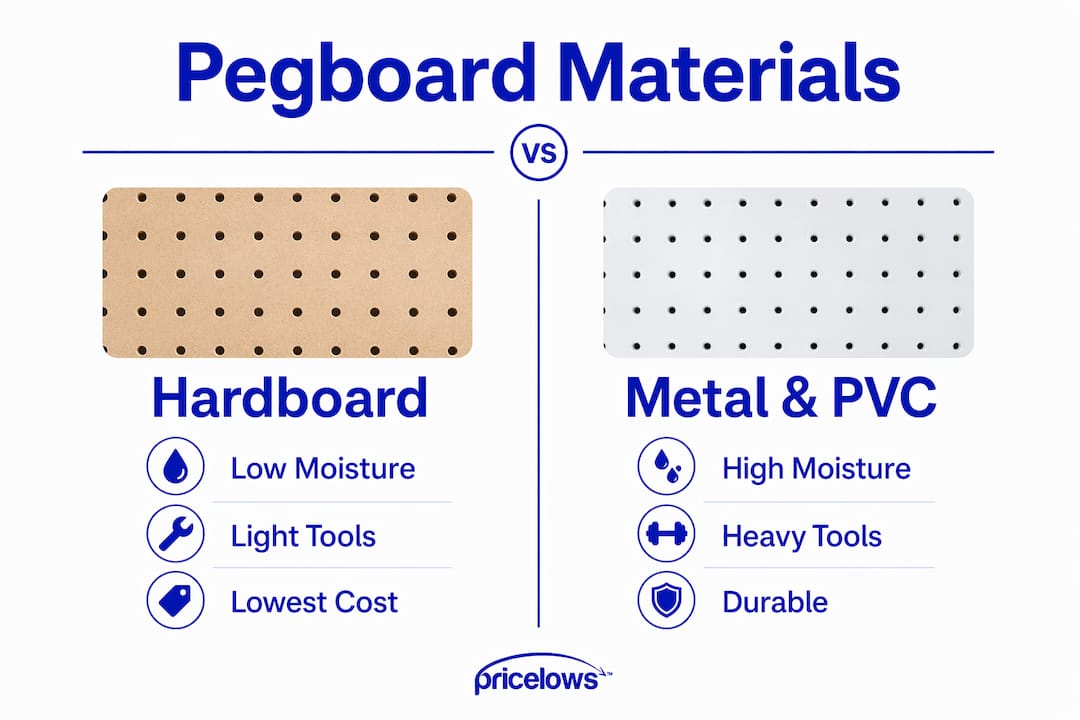
Metal pegboards, typically 20-gauge steel, solve every problem hardboard creates. 20-gauge steel panels resist moisture, hold their shape, and can support up to 200 lbs per panel. That capacity makes them a permanent solution for any garage. Experts at This Old House warn against fiberboard pegboards in unconditioned garages and recommend metal or PVC instead.
PVC pegboards sit between the two. They resist moisture well, weigh less than steel, and work well in damp or unheated garages. They do not match metal for raw load capacity, but they handle most residential tool collections without issue.
| Material | Moisture resistance | Load capacity | Best for |
|---|---|---|---|
| Hardboard | Low | Light tools under 15 lbs | Dry, conditioned garages |
| Metal (20-gauge steel) | High | Up to 200 lbs per panel | All garages, heavy tools |
| PVC | High | Moderate residential loads | Damp or unheated garages |
Pro Tip: If your garage is unheated or has no climate control, skip hardboard entirely. The moisture damage will cost you more in replacements than the upfront savings are worth.
Installation essentials for maximizing pegboard performance
Good installation determines whether your pegboard holds up for years or fails in months. Follow these steps to get it right the first time.
- Locate your studs. Anchor the pegboard directly to wall studs for maximum load capacity. Drywall anchors alone will not hold a fully loaded board safely.
- Space the board off the wall. Proper installation requires 1/4 to 3/4 inch spacing between the pegboard and the wall. Without this gap, hooks cannot engage fully and will pop out under weight.
- Use furring strips or built-in flanges. Thin wood furring strips create the required gap on hardboard and PVC systems. Many metal pegboard systems include built-in flanges that eliminate the need for extra framing.
- Choose slotted or square-hole systems for heavy tools. Slotted pegboard systems lock hooks securely and prevent pop-out under heavy loads. Standard round-hole friction-fit hooks fail more often when you remove and reinsert tools frequently.
- Plan your layout before drilling. Lay the board flat, arrange your hooks and accessories, then transfer the stud locations to the wall.
A 4x8 foot hardboard sheet takes 30–45 minutes to install when anchored to studs. Metal panels with built-in flanges often go up even faster. This is a single-afternoon project with a permanent payoff.
Pro Tip: Trace each tool’s outline on the pegboard with a marker after hanging it. That silhouette tells you instantly when something is missing, which keeps your garage organized without any extra effort.
Organizational benefits of pegboards for garage tool storage
Pegboards change how you work in your garage, not just how it looks. The benefits of pegboards for garage organization go beyond tidiness.
- Visible storage reduces search time. Moving tools to a pegboard creates a visual cue for every item’s location. You stop digging through drawers and start reaching directly for what you need.
- Defined spots encourage return habits. When every tool has a labeled or outlined spot, you naturally put it back. That habit is what keeps a garage organized long-term, not a single cleanup session.
- Accessories multiply your options. Hooks, cup holders, small bins, and shelf brackets all mount to the same board. A pegboard cup organizer holds screwdrivers, pencils, or drill bits in seconds. You can reconfigure the whole setup in an afternoon as your projects change.
- Vertical storage frees your workbench. Tools on the wall mean tools off the bench. A clear workbench surface directly improves how efficiently you work on any project.
- Pegboards support any hobby. Woodworking, automotive, gardening, and cycling gear all organize well on a pegboard. The same board that holds wrenches today can hold garden trowels next season.
A clean pegboard layout also delivers a psychological benefit. Research on tool organization and workflow shows that a tidy, visible workspace motivates people to maintain order over time. The board itself becomes a system that reinforces good habits.
Choosing the right pegboard system for your garage
Selecting the right system means matching material, capacity, and accessories to your specific garage and how you use it.
- Assess your garage environment first. An unheated, humid garage demands metal or PVC. A dry, climate-controlled garage can work with hardboard if your tools are light.
- Know your tool weights. Matching pegboard material to tool weight prevents hook failures and extends the board’s life. Weigh your heaviest tools before buying.
- Plan your layout by zone. Group tools by task: hand tools near the workbench, power tool accessories near the outlet, seasonal items at the edges. Zone planning makes the board faster to use.
- Budget for the full system. The board itself is only part of the cost. Quality hooks, bins, and shelf brackets add up. Metal systems cost more upfront but require far less replacement over five or ten years.
For a broader look at how pegboards fit into a complete garage setup, the 2026 garage storage guide at PriceLows™ covers every major system side by side.
Key Takeaways
Pegboards suit garage walls because they convert unused vertical space into flexible, visible tool storage with minimal installation effort and wall damage.
| Point | Details |
|---|---|
| Material determines durability | Choose metal or PVC for humid garages; hardboard degrades within three years in damp conditions. |
| Spacing is non-negotiable | Install the board 1/4 to 3/4 inch off the wall so hooks engage fully and hold weight safely. |
| Visible storage builds habits | Defined tool spots create visual cues that encourage returning items and maintaining order. |
| Accessories complete the system | Hooks, bins, and cup organizers turn a bare board into a fully customized tool station. |
| Budget for longevity | Metal systems cost more upfront but eliminate replacement costs over five or more years. |
What I’ve learned from setting up pegboards the hard way
I’ve installed pegboards in three different garages, and the biggest mistake I made early on was treating the board as the solution. It is not. The board is just the foundation. The hooks, bins, and layout are what actually make it work.
The second mistake I see constantly is skipping the wall spacing. Homeowners mount the board flush to the wall, then wonder why hooks keep falling out. That 1/2-inch gap is not optional. It is what makes the whole system function.
My honest recommendation: buy metal the first time. I bought hardboard twice because it was cheaper, and I replaced it twice because humidity destroyed it. The metal panel I installed in my current garage has not moved, warped, or lost a single hook in four years of heavy use.
Treat your pegboard as a living layout. Rearrange it when your projects change. Add a shelf bracket for a small parts bin. Hang a magnetic strip for drill bits. The board rewards the homeowners who keep adjusting it, not the ones who set it up once and walk away.
— Thane Holland
Complete your garage setup with PriceLows™ storage solutions
A pegboard handles your walls. A quality storage cabinet handles everything else.

PriceLows™ carries a full line of garage storage cabinets built to work alongside pegboard systems. The lockable rolling tool cabinet features a powder-coated, rust-resistant finish and keeps your larger tools secure and mobile. For a complete setup, the 6-piece garage cabinet set includes pegboard components, rolling chests, and a rubberwood worktop, giving you a wall-to-floor system that covers every storage need. PriceLows™ offers free shipping and a 100% shipping protection plan on every order, so your garage upgrade arrives safely and on budget.
FAQ
Why do pegboards work so well on garage walls?
Pegboards use vertical wall space that would otherwise go empty, keeping tools visible and accessible without taking up floor area. Their hook-and-hole system lets you reconfigure storage in minutes as your needs change.
What pegboard material is best for a garage?
Metal pegboards, typically 20-gauge steel, are the best choice for most garages because they resist moisture, hold up to 200 lbs per panel, and do not warp over time. PVC is a strong second option for damp or unheated spaces.
How far off the wall should a pegboard be mounted?
A pegboard needs 1/4 to 3/4 inch of space between the board and the wall. That gap allows hooks to seat fully and hold weight without popping out.
Are pegboards renter-friendly?
Yes. Pegboards require fewer wall holes than slatwall or rail systems, and the small screw holes patch easily with spackle when you move out.
How long does pegboard installation take?
A standard 4x8 foot panel anchored to studs takes 30–45 minutes to install. Metal panels with built-in flanges often go up faster because they do not require separate furring strips.