


Benefits of Overhead Garage Shelving for Homeowners
TL;DR:
- Overhead garage shelving reclaims vertical space, allowing most two-car garages to park vehicles freely.
- It improves garage safety, organization, and home value by reducing clutter and enhancing usability.
- Proper installation and weight management are crucial for safety and long-term durability.
Overhead garage shelving is a ceiling-mounted storage system that reclaims unused vertical space above your garage floor. A standard 4x8-foot platform holds 400–600 pounds, fitting 15 to 25 large storage totes with room to spare. That capacity means most two-car garages can recover enough floor space to park a vehicle, set up a workbench, or create a dedicated hobby area. The benefits of overhead garage shelving go well beyond tidiness. They touch safety, home value, and the way your family actually uses the space every day.
1. Benefits of overhead garage shelving: reclaiming your floor space
The single biggest overhead storage advantage is what disappears from your floor. Bikes, holiday boxes, and camping bins no longer compete with your car for square footage. A 4x8-foot overhead rack frees enough floor area for indoor vehicle parking in most two-car garages. That is a direct, measurable gain.
Common garage scenarios that benefit most from overhead shelving include:
- Two-car garages where one bay has become a storage room by default
- Single-car garages where a workbench or exercise area is the goal
- Garages shared between vehicles and hobby projects
- Homes without a basement or attic, where the garage absorbs all overflow storage
Pro Tip: Measure your ceiling height before buying any system. Most overhead racks require at least 8 feet of clearance, and you need room to load and unload bins comfortably.
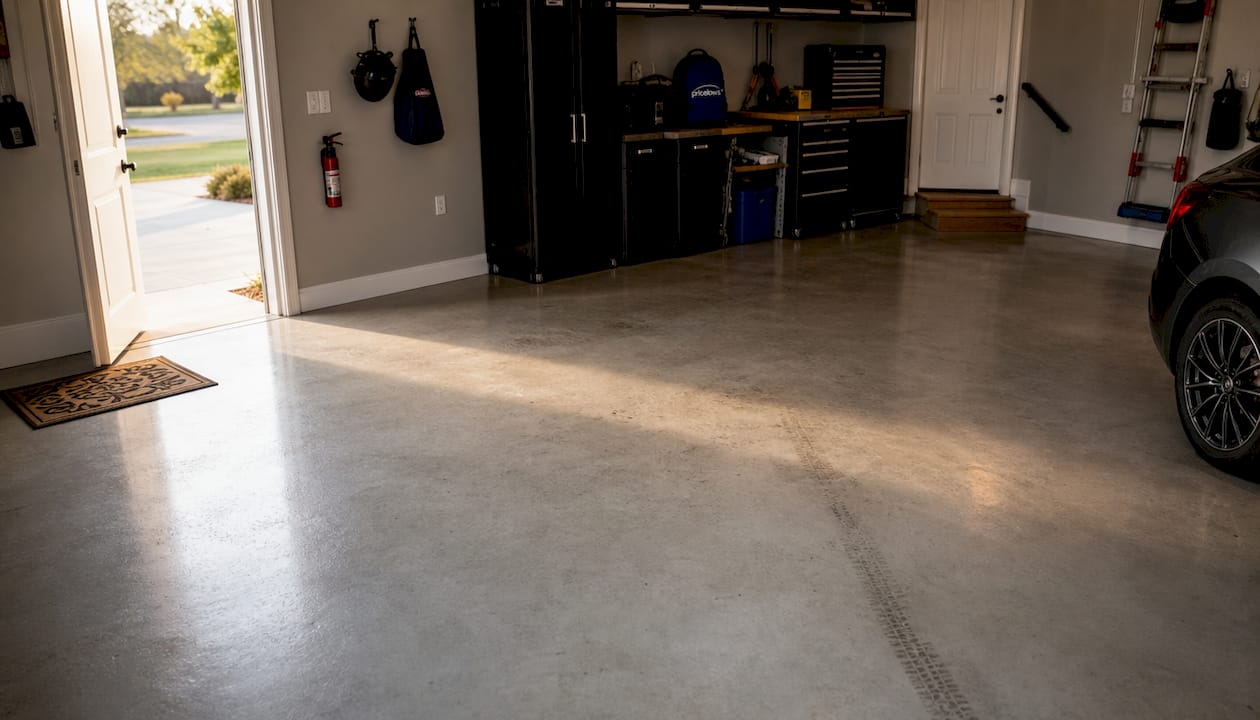
Freeing the floor also makes the garage safer. Clear walkways reduce trip hazards and give vehicles more room to maneuver without scraping stored items. The layered storage approach places seasonal items overhead and daily-use tools on walls, which keeps every category of item exactly where it makes sense.
2. What to store on overhead shelves and how to organize it
Seasonal items like holiday decorations, camping gear, ski equipment, and luggage are the best candidates for overhead storage. They are bulky, take up significant floor space, and get used only a few times per year. Putting them overhead is the highest-value use of that ceiling real estate.
The best items for overhead shelves share three traits:
- Infrequently accessed. Anything you reach for less than once a month works well overhead.
- Lightweight to moderately heavy. Stay well under the rack’s rated capacity and distribute weight evenly.
- Boxed or binned. Loose items shift and fall. Labeled totes keep things organized and safe.
Pro Tip: Rotate your overhead bins seasonally. Move winter gear down in the fall and summer gear down in the spring. Label every tote on the side facing out so you can read it from the floor.
Frequently accessed tools and supplies belong on wall-mounted solutions, not overhead. Climbing a ladder every time you need a screwdriver defeats the purpose of an organized garage. Wall pegboards and hooks handle daily-use items far better. Combining overhead racks with wall-mounted storage creates a layered system where every item has a logical home.
3. Installation considerations and safety tips
Installing overhead shelving correctly is the difference between a system that lasts decades and one that fails under load. Measuring ceiling height and locating joists before installation is the first step. Joists carry the weight. Anchoring into drywall alone is not safe and will not hold a loaded rack.
Follow these installation steps in order:
- Locate ceiling joists using a stud finder. Mark each one clearly.
- Measure ceiling height to confirm you have enough clearance for the rack plus loaded bins.
- Check garage door clearance. A clearance of 18 to 24 inches above the fully open garage door is required to avoid blocking the door mechanism.
- Distribute weight evenly across all mounting points. Uneven loading stresses individual joists and shortens the system’s life.
- Confirm weight limits before loading. Never exceed the manufacturer’s rated capacity.
Homeowners consistently underestimate overloading risks. Improper loading compromises shelf safety and ceiling integrity, turning a useful storage system into a genuine hazard. Treat the weight rating as a hard limit, not a suggestion.
Budget matters here too. DIY kits for a 4x8-foot platform run $100 to $300, while motorized lift systems range from $300 to $600. Custom fixed shelves built from lumber cost as little as $50 to $100 in materials. Your choice depends on how often you need to access the rack and how much ceiling height you have to work with.
4. Additional advantages: safety, organization, and home value
Overhead shelving does more than create storage. Clearing floor clutter makes the garage feel like a functional extension of the home rather than a dumping ground. That psychological shift is real. A garage you can actually walk through and work in gets used more often and maintained more consistently.
The secondary benefits stack up quickly:
- Improved safety. Cleared walkways reduce trip hazards and lower the risk of items falling onto vehicles or people.
- Vehicle protection. Cars parked in a clear garage avoid door dings, scratches from stored items, and weather exposure.
- Better use of activity zones. A floor free of bins and boxes makes room for a workbench, a hobby area, or a fitness setup.
- Home value. Buyers notice organized, functional garages. A well-installed storage system signals that the home has been maintained with care.
Moving infrequently used items overhead reduces clutter in activity zones and makes the garage more pleasant to spend time in. That is not a minor benefit. Garages that function well get used for projects, family activities, and hobbies. Garages that are cluttered get avoided.
Key takeaways
Overhead garage shelving is the most space-efficient garage storage solution available, combining high weight capacity, seasonal organization, and floor space recovery in a single system.
| Point | Details |
|---|---|
| Floor space recovery | A 4x8-foot rack holds 400–600 pounds and frees enough floor space for vehicle parking. |
| Best items to store | Seasonal, bulky, infrequently used items like holiday decor, camping gear, and luggage. |
| Safety comes first | Locate joists, check door clearance, and never exceed the rated weight limit. |
| Layer your storage | Combine overhead racks with wall-mounted solutions for a fully functional garage. |
| Budget options exist | DIY kits start at $100; motorized systems run up to $600 depending on your needs. |
Why overhead shelving changed how I think about garage space
Thane Holland’s take on getting this right
The first time I helped a neighbor install overhead shelving, we both expected a simple weekend project. What we got was a lesson in how much a garage can change when the floor is actually clear. He went from parking in the driveway to fitting both cars inside within a single afternoon of work.
The part most articles skip is the ladder trade-off. Overhead shelving is not for everything. If you find yourself climbing up every other day, you have stored the wrong items up there. The system works best when you treat it as a seasonal vault, not a daily pantry. Set it up right once, load it with the right things, and you will barely think about it again until the seasons change.
My honest recommendation is to pair overhead racks with pegboards on the walls and a solid rolling cabinet on the floor. Each layer handles a different category of item. That combination is what actually keeps a garage organized long-term, not any single product on its own.
— Thane Holland
Complete your garage setup with PriceLows™

Overhead shelving handles the ceiling. The floor and walls need their own solutions to complete the system. PriceLows™ carries a full lineup of garage storage products built to work alongside your overhead racks. The rolling garage tool cabinet gives you lockable, mobile storage for frequently used tools, keeping them off the floor and within reach without a ladder. For a complete floor-level setup, the 6-piece garage cabinet set includes a worktop, pegboard, rolling chests, and lockers in one package. PriceLows™ ships free with 100% shipping protection on every order.
FAQ
What weight can overhead garage shelves hold?
A standard 4x8-foot overhead garage storage platform holds 400–600 pounds. Always confirm the specific weight rating of your system before loading it.
What items should I store on overhead garage shelves?
Seasonal items like holiday decorations, camping gear, ski equipment, and luggage work best. These items are bulky, infrequently used, and ideal for ceiling-level storage.
How much clearance do I need above my garage door?
You need 18 to 24 inches of clearance above the fully open garage door. Less than that risks blocking the door mechanism and causing operational damage.
How much does overhead garage shelving cost to install?
DIY kits for a 4x8-foot platform cost $100 to $300. Motorized systems range from $300 to $600, and custom fixed shelves built from lumber run as low as $50 to $100 in materials.
Can I install overhead garage shelving myself?
Yes, most DIY kits are designed for homeowner installation. Locate your ceiling joists with a stud finder, confirm clearances, and follow the weight distribution guidelines to do it safely.