Best Outdoor Seating Placement Considering the Sun
TL;DR:
- Placing outdoor seating in morning sun or shaded zones enhances comfort and simplifies design choices.
- Layering fixed and adjustable shade solutions ensures predictable coverage and seasonal flexibility.
The best placement for outdoor seating considering the sun puts your main seating in morning light zones or naturally shaded afternoon spots, never in direct midday or late afternoon glare. Get this one decision right and everything else, from shade layering to furniture choice, becomes easier.
Here is what that looks like in practice:
- Place primary seating where it catches morning sun (east-facing) and falls into shade by early afternoon.
- Avoid positioning chairs and sofas in zones that receive direct sun between noon and 4:00 PM.
- Leave at least one side of your seating area open to prevailing breezes so air can move through.
- Combine a fixed shade structure with at least one flexible option (an umbrella or shade sail) to handle shifting sun angles.
- Maintain clear walkways wide enough for comfortable movement and sufficient clearance behind dining chairs.
1. How the sun’s path should drive your seating placement
Sun direction determines where every seating zone belongs. East-facing areas get morning sun, south-facing areas stay in sun most of the day, west-facing areas take the strongest afternoon and evening glare, and north-facing areas stay shaded. Walk your yard at 8:00 AM, noon, and 3:00 PM on a clear day and mark where shade falls at each hour. That 20-minute exercise tells you more than any design guide.
Seasonal sun angle shifts matter too. The sun rides lower in the sky from October through February, which means a pergola that blocks overhead summer sun may let low-angle winter light slip right under it. If you live in the Sun Belt, plan for that gap with a side screen or shade sail on the western edge.
| Direction | Sun timing | Best use |
|---|---|---|
| East-facing | Morning sun | Coffee nook, breakfast seating |
| South-facing | All-day sun | Loungers with shade structure |
| West-facing | Afternoon/evening glare | Sunset seating with side screening |
| North-facing | Mostly shaded | Reading area, heat-sensitive plants |
Local climate shapes the priority. In humid regions like Florida or the Gulf Coast, airflow often matters as much as shade. In dry climates like Arizona, overhead shade and light-colored surfaces carry most of the comfort work.
2. Layout and spacing dimensions that keep your patio comfortable
Outdoor furniture needs more clearance than indoor pieces because people walk around all sides. Design experts recommend clearances that allow easy passage around furniture and sufficient distance between seating and tables to maintain comfort and accessibility. Go tighter than that and guests start squeezing past each other, which kills the relaxed feel you are after.
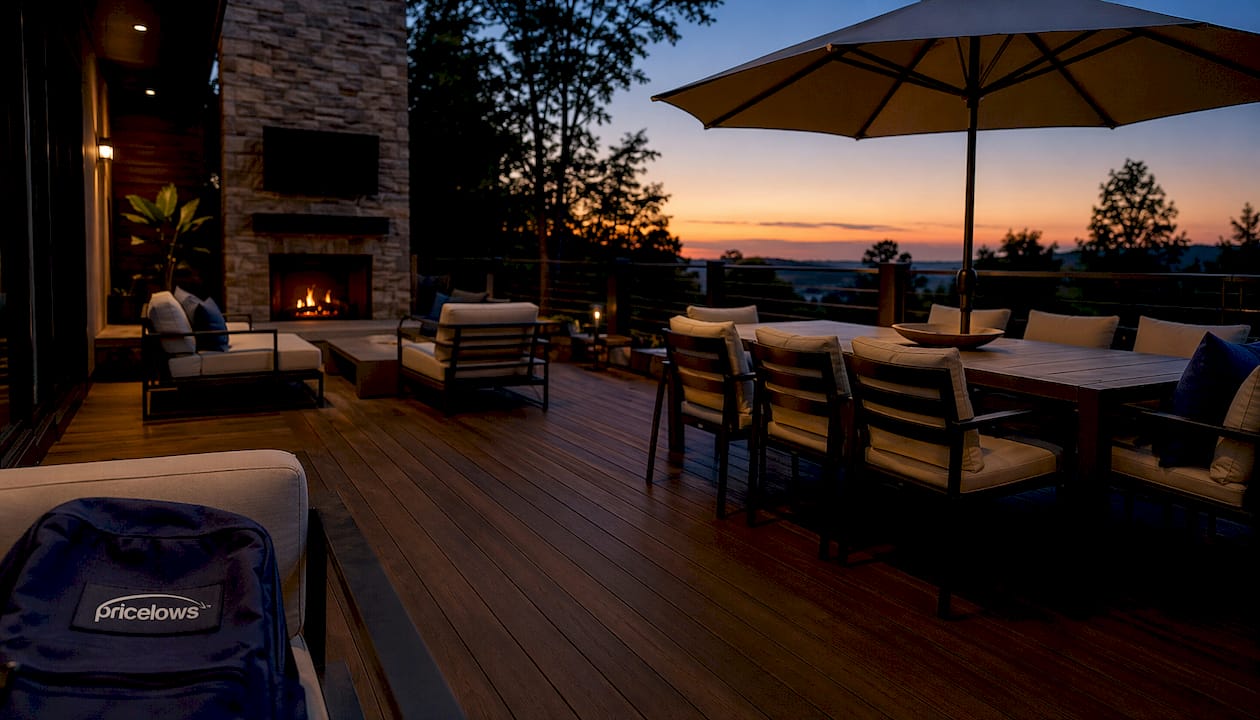
Clear circulation paths wide enough to allow comfortable movement make a patio feel more spacious even when the square footage is modest. That perception of space comes from protected walkways, not from the patio being large. A well-planned 10-by-12-foot zone with scaled furniture often outperforms a sprawling patio where furniture crowds every corner.
Split larger patios into seating and dining zones separated by sufficient distance to define each area as its own functional space. That gap defines each area as its own functional space rather than one big furniture pile. Orient the two zones differently so they feel distinct: dining near the house or grill, lounge group facing the yard.
| Spacing element | Recommended clearance |
|---|---|
| Main walkways | 36 inches minimum (up to 48 inches for spacious feel) |
| Secondary paths | 30–36 inches |
| Sofa to coffee table | 16–18 inches |
| Behind dining chairs | 36 inches |
| Between seating and dining zones | 6 feet |
Keep seating away from grill areas. Safety guidelines recommend maintaining significant distance between combustible surfaces and grills, so factor that into your layout before you lock in furniture positions.
3. Shade management strategies that adapt to shifting sun angles
No single shade solution handles every condition a sunny patio presents. A layered approach combining fixed structures with adjustable options handles shifting sun angles and seasonal changes far better than any one element alone.
Fixed structures like pergolas and covered patios deliver consistent, predictable shade. You can arrange seating confidently around them because the coverage does not move. The trade-off is that a fixed roof designed for summer overhead sun may miss low-angle afternoon light in spring or fall.
Flexible options fill those gaps. Patio umbrellas, shade sails, and retractable awnings each offer adjustability that built structures cannot match. A shade sail can be angled to intercept light from a specific direction; a retractable awning extends or retracts by the hour. For a west-facing patio, a shade sail triangle canopy positioned on the western edge blocks low afternoon glare that a pergola roof simply cannot reach.
Pro Tip: Raise one edge of a shade sail higher than the other. That angle lets warm air escape upward instead of pooling under the fabric, which keeps the seating area noticeably cooler.
Trees add a long-term layer. A newly planted tree may take several years to deliver meaningful coverage, so treat natural shade as a future asset rather than an immediate fix. Plan tree placement early so the canopy matures as the rest of your outdoor space develops.
| Shade option | Best for | Key limitation |
|---|---|---|
| Pergola | Permanent partial shade | Weak against low western sun |
| Retractable awning | House-adjacent patios | Less useful away from the wall |
| Shade sail | Broad, flexible coverage | Needs correct anchor height |
| Market umbrella | Small dining tables | Often misses chair backs |
| Tree canopy | Natural cooling | Slow to mature |
Light-colored paving materials and breathable fabrics reduce radiant heat around seating areas. Dark pavers absorb heat all morning and radiate it back through the afternoon, making even a shaded seat feel stifling. Aluminum and teak frames stay cooler than wrought iron; mesh fabrics allow air to circulate rather than trapping heat against the body.
4. Common mistakes that ruin outdoor seating comfort
The most common error is placing seating in the deepest shaded corner of the yard. Most homeowners do this instinctively, but a corner against a fence blocks airflow and creates a dead-air pocket that feels worse than sitting in partial sun. The better position is just inside the shade line, where you stay protected but a breeze can still reach you.
Overcrowding is the second big mistake. Comfort depends more on layout and airflow than on expensive furniture. A small, well-planned patio with two movable chairs and a bench often works better than a full sectional that blocks every walking path.
Pro Tip: Before buying anything, put one chair where someone would actually sit. Then look toward the house, yard, fence, and sun. If the best view forces people to face low western glare, the layout will disappoint regardless of how good the furniture looks.
A few other patterns worth avoiding:
- Facing seating directly west without side screening. Low afternoon sun slips under pergolas and umbrellas, so overhead shade alone does not solve a west-facing glare problem.
- Blocking the main breeze corridor with a large sectional or solid privacy wall. Airflow needs an entry and an exit.
- Skipping a digital layout test before moving heavy furniture. Testing configurations digitally prevents the frustrating cycle of physical rearranging.
Orient main sofas diagonally toward the yard or a focal point rather than straight toward the sun or a fence. That angle balances the view, social interaction, and sun exposure without forcing a compromise on any one of them.
Your 2026 outdoor seating placement checklist
Use this before you move a single piece of furniture:
- Map sun exposure first. Walk your yard at morning, noon, and mid-afternoon to identify morning light zones, midday exposure zones, and afternoon shade zones.
- Position primary seating in morning sun or afternoon shade. Avoid any spot that bakes in direct sun between noon and 4:00 PM.
- Protect walkways. Keep main paths at 36–48 inches wide and secondary paths at 30 inches minimum.
- Layer your shade. Pair a fixed structure like a pergola shade cover with at least one flexible option to handle seasonal sun angle shifts.
- Preserve airflow corridors. Leave one side of your seating area open to prevailing breezes and avoid solid enclosures on all sides.
- Angle seating diagonally. Face the yard or a focal point rather than straight toward the sun or a wall.
- Choose light-colored, breathable materials. Light paving, aluminum or teak frames, and mesh fabrics reduce radiant heat and keep seating comfortable well past midday.
Key Takeaways
The best outdoor seating placement puts furniture in morning light or afternoon shade zones, with at least 36 inches of clear walkway, layered shade, and at least one open side for airflow.
| Point | Details |
|---|---|
| Sun path drives placement | East-facing spots get morning sun; afternoon shade zones suit primary lounge seating. |
| Spacing protects comfort | Keep at least 36 inches for main walkways and 36 inches of clearance behind dining chairs. |
| Layer shade solutions | Combine a fixed structure with a flexible option like a shade sail or umbrella for full coverage. |
| Airflow beats deep shade | Place seating just inside the shade line, not in a fenced corner, to preserve breeze. |
| Materials reduce heat | Light-colored paving and breathable mesh fabrics cut radiant heat around seating areas. |
PriceLows™ carries outdoor living essentials at prices that make it easy to set up your patio right the first time. From shade sails to pergola covers, every product ships free with 100% shipping protection.