


Home Composters: Tumblers in Weeks, Bins in Months or Go Electric
Choose a tumbler if you have a small yard, mostly kitchen scraps, and want faster compost with better rodent protection. Choose a stationary bin if you have a bigger yard, lots of leaves and grass clippings, and want something forgiving that costs less upfront. If your composting is purely kitchen scraps and outdoor space isn’t an option, an indoor electric composter like the Revive R500 or Revive V500 solves a different problem entirely, and you might also consider encouraging kids to help with composting tasks using a Kids Garden Wheelbarrow Set as a fun way to teach gardening.
TL;DR:
- Tumblers are ideal for small yards with mostly kitchen scraps because they produce compost faster and have better pest control compared to stationary bins.
- Stationary bins handle larger yard waste quantities and are more forgiving of infrequent turning, but they take longer to produce compost and require more effort to manage.
- Electric kitchen composters suit households with limited outdoor space, processing only food scraps indoors and avoiding the need for turning or managing moisture ratios.
- Both tumblers and bins require proper moisture and carbon-to-nitrogen ratios to prevent odors and slow decomposition, with overfilling being a common mistake.
- Home composters should avoid including meat, dairy, oils, or diseased plants to prevent pests and odor issues, especially in outdoor systems.
Table of Contents
- Compost Bin vs Tumbler: Comparing Capacity, Speed, Cost, and Pests
- Pros and Cons of Tumblers vs Bins
- How Do You Choose the Right Compost System?
- How Often Should You Turn Compost and What Ratio Matters?
- When an Electric Kitchen Composter Beats Both
- What’s the Smartest Way to Compost at Home?
- Get Kitchen Composting Sorted Without the Yard Work
- Sources
- FAQ
Compost Bin vs Tumbler: Comparing Capacity, Speed, Cost, and Pests
The right system usually comes down to how much waste you generate and how much physical effort you want to spend turning it.
Stationary bins typically hold several cubic feet, enough for a household that rakes leaves, trims hedges, and tosses in food scraps. Tumblers tend to have a smaller capacity per chamber, fitting a smaller kitchen-focused routine better than a full yard cleanup. Tumblers also finish faster. Actively managed tumblers can produce usable compost in a matter of weeks, while stationary bins usually need several months to break down fully, especially if you’re not turning them often.
Cost follows a similar split. Basic bins start cheap, often under $100, and last for years with minimal parts to fail. Tumblers cost more upfront because of the rotating mechanism and sealed housing, but that housing is exactly what gives them an edge against pests.
- Capacity: bins hold more total volume; tumblers hold less but cycle faster.
- Speed: tumblers can finish in weeks with regular turning; bins typically take months.
- Cost: bins are cheaper to buy; tumblers cost more but need less physical strength to operate.
- Pests: tumblers stay elevated and sealed, which keeps rodents out better than an open bin sitting on the ground, according to Franklin County’s extension guidance.
Pros and Cons of Tumblers vs Bins
Neither system wins on every point, and the trade-offs are exactly where most buyers get tripped up.
Tumbler advantages:
- Turning takes a crank, not a shovel, which spares your back and speeds up aeration.
- The elevated, enclosed design keeps rodents and raccoons out far better than an open pile.
- A compact footprint suits patios, small side yards, and tight urban lots.
- Faster cycles mean you’re not staring at the same unfinished pile for six months.
Tumbler drawbacks:
- Working volume is limited, so a big fall leaf drop will overwhelm it fast.
- Some models leak liquid from the bottom seam if moisture gets too high.
- You need to stay on top of moisture and green-to-brown ratios, because there’s no soil contact to buffer mistakes.
Bin advantages:
- Higher capacity handles yard waste, not just kitchen scraps.
- Lower purchase price, especially for basic wood or wire-mesh designs.
- Forgiving of neglect. Skip a few weeks of turning and it still breaks down eventually.
- Ground contact invites worms and beneficial organisms that speed up long-term decomposition.
Bin drawbacks:
- Turning requires a pitchfork and real effort, especially once it’s full.
- Pest risk is higher unless you add hardware cloth or a secured lid.
- Decomposition is slower without consistent management.
How Do You Choose the Right Compost System?
Start by estimating your weekly input. A household of four generating a gallon or two of kitchen scraps a week, plus occasional yard trimmings, fits comfortably in a single-chamber tumbler. Add regular lawn clippings, fall leaves, or garden cleanup debris, and you’re better served by a bin with at least 6 to 10 cubic feet of working volume.
Budget tends to break into three bands: basic wire or wood bins under $100, mid-range plastic bins and single-chamber tumblers between $100 and $250, and dual-chamber tumblers or insulated cold-climate units above $250. Dual-chamber tumblers let you add fresh scraps to one side while the other cures, which cuts downtime for busy households, though each chamber’s actual capacity is smaller than it looks on paper.
When shopping, look for:
- A locking or latching lid that survives repeated opening
- An access door positioned at a height you can actually reach without straddling the unit
- A solid base or buried hardware cloth to block burrowing pests, a fix extension publications recommend for stationary bins
- Insulated wall material if you live somewhere winters regularly dip below freezing, since cold weather slows tumblers more than it slows a large, insulated pile
Pro Tip: Don’t force a single system to do everything. A lot of experienced gardeners run a tumbler for daily kitchen scraps and a stationary bin for the leaves and stalks that show up seasonally. A sturdy garden spreader makes distributing that finished compost across beds a lot less tedious once it’s ready.
How Often Should You Turn Compost and What Ratio Matters?
Turning frequency depends on the system and desired speed. A tumbler managed for speed benefits from turning every few days. A bin worked for hot, fast composting needs weekly turning with a fork; a passive bin can go longer between turns and still finish, though slower.
Moisture should feel like a wrung-out sponge, damp but not dripping. Too dry and decomposition stalls; too wet and you get a slimy, smelly mess. The carbon-to-nitrogen ratio matters more than most beginners realize, with a target around 25 to 30 parts carbon to 1 part nitrogen. Greens like grass clippings, coffee grounds, and vegetable scraps supply nitrogen; browns like dry leaves, cardboard, and straw supply carbon.
Common problems have simple fixes:
- Slimy or sludgy texture: add more dry browns and turn immediately.
- Bad odor: usually too wet or too many greens; mix in shredded paper or leaves.
- Slow breakdown: chop material smaller and turn more often to add oxygen.
Overfilling a tumbler is one of the most common mistakes home composters make, since it becomes too heavy to rotate. Skip meat, dairy, oils, and diseased plant material entirely. The EPA warns these attract pests and create odor problems in typical backyard systems, whether it’s a bin or a tumbler.
When an Electric Kitchen Composter Beats Both
Some gardeners don’t actually have a yard problem, they have a kitchen problem. If your composting need starts and ends with food scraps and you have no outdoor space to manage, an outdoor bin or tumbler may be solving a problem you don’t have.
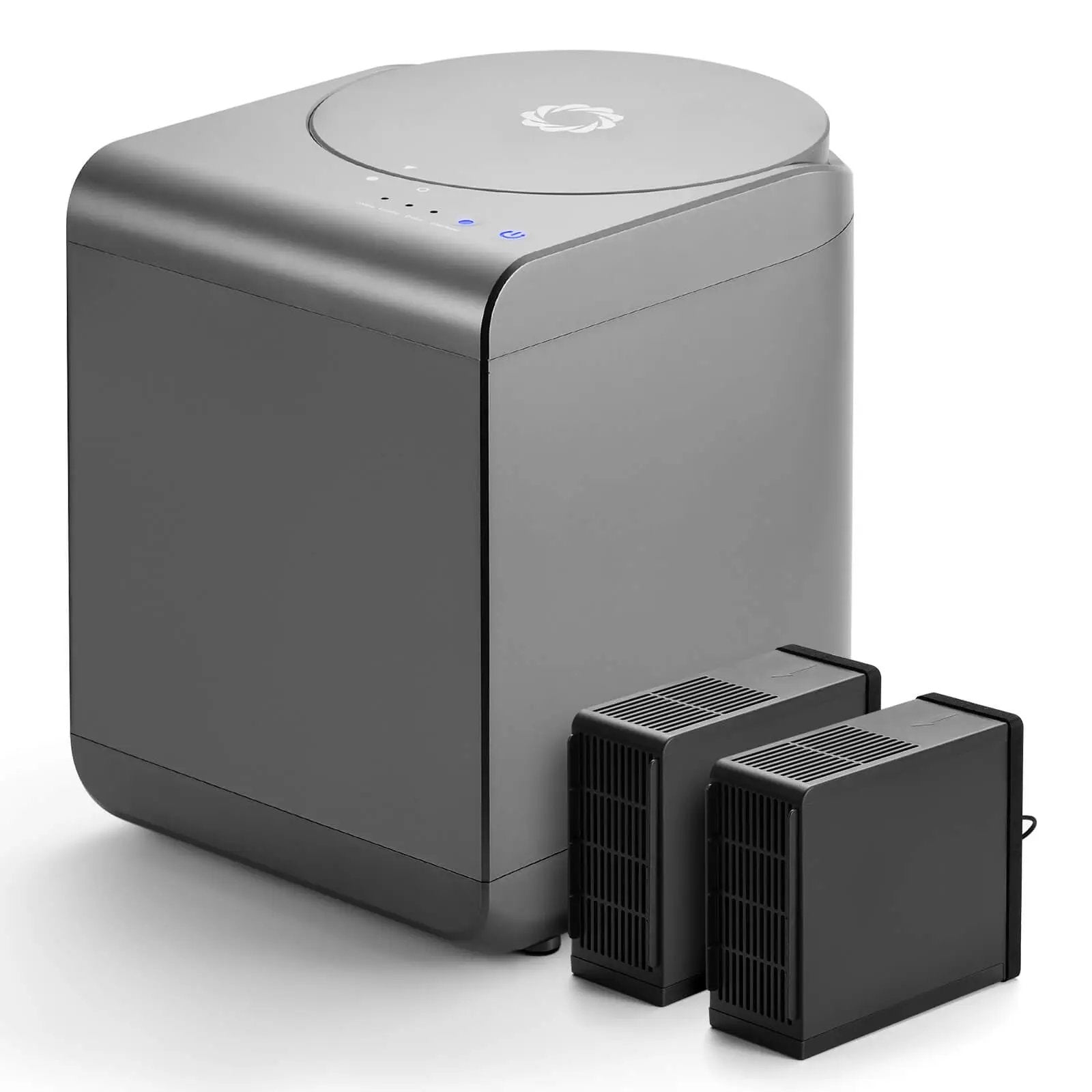
That’s the case for an electric countertop composter like the Revive R500 or Revive V500. These fit households in apartments, homes with small patios, or anyone who wants scraps processed indoors without turning, layering, or monitoring carbon-to-nitrogen ratios.
Consider one if:
- You generate mostly food scraps and little to no yard waste
- Outdoor space is limited or nonexistent
- You want a low-effort, mostly hands-off process
The trade-off is real: electric units process smaller daily volumes than an outdoor bin or tumbler, and they’re not built for bulk yard waste like leaves or branches. Check the product pages for exact specs and shipping protection details before deciding.
What’s the Smartest Way to Compost at Home?
If your yard is small and your compost is mostly food scraps, a tumbler earns its higher price through speed and pest control. If you’ve got space and generate real yard waste, a bin does more work for less money. Most gardeners land somewhere in between, and running a tumbler for scraps alongside a bin for leaves and trimmings solves both problems without forcing a single system to do a job it wasn’t built for.
— Thane Holland
Get Kitchen Composting Sorted Without the Yard Work
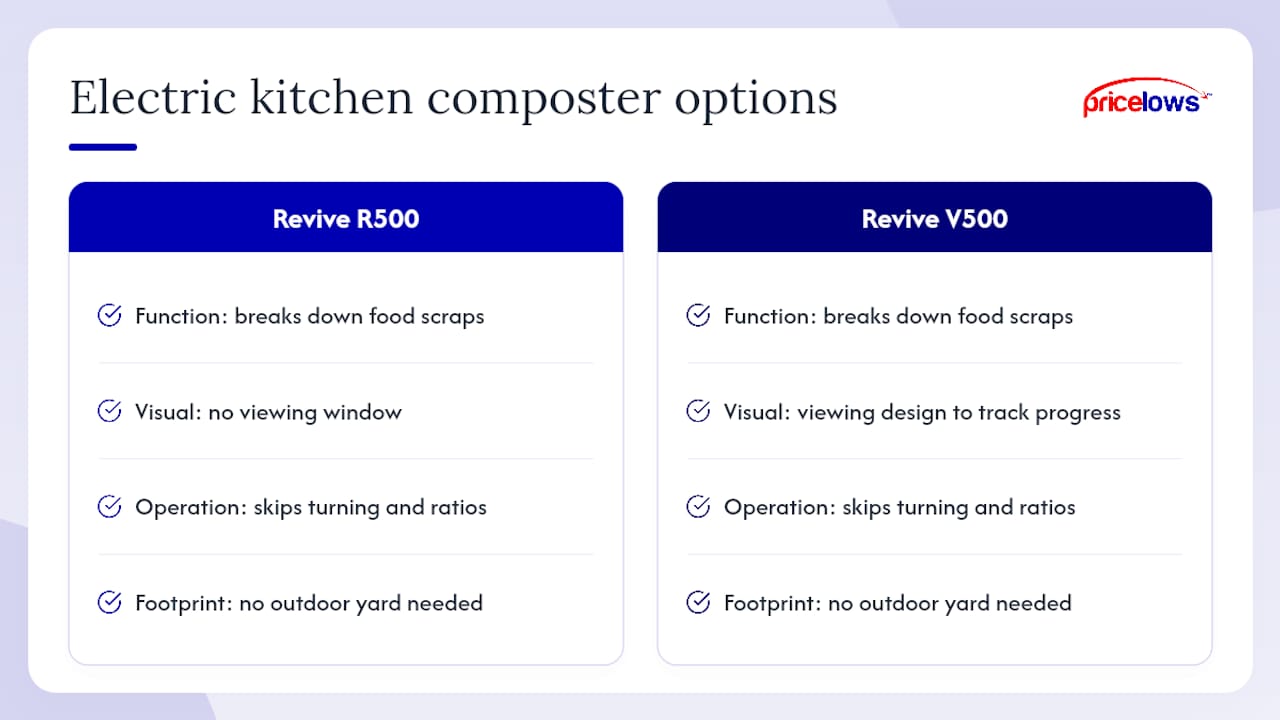
If a backyard bin or tumbler feels like more system than your kitchen scraps actually need, PriceLows™ carries a more direct route: electric composters that skip the turning, the ratios, and the outdoor footprint entirely. The Revive R500 Electric Kitchen Composter is built for straightforward daily use, breaking down food scraps into usable material without a yard, a shovel, or a weekend spent monitoring moisture.
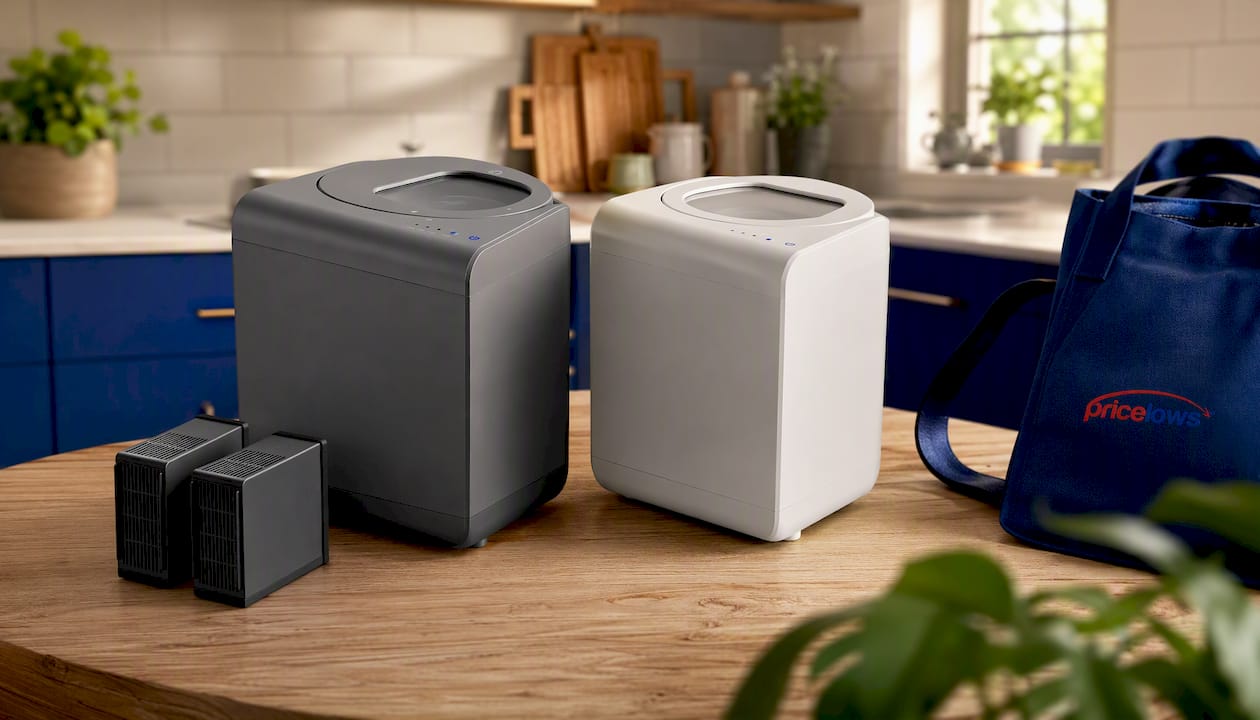
For gardeners who want to see the process happening rather than guess at it, the Revive V500 Electric Kitchen Composter, Visual Version offers the same core function with a viewing design that makes it easy to track progress. Both models come with a shipping protection plan, so a damaged or lost delivery doesn’t leave you stuck.
Check the Revive R500 product page or the Revive V500 listing to compare specs and place an order today.
Sources
The EPA’s home composting guidance covers safe inputs, Consumer Reports breaks down tumbler versus bin performance, and Franklin County’s extension office details pest-control differences between the two systems.
FAQ
Which Is Better, a Compost Bin or a Tumbler?
Neither is universally better. Tumblers win on speed and pest protection for small yards with mostly kitchen scraps, while bins win on capacity and cost for larger yards with heavy yard waste.
Can I Compost With a Tumbler, and How?
Yes. Add a mix of kitchen scraps (greens) and dry material like leaves or shredded paper (browns), keep the mixture damp but not soggy, and crank the tumbler every 2 to 3 days to speed decomposition.
What Is the Disadvantage of a Compost Tumbler?
Limited working volume is the biggest drawback. Overfilling makes the tumbler too heavy to turn, and some models can leak liquid if moisture builds up inside.
What Are Five Items That Should Not Be Composted?
Meat, fish, dairy, grease or cooking oils, and diseased plant material should stay out of home compost systems, since the EPA notes these attract pests and cause odor problems.
Is an Electric Kitchen Composter a Good Alternative?
For households with little to no yard waste, yes. Models like the Revive R500 and Revive V500 process food scraps indoors without turning, moisture management, or outdoor space, though they handle smaller volumes than an outdoor bin or tumbler.