


Yard Tool Material Types Explained for Home Gardeners
What are the main yard tool material types?
Choosing the right yard tool comes down to one practical question: what is the tool made of, and will that material hold up to your yard? The most common yard tool materials are high-carbon steel, stainless steel, forged steel, and reinforced plastics. Each has a distinct set of trade-offs, and no single material suits every task, soil type, or maintenance habit.
Here is a quick breakdown of what each material actually does:
- High-carbon steel: The go-to for digging, cutting, and planting. Holds a sharp edge well, affordable, but rusts without regular care.
- Stainless steel: Resists corrosion and needs less upkeep. Blades dull faster than carbon steel, making it better for wet gardens than rocky ones.
- Forged steel: A manufacturing method, not a separate alloy. Forged heads are shaped under heat and pressure, producing a stronger, more durable tool head than stamped alternatives.
- Reinforced plastics: Used mainly for handles, grips, and lightweight accessories. Weather-resistant and low-maintenance, though not suited for cutting edges.
No marketing claim about “premium alloy” changes these fundamentals. The material sets the baseline; construction and maintenance determine how long the tool actually lasts.
Table of Contents
- How each material performs in real garden conditions
- Why construction quality often matters more than the material
- How to maintain yard tools based on their material
- How to choose the right material for your home garden
- Common yard tool materials and their properties at a glance
- How your soil and usage pattern affect material choice
- What modern reinforced plastics actually do in yard tools
- Environmental impact and sustainability of yard tool materials
- PriceLows™ has the storage your yard tools deserve
- Key Takeaways
How each material performs in real garden conditions
Understanding the properties of each material helps you avoid buying a tool that fails in your specific yard. Here is what matters in practice:
- Carbon steel gives you the best balance of affordability and sharpness for heavy digging and cutting. Medium-carbon grades like AISI 1045 and 1050 handle impact well, making them reliable for shovel and hoe blades. The catch is rust. Leave carbon steel tools dirty or wet, and they corrode fast.
- Stainless steel adds chromium to the alloy, which creates a passive layer that resists rust. It is ideal for wet environments and low-maintenance use, but the trade-off is edge retention. Stainless blades dull faster under heavy use.
- Forged steel heads are shaped by rolling heated steel over blocks, giving the tool variable thickness where it counts: thicker at stress points, thinner at the cutting edge. Stamped heads are cut from flat sheet steel and bent into shape, leaving uniform thickness throughout and a weaker connection at the socket.
- Reinforced plastics handle drops and weather better than many low-grade metal parts. They show up in ergonomic grips, D-handles, and tool accessories where weight and comfort matter more than cutting strength.
Pro Tip: When comparing two shovels at the same price point, pick the one with a forged head over a stamped one every time. The forged version will outlast the stamped alternative in rocky or clay-heavy soil.
Why construction quality often matters more than the material
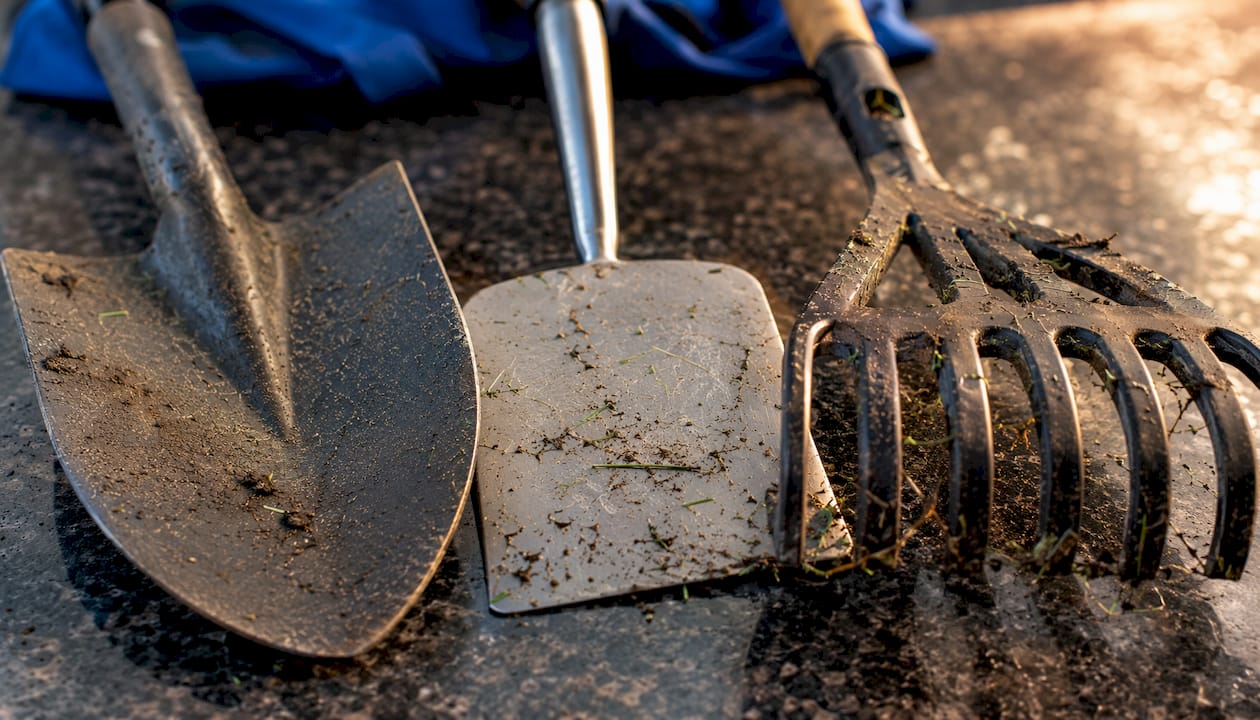
The material in a yard tool sets the ceiling on performance, but construction determines whether the tool reaches it. A medium-grade steel tool built with forged, closed-socket construction will outperform a premium stamped alloy tool in real-world use.
Here is what to look for:
- Forged vs. stamped heads: Forged heads carry markings like “tempered,” “heat-treated,” or “drop forged” near the socket. Stamped heads rarely carry any such label.
- Closed socket vs. tang and ferrule: A closed socket seals the joint between handle and head, blocking moisture and debris. Tang and ferrule designs, common in cheaper hand tools, leave a gap where water enters, causing the wood to swell, shrink, and eventually loosen.
- One-piece construction: Tools forged from a single piece of steel have no welds to fail. Bad welds on rakes and forks are a frequent failure point under heavy stress.
- Handle attachment: Quality tools use long steel straps riveted through the shaft in two or three places, or a fully forged solid socket. Both approaches distribute stress along the handle rather than concentrating it at one point.
The tang and ferrule design is the most common failure point in budget hand tools. Moisture works into the gap, the wood rots, and the head loosens. Spending a few dollars more on a closed-socket tool avoids that problem entirely.
How to maintain yard tools based on their material
Proper care extends tool life regardless of material. The maintenance routine changes depending on what the tool is made of.
- High-carbon steel: Clean soil off immediately after use. Apply a light coat of motor oil to the blade before storage. Skipping this step even once in humid conditions can start surface rust.
- Stainless steel: Wipe clean and store dry. Stainless tools need far less attention than carbon steel, though they still benefit from occasional oiling on cutting edges.
- Wood handles: Ash is the preferred wood for tool handles because it combines strength with flexibility. Treat wood handles periodically with linseed oil to prevent drying and cracking. Inspect for grain defects before buying.
- Fiberglass handles: No oiling needed. Fiberglass resists weathering, cracking, and splitting better than wood, but it transmits vibration through the shaft, which causes fatigue on long jobs. It is also harder to replace when broken.
- Steel handles: Strongest option with the least flex. Found mostly in smaller hand tools. Wipe clean and check for rust at joints.
- Reinforced plastic parts: Wipe down with a damp cloth. No special treatment needed.
- Storage: Keep all tools in a ventilated, dry space. Hanging tools off the ground prevents moisture from pooling at the head-to-handle joint.
Staying on top of rust prevention with carbon steel tools is the single highest-return maintenance habit for home gardeners. A five-minute clean and oil after each use adds years to a tool’s life.
How to choose the right material for your home garden
The right material depends on four factors: the task, your soil type, your climate, and how much maintenance you are willing to do. Here is how to match them:
- Heavy digging in clay or rocky soil: High-carbon steel or forged boron-alloy steel. You need edge retention and toughness. Stainless will dull too fast.
- Wet climates or coastal gardens: Stainless steel or powder-coated carbon steel. Corrosion is the bigger threat here, and stainless handles it without constant oiling.
- Light weeding and planting in loose soil: Stainless steel hand tools or reinforced plastic-handled tools work well. The tasks do not demand carbon steel’s edge retention.
- Budget-conscious buyers: Carbon steel tools with forged heads offer the best value. They cost less than stainless, perform better under stress, and last for years with basic care.
- Low-maintenance preference: Stainless steel or tools with protective coatings like zinc plating or powder coating. Modern surface finishes significantly extend lifespan without demanding daily attention.
For most home gardeners, a yard tool material guide comes down to this: buy carbon steel for digging and cutting, stainless or coated steel for wet or storage-prone tools, and reinforced plastic handles wherever weight and grip comfort matter.
Common yard tool materials and their properties at a glance
| Material | Strength | Rust Resistance | Edge Retention | Maintenance | Best For |
|---|---|---|---|---|---|
| High-carbon steel | High | Low | Excellent | High | Digging, cutting, planting |
| Stainless steel | Moderate | High | Moderate | Low | Wet gardens, hand tools |
| Forged steel | Very high | Varies | Excellent | Moderate | Heavy-duty digging tools |
| Aluminum | Low-moderate | High | Poor | Low | Lightweight handles |
| Reinforced plastic | Moderate | Very high | N/A | Very low | Handles, grips, accessories |
| Wood (ash) | Moderate | Low | N/A | High | Traditional long handles |
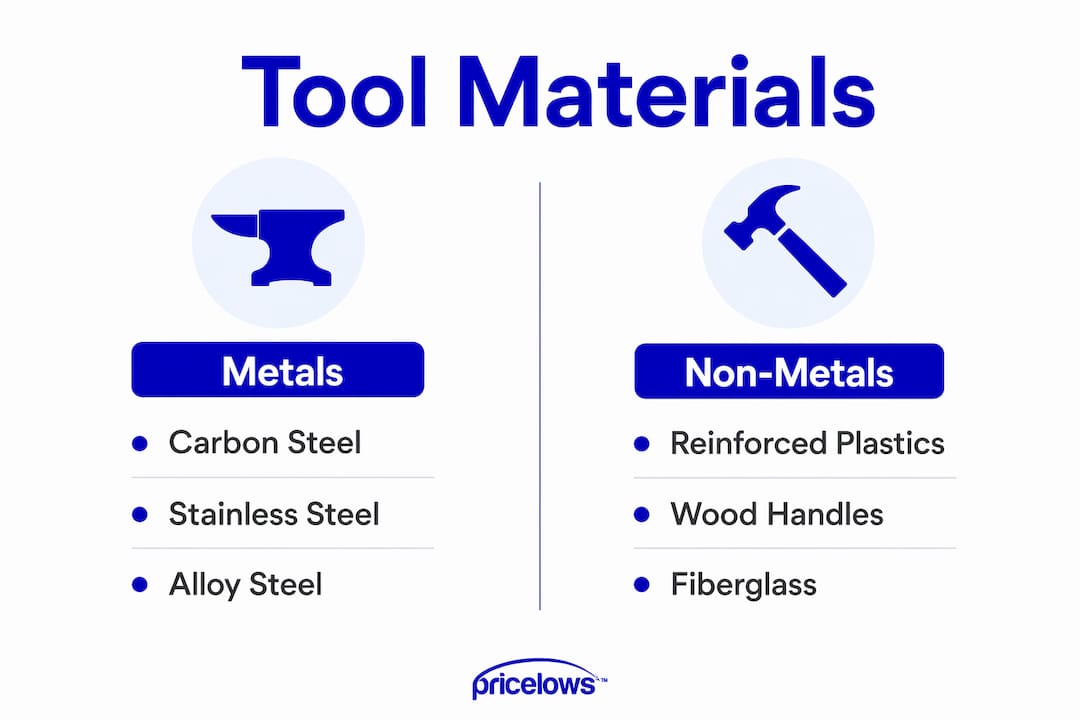
Stainless steel tools resist corrosion without the maintenance burden of carbon steel, but they trade away the sharp, durable edge that makes carbon steel the standard for serious digging. Aluminum stays light and rust-free but bends under heavy load, so it belongs on handles, not blades. Ash wood handles remain a trusted choice for long-handled tools because ash is strong without being brittle, unlike maple or hickory.
How your soil and usage pattern affect material choice
Soil type is one of the most overlooked factors in picking yard tool materials. Sandy, loose soil is forgiving. Rocky, clay-heavy, or compacted soil puts real stress on blades and handles, and that stress exposes weak materials fast.
Rocky or gritty soil demands tougher alloys. Properly tempered medium-carbon steel achieves a balance of hardness and toughness that reduces brittleness and chipping in these conditions. Tools that are too hard become brittle and chip at the tip; tools that are too soft bend and lose their edge. The sweet spot for most home gardeners is a medium-carbon or boron-alloy steel with documented heat treatment.
Frequency of use matters just as much. A tool used twice a year can get away with basic carbon steel and minimal care. A tool used three times a week in wet soil needs either stainless steel or a disciplined cleaning routine. Matching material to actual use frequency prevents overspending on premium alloys you do not need and under-buying on tools that will fail quickly.
What modern reinforced plastics actually do in yard tools
Reinforced plastics have moved well beyond cheap trowel handles. Modern glass-filled nylons and fiber-reinforced polymers show up in ergonomic D-grips, tool collars, and even full handle shafts on lighter garden tools. They withstand drops and weather exposure better than many low-quality metal parts, and they add no rust risk at all.
The practical advantage for home gardeners is weight. A fiberglass or reinforced plastic handle on a rake or cultivator reduces fatigue on longer jobs. The downside is vibration: fiberglass transmits more shock through the shaft than wood does, which becomes noticeable on repetitive tasks like hoeing. For short sessions, that trade-off is easy to accept. For extended digging, a wood or padded handle is more comfortable.
Plastic components also appear in tool accessories like hose nozzles and watering wands, where UV-resistant formulations handle outdoor exposure without cracking. These parts are not structural, so the lower strength of plastic is not a problem.
Environmental impact and sustainability of yard tool materials
Steel production carries a higher upfront carbon cost than plastic, but a well-made steel tool used for 20 years has a far lower lifetime footprint than a cheap plastic tool replaced every two seasons. Durability is the most practical sustainability metric for home gardeners.
Wood handles from sustainably sourced ash or hickory are renewable and biodegradable. They also require periodic linseed oil treatment, which is a low-impact maintenance input. Fiberglass handles last longer without maintenance but are not recyclable in most municipal programs.
Powder coating and zinc plating extend steel tool life significantly, reducing the frequency of replacement. From a sustainability standpoint, buying one well-built carbon steel tool with a protective finish beats buying three budget tools over the same period. The essential yard tools worth investing in are the ones you use most: a good shovel, a digging fork, and a hand trowel.
PriceLows™ has the storage your yard tools deserve
Good tools need a good home. After investing in the right materials, the worst thing you can do is pile tools in a damp corner where moisture attacks carbon steel blades and wood handles rot at the socket.

PriceLows™ carries a full range of garage storage built specifically for this problem. The Rolling Garage Tool Cabinet features a powder-coated, rust-resistant finish and a lockable steel chest, keeping tools dry, organized, and protected between uses. For a larger setup, the Garage Storage Cabinet Set delivers a 6-piece metal construction with a rubberwood worktop, pegboard, rolling chests, and lockers in one package. Every order ships free with 100% shipping protection. Browse the full selection at PriceLows™ and give your tools the storage they need to last.
Key Takeaways
Material choice, construction quality, and maintenance together determine how long a yard tool actually lasts.
| Point | Details |
|---|---|
| Carbon steel leads for digging | High-carbon steel offers the best edge retention and affordability for heavy digging and cutting tasks. |
| Construction beats material alone | A forged, closed-socket tool in medium-grade steel outperforms a premium stamped alloy in real use. |
| Stainless steel suits wet gardens | Stainless resists corrosion with minimal upkeep but dulls faster than carbon steel under heavy load. |
| Maintenance is material-specific | Carbon steel needs cleaning and oiling after every use; stainless and reinforced plastics need far less attention. |
| PriceLows™ for tool storage | PriceLows™ offers powder-coated, lockable steel storage cabinets that protect yard tools between uses. |