


Kitchen Gadget Materials Compared and Explained
TL;DR:
- Choosing silicone is best for non-stick cookware because it prevents scratches and conforms to pans. Stainless steel tools withstand high heat and last over a decade with proper care. Beechwood utensils outlast bamboo due to tighter grain and better moisture resistance.
The material your kitchen tools are made from determines how long they last, how safe they are, and whether they will scratch your cookware. Kitchen gadget materials compared and explained covers the five most common options: silicone, stainless steel, beechwood, bamboo, and glass. Each has distinct heat resistance thresholds, durability profiles, and maintenance demands. Knowing the differences before you buy saves money and protects your pots and pans.
What are the key properties of kitchen gadget materials?
Material science for kitchen tools, often called utensil material comparison in the industry, starts with three measurable factors: heat resistance, chemical inertness, and mechanical durability. These three factors predict how a tool performs and how long it lasts.
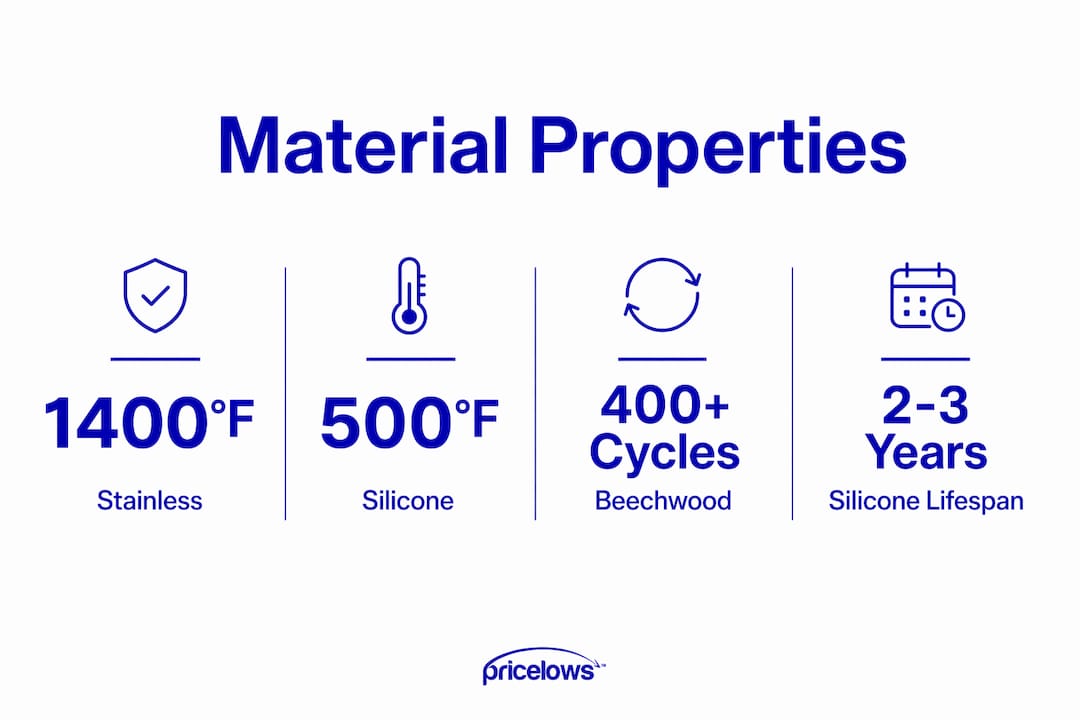
Stainless steel leads on heat resistance, withstanding temperatures above 1,400°F. That makes it the only material suitable for direct flame contact or high-heat searing tasks. Silicone handles up to 500°F, which covers virtually every stovetop and oven scenario a home cook encounters. Beechwood degrades above 400°F, so it belongs away from direct heat sources.
Chemical safety separates stainless steel from the rest. Grade 304 stainless steel is the industry standard for food-safe use. It does not leach chemicals or alter food flavor, even with acidic ingredients like tomato sauce or citrus. Grade 316 offers superior corrosion resistance for salty or highly acidic environments, though it is less common in home kitchens.
| Material | Heat resistance | Chemical inertness | Scratch risk |
|---|---|---|---|
| Stainless steel | Above 1,400°F | Fully inert (grade 304/316) | High on non-stick |
| Silicone | Up to 500°F | Fully inert, food-grade | None |
| Beechwood | Up to 400°F | Naturally inert, porous | None |
| Bamboo | Up to 400°F | Naturally inert, more porous | None |
| Glass | Varies by type | Fully inert | None |
Silicone and glass are both fully inert, meaning neither reacts with food or releases compounds during normal cooking. Wood materials are naturally inert but porous, which means bacteria can lodge in surface cracks if the tool is not maintained properly.
How do kitchen gadget materials affect cookware compatibility?
The material of your utensil directly determines whether it protects or damages your cookware surface. This is the most practical consideration for home cooks who use non-stick pans.
Silicone is the safest choice for non-stick cookware. Its flexibility lets it conform to pan surfaces without applying concentrated pressure, and its softness means it cannot scratch PTFE or ceramic coatings. The tradeoff is that silicone lacks rigidity. Scraping caramelized bits from a stainless steel pan or flipping a dense burger patty requires a stiffer tool.
Stainless steel provides the rigidity needed for heavy-duty tasks like scraping, deglazing, and flipping. The problem is that stainless steel conducts heat quickly. Handles become hot during extended cooking, unlike wood or silicone, which insulate well. Stainless steel also scratches non-stick surfaces, so it belongs only in cast iron, carbon steel, or stainless cookware.
Beechwood sits in a useful middle ground. It is rigid enough for stirring thick batters and sauces, gentle enough to avoid scratching most surfaces, and its natural density provides good heat insulation. Bamboo performs similarly but has a more porous fiber structure, which makes it more prone to absorbing moisture and harboring bacteria over time.
- Silicone: Use with non-stick, ceramic, and enameled cookware. Avoid for tasks requiring stiff scraping.
- Stainless steel: Use with cast iron, carbon steel, and stainless pans. Never use on non-stick surfaces.
- Beechwood: Use for stirring, folding, and serving. Suitable for most cookware types.
- Bamboo: Use for light stirring and serving. Avoid prolonged soaking or dishwasher use.
- Glass: Use for measuring, mixing bowls, and bakeware. Not a utensil material for direct stovetop contact.
Pro Tip: If you cook on non-stick pans daily, keep a dedicated set of silicone utensils for those pans and a separate set of stainless steel tools for cast iron or stainless cookware. Mixing them up is the fastest way to ruin a non-stick coating.
What is the typical lifespan of each kitchen gadget material?
Longevity varies widely across materials, and the gap between the best and worst performers is larger than most home cooks expect. Understanding durability of kitchen tools by material helps you budget and plan replacements.
Food-grade silicone lasts 2–3 years in home kitchens under normal use. Commercial kitchens see that lifespan drop to 12–18 months due to higher thermal stress and washing frequency. Silicone can also develop permanent stains from acidic or colorful foods like tomato sauce and turmeric. Staining affects appearance but not food safety, though odor retention after washing is a real annoyance.
Stainless steel outlasts every other material in this comparison. With basic care, a quality stainless steel utensil lasts a decade or more. It is dishwasher safe, does not absorb odors, and does not stain. The higher upfront cost pays off over time.
Wood materials tell a more nuanced story. Beechwood maintains smooth surfaces through more than 400 wash cycles, while bamboo begins to splinter after 180 cycles. That difference comes down to grain structure. Beechwood’s tighter grain resists cracking better than bamboo’s more porous fibers. Beechwood also stays dimensionally stable after extended soaking, while bamboo swells and warps more quickly.
| Material | Home lifespan | Dishwasher safe | Key care requirement |
|---|---|---|---|
| Stainless steel | 10+ years | Yes | Rinse acidic foods promptly |
| Beechwood | 3–5 years | No | Hand wash, oil periodically |
| Silicone | 2–3 years | Yes | Avoid high-pigment foods |
| Bamboo | 1–2 years | No | Hand wash only, dry immediately |
| Glass | Indefinite | Yes | Handle carefully to avoid breakage |
Pro Tip: Rub beechwood utensils with food-grade mineral oil every few months. This seals the grain, repels moisture, and adds years to the tool’s life. It takes two minutes and costs almost nothing.
Which materials are best for different home cooking scenarios?
The right material depends on what you cook, how often you cook, and what cookware you own. No single material wins every scenario.
- Daily non-stick cooking: Silicone is the clear choice. It protects coatings, handles everyday heat, and cleans easily.
- High-heat searing and cast iron cooking: Stainless steel handles the task without warping or melting. Look for grade 304 or 316 for food safety and durability.
- Baking and dough work: Beechwood spoons and scrapers excel at folding and stirring thick mixtures. The rigidity and heat insulation make them comfortable for long sessions.
- Budget-conscious cooks: Silicone offers the best value per year of use. Stainless steel costs more upfront but delivers a lower cost per year over its lifespan. A budget kitchen gadgets guide can help you prioritize which materials to invest in first.
- Eco-conscious cooks: Beechwood is a renewable resource and biodegradable at end of life. Silicone is not biodegradable but lasts longer than most plastic alternatives, reducing overall waste.
The practical answer for most home cooks is a mixed set. Silicone spatulas and spoons for non-stick work, stainless steel tongs and whisks for high-heat tasks, and one or two beechwood spoons for stirring and serving. That combination covers nearly every cooking scenario without compromise.
Key Takeaways
The material of a kitchen tool determines its heat limit, cookware compatibility, lifespan, and maintenance needs, making material choice the single most important factor in building a durable, functional kitchen.
| Point | Details |
|---|---|
| Heat resistance hierarchy | Stainless steel tops 1,400°F; silicone handles 500°F; wood materials cap at 400°F. |
| Cookware protection | Use silicone on non-stick surfaces; stainless steel scratches coatings and belongs only in cast iron or stainless pans. |
| Lifespan differences | Stainless steel lasts a decade or more; silicone lasts 2–3 years; bamboo degrades fastest after about 180 wash cycles. |
| Wood material choice | Beechwood outlasts bamboo significantly due to its tighter grain and better moisture resistance. |
| Best strategy | Build a mixed set: silicone for non-stick, stainless steel for high-heat tasks, and beechwood for stirring and serving. |
What I’ve learned from years of testing kitchen materials
The conventional wisdom says buy one material and stick with it. That advice is wrong, and I’ve seen it cost home cooks real money.
The cooks I respect most treat their kitchen tool set like a mechanic treats a toolbox. You would not use a flathead screwdriver where a Phillips is needed. The same logic applies here. I use silicone spatulas exclusively on my non-stick skillets, and I have never had to replace a coating because of utensil damage. Meanwhile, my stainless steel tongs go into the cast iron every single time without hesitation.
The one thing most articles skip is the beechwood versus bamboo distinction. Bamboo gets marketed as durable and eco-friendly, but the data tells a different story. Beechwood’s tighter grain resists cracking and moisture far better than bamboo’s porous fibers. If you are buying wooden utensils, beechwood is the correct choice. Bamboo looks similar on the shelf but performs worse over time.
My honest advice: start with a silicone spatula, a stainless steel whisk, and a beechwood spoon. Those three tools, chosen for the right materials, will serve you better than a full drawer of mismatched gadgets bought without thinking about what they are made from.
— Thane Holland
Quality kitchen tools at prices that make sense
Finding well-made kitchen tools at fair prices does not require compromise. PriceLows™ carries a curated selection of durable kitchen storage and kitchen essentials built to last, with free shipping and a 100% shipping protection plan on every order.

Whether you are building a new kitchen tool set or replacing worn-out utensils, PriceLows™ stocks options across silicone, stainless steel, and wood categories at prices designed for families who want quality without overpaying. Every product is vetted for value, so you spend less time second-guessing and more time cooking. Browse the full kitchen collection at PriceLows™ and find the right tools for your kitchen today.
FAQ
What material is safest for non-stick cookware?
Silicone is the safest material for non-stick cookware. Its soft, flexible surface cannot scratch PTFE or ceramic coatings, making it the standard recommendation for daily non-stick use.
How long do silicone kitchen utensils last?
Silicone utensils last 2–3 years in home kitchens under normal conditions. Commercial use shortens that lifespan to 12–18 months due to higher heat exposure and washing frequency.
Is beechwood or bamboo better for kitchen utensils?
Beechwood is the better choice. It maintains smooth surfaces through more than 400 wash cycles, while bamboo begins to splinter after 180 cycles and warps more quickly when exposed to moisture.
What grade of stainless steel should kitchen tools be?
Grade 304 stainless steel is the industry standard for food-safe kitchen tools. Grade 316 offers superior corrosion resistance for acidic or salty cooking environments and is worth seeking out for heavy use.
Can I put wooden kitchen utensils in the dishwasher?
Wooden utensils should never go in the dishwasher. The heat and prolonged moisture exposure cause warping, cracking, and splintering. Hand wash and dry immediately to extend their lifespan.