


Upgrade Kitchen Tools Without Overspending in 2026
TL;DR:
- A $200 to $500 budget covers most kitchen essentials, depending on how many specialized tools are needed. Prioritizing multi-functional, quality items like a chef’s knife and skillet ensures long-term value and performance. Buying second-hand or during sales can further reduce costs while building a functional and efficient kitchen.
Upgrading kitchen tools without overspending means selecting versatile, quality essentials first. A $200 budget covers 90% of typical daily cooking needs, and a $500 budget covers nearly all common tasks including specialized tools. That range gives budget-conscious shoppers a clear target before they buy a single item. The key is a task-first approach: identify what you actually cook, then buy only the tools that serve those meals. Skip the aspirational gadgets and you will rarely feel the pinch.
What are the essential kitchen tools that deliver the most value?
The most cost-effective kitchen upgrades start with a short list of multi-functional tools. A well-equipped starter set of 30 essentials runs $345–$580, but focused buyers can cover the basics for under $400. Spending less is possible when you skip redundant items and choose tools that do double or triple duty.
The core list every kitchen needs:
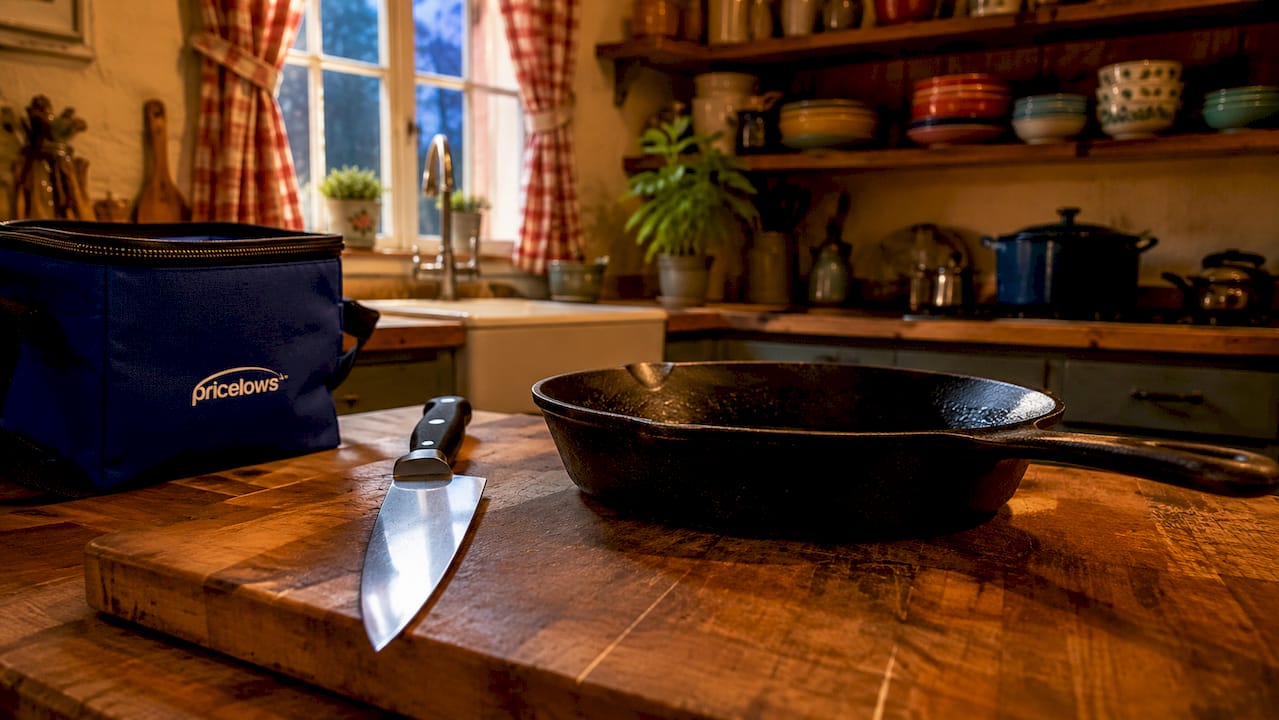
- Chef’s knife ($40–$80): The single most used tool in any kitchen. A quality knife handles chopping, slicing, and mincing for every meal.
- 10-inch skillet ($30–$60): Works for sautéing, searing, frying, and finishing sauces. Cast iron or stainless steel versions last decades.
- Medium saucepan ($25–$45): Covers soups, grains, sauces, and boiling eggs.
- Cutting board: One large, thick board in wood or plastic handles most prep work.
- Basic utensil set: A wooden spoon, silicone spatula, ladle, and tongs cover the vast majority of cooking tasks.
- Sheet pan: Roasting vegetables, baking, and reheating all happen on one flat surface.
Investing slightly more in a chef’s knife and skillet delivers better performance and longevity than buying a cheap full set. A $60 knife used daily for ten years costs less per use than a $15 knife replaced every two years.
Pro Tip: Buy the best budget gadgets you can afford in the knife and skillet categories first. Everything else can wait.
How can you set and optimize your budget for kitchen upgrades?
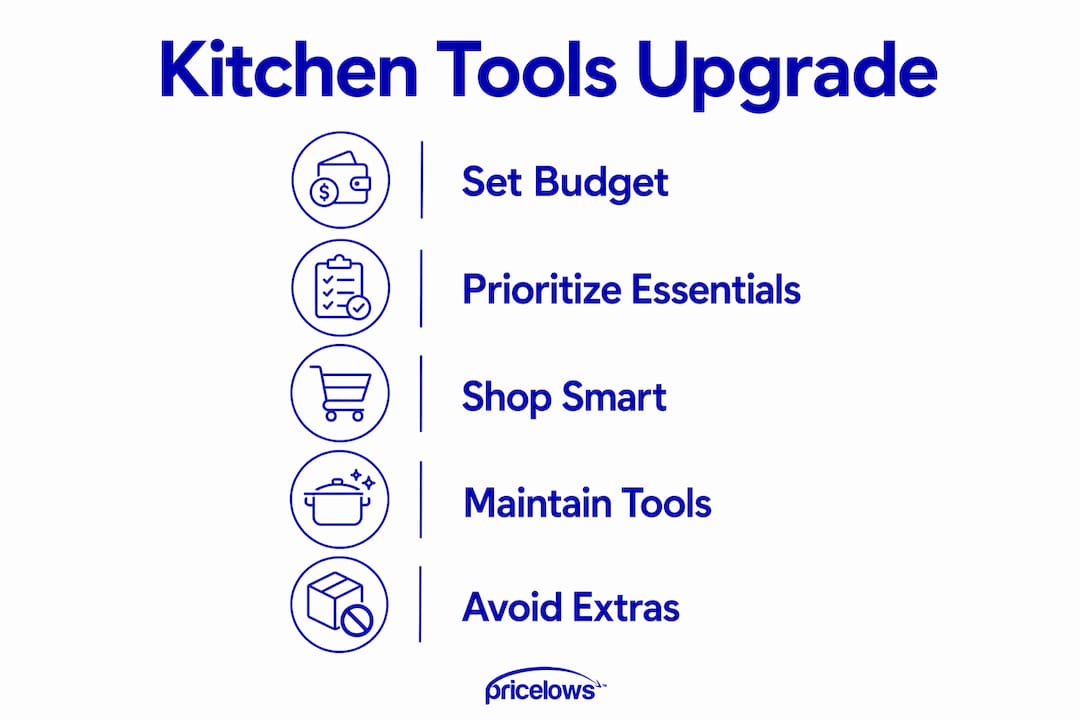
A clear budget prevents overspending before you ever reach the checkout. The $200–$500 range covers the full spectrum from bare essentials to a well-rounded kitchen. Here is how to structure that spending:
- Set your baseline at $200. This covers a chef’s knife, skillet, saucepan, cutting board, and basic utensils. You will handle 90% of everyday meals with these five items.
- Plan a $400–$500 ceiling for a complete setup. Adding a stockpot, baking sheet, mixing bowls, a colander, and a few specialty tools brings your kitchen to full capacity.
- Build in a 10–20% buffer. Leave room in your budget for unexpected needs or opportunistic purchases when prices drop.
- Time your purchases around seasonal sales. January and September sales can cut 30–50% off kitchen essentials, according to Consumer Reports. That discount alone can fund two or three additional tools.
- Use loyalty programs and cashback apps. Many retailers offer points or rebates that stack on top of sale prices, stretching your budget further.
The task-first approach ensures you only buy tools that match your actual cooking habits. Write down the five meals you cook most often, then list the tools each one requires. That list becomes your shopping guide.
Pro Tip: Never shop for kitchen tools without a written list. Impulse buys on gadgets are the fastest way to blow a tight budget.
What are practical ways to find affordable, quality kitchen tools?
Retail price is not the only price. Budget-conscious shoppers who look beyond standard retail channels find durable cookware at a fraction of the original cost. Second-hand markets and discount outlets are especially productive for heavy-duty items.
Where to look and what to buy:
- Thrift stores: Cast iron skillets and Dutch ovens appear regularly at thrift stores for $5–$15. These items are nearly indestructible and restore easily with a simple re-seasoning process.
- Online marketplaces: Stainless steel cookware, knife sets, and mixing bowls sell frequently on resale platforms. Search for brand-name items in good condition and you often find professional-quality tools at entry-level prices.
- Restaurant supply stores: These stores sell commercial-grade tools to the public at wholesale prices. A sheet pan or stainless steel bowl from a restaurant supplier costs less and lasts longer than a retail equivalent.
- Discount home goods retailers: End-of-season clearance sections often carry quality cookware at 40–60% off regular price.
Restoring used cast iron or stainless steel cookware is straightforward. Cast iron needs scrubbing, drying, and a coat of oil baked in at 450°F for one hour. Stainless steel cleans up with baking soda and vinegar. Both materials last 20+ years with basic care, making them the best long-term value in any kitchen.
Which kitchen upgrades should you avoid or delay?
The biggest budget mistake is buying aspirational appliances before you have the basics covered. Single-use gadgets and large countertop appliances consume both money and space without delivering proportional value.
“Avoid aspirational appliances like stand mixers, bread machines, and waffle irons unless you will use them at least once a week. These items commonly sit unused after the first few months and occupy counter space that functional tools need.” Source: The Home Picker
A stand mixer costs $200–$500 and earns its place only in kitchens where baking happens weekly. A bread maker runs $80–$200 and produces results a Dutch oven can replicate for free. A waffle iron does one thing. These are purchases to consider after your core kitchen is fully equipped, not before. Focus on function first. Aesthetics and specialty tools come later, once your budget allows and your cooking habits confirm the need.
How do you maintain kitchen tools to avoid surprise replacement costs?
Proper maintenance extends the life of every tool you own. The goal is to avoid the cost of early replacement by treating each item correctly from day one.
Key maintenance habits:
- Replace nonstick pans every five years. Nonstick coatings degrade over time and lose effectiveness regardless of care. Plan for this cost in advance rather than waiting for performance to fail.
- Sharpen knives every two to three months. A sharp knife is safer and more efficient than a dull one. A basic whetstone costs under $20 and keeps a quality knife performing for decades.
- Oil wooden cutting boards monthly. Food-grade mineral oil prevents cracking and warping, which extends board life significantly.
- Watch for signs of wear. Warped pans, chipped coatings, and loose handles all signal replacement time. Catching these early prevents poor cooking results and potential safety issues.
Stainless steel tools and cast iron cookware have no practical lifespan limit when maintained correctly. Prioritizing these materials over nonstick for high-heat cooking reduces long-term replacement costs.
Key Takeaways
Equipping a kitchen on a budget works best when you prioritize multi-functional essentials, shop strategically, and resist single-use appliances until your core setup is complete.
| Point | Details |
|---|---|
| Start with five core tools | A chef’s knife, skillet, saucepan, cutting board, and utensil set cover 90% of daily cooking needs. |
| Use the $200–$500 budget range | $200 handles everyday meals; $500 builds a complete, capable kitchen. |
| Time purchases around sales | January and September sales cut 30–50% off kitchen essentials. |
| Shop second-hand for heavy cookware | Cast iron and stainless steel from thrift stores restore easily and last decades. |
| Delay single-use appliances | Stand mixers and bread makers belong after your core kitchen is fully equipped. |
The real cost of buying wrong the first time
Most people overspend on kitchen tools not because they spend too much on one item, but because they buy the wrong items repeatedly. I have watched families fill cabinets with gadgets that never get used, then complain they cannot afford a decent knife. The problem is sequence, not budget size.
My honest advice: write down your five most-cooked meals before you buy anything. Every tool you purchase should appear in at least three of those recipes. If it does not, it waits. I found a cast iron skillet at a thrift store for $8 that I still use daily. That single purchase replaced four pans I had bought cheaply and replaced twice each. The math on quality and patience always wins.
Small aesthetic upgrades matter too, but only after function is covered. Swapping cabinet hardware to solid metal knobs costs under $30 and makes a kitchen feel genuinely refreshed. That kind of upgrade belongs at the end of the process, not the beginning. Patience and a written list are the two most underrated kitchen tools you will ever own.
— Thane Holland
Affordable kitchen tools and storage from PriceLows™
A well-chosen set of tools deserves an organized home. PriceLows™ carries a full range of value-priced kitchen essentials built for everyday use, including heat-resistant utensil sets and kitchen storage racks that keep your upgraded kitchen running efficiently.

PriceLows™ has spent 15 years helping families get more from their home budgets. Every product ships free with a 100% shipping protection plan, so you shop with confidence. Browse the full kitchen collection at PriceLows™ and find quality tools that fit your budget without compromise.
FAQ
What is the minimum budget for a functional kitchen setup?
A $200 budget covers the five core tools needed for 90% of everyday cooking, including a chef’s knife, skillet, saucepan, cutting board, and basic utensils.
When is the best time to buy kitchen tools on sale?
January and September offer the deepest discounts on kitchen essentials, with savings of 30–50% according to Consumer Reports.
Are second-hand kitchen tools worth buying?
Cast iron and stainless steel cookware from thrift stores or online marketplaces restore easily and perform as well as new items at a fraction of the retail price.
How often should nonstick pans be replaced?
Nonstick pans should be replaced at least every five years, as the coating degrades over time and loses its non-stick performance regardless of how well you care for them.
Which kitchen appliances should budget shoppers avoid first?
Stand mixers, bread machines, and waffle irons are low-priority purchases for budget-conscious shoppers. These appliances are costly, take up counter space, and often go unused after the first few months.