


Essential Home Cleaning Tools: Budget Guide for Every Home
Every home needs the same short list of workhorses: a vacuum or broom, a mop, microfiber cloths, an all-purpose cleaner, scrub brushes, sponges or melamine pads, a duster, a bucket, rubber gloves, trash liners, a toilet brush, and a squeegee. That’s it. Wirecutter’s expert roundup confirms that an all-purpose cleaner paired with microfiber cloths handles most household tasks, and Consumer Reports testing backs the same conclusion: quality cloths and a versatile cleaner are the real core of any home kit. Buying multipurpose, reusable items from the start keeps long-term costs and waste low.
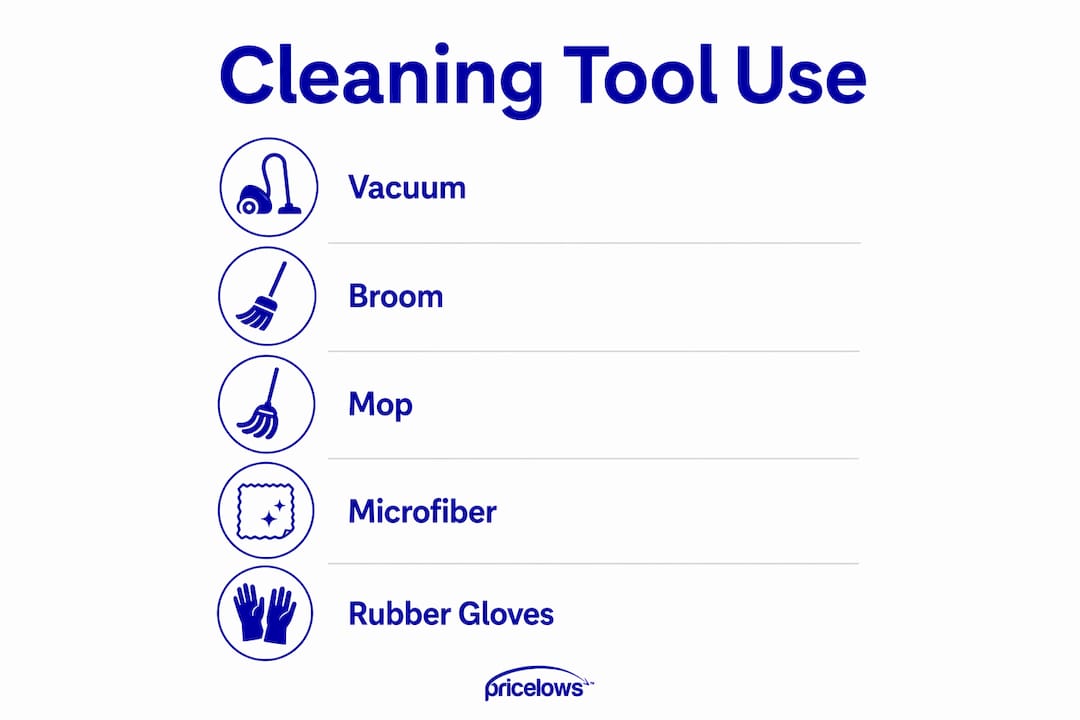
Pro Tip: Start with five items: microfiber cloths, an all-purpose cleaner, a broom or vacuum, a mop, and rubber gloves. Those five cover most weekly cleaning before you spend a dollar on anything else.
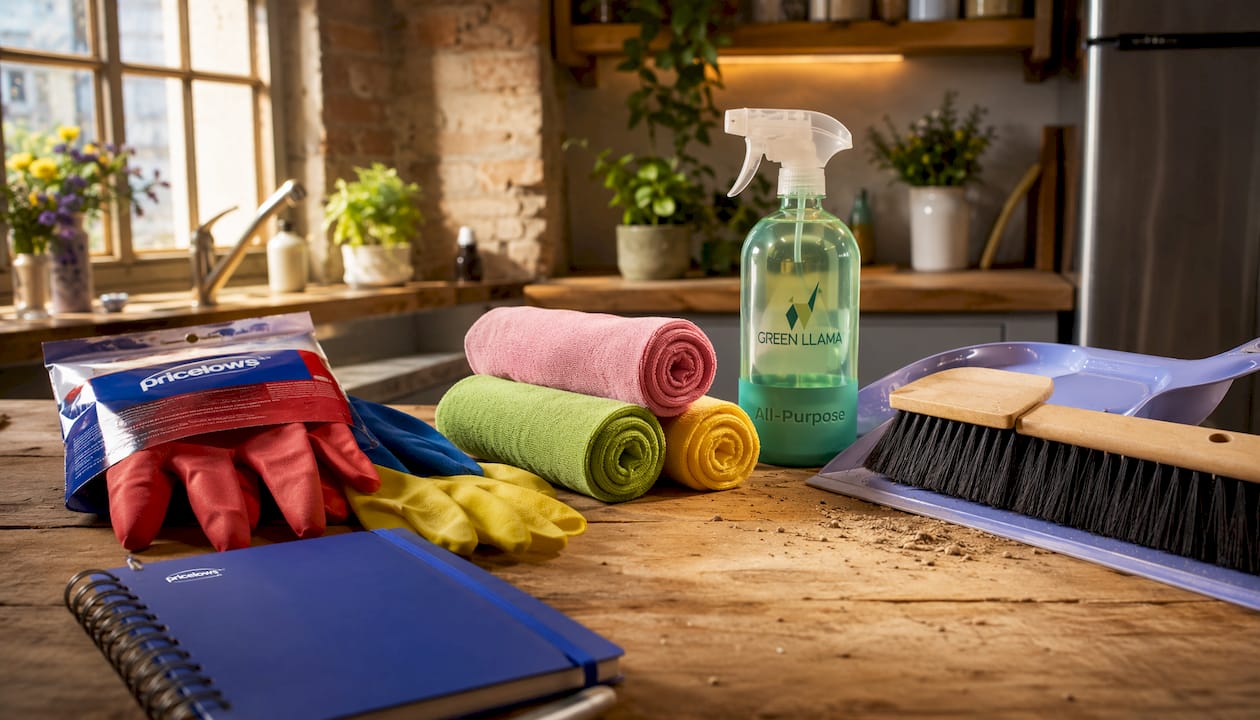
Table of Contents
- What are essential home cleaning tools, and what does each one actually do?
- How do you prioritize what to buy first based on your home?
- Why do experts favor reusable tools, especially microfiber?
- How often should you replace cleaning tools, and what do they cost?
- What should you buy first? A budget starter-kit checklist
- Why fewer high-quality multipurpose tools beat a large specialty collection
- Key Takeaways
- The case for keeping it simple (and why I mean it)
- PriceLows™ starter kits: ready to clean from day one
What are essential home cleaning tools, and what does each one actually do?
A quick reference by tool, so you can match function to your home before you buy.
- Vacuum or broom: Vacuums pull dirt from carpet fibers; a stiff-bristle broom sweeps hard floors fast. Use both if you have mixed flooring.
- Mop: Wet mops clean sealed hard floors; flat microfiber mops dry faster and spread less dirty water.
- Microfiber cloths: Lift dust, grease, and bacteria without scratching. Color-code them: one color for bathrooms, another for kitchen surfaces.
- All-purpose cleaner: Handles counters, sinks, appliances, and most bathroom surfaces. One bottle replaces five specialty sprays.
- Scrub brushes: Stiff bristles for grout lines, shower tracks, and stove crevices. Forbes notes that manual scrub brushes with ergonomic handles outperform motorized scrubbers for tight spots because they give you better pressure control.
- Sponges or melamine pads: Sponges for dishes and general wipe-downs; melamine (magic eraser) pads for scuff marks and stubborn stains.
- Duster: An extendable duster reaches ceiling fans, vents, and crown molding without a ladder.
- Bucket: Holds rinse water for mopping and doubles as a caddy for carrying supplies room to room.
- Rubber gloves: Protect skin from cleaners and hot water. Reusable rubber gloves outlast disposables by months.
- Trash liners: Match liner size to bin size. Overstuffing a small liner wastes bags and causes tears.
- Toilet brush: Non-negotiable. Replace it every six months or when bristles splay.
- Squeegee: Wipe shower glass after every use and you cut deep-clean frequency in half.
Pro Tip: For streak-free glass, use a two-cloth method: one damp microfiber to wash, immediately followed by a completely dry microfiber to buff. No streaks, no paper towels needed.
| Tool | Best surface | Frequency |
|---|---|---|
| Vacuum | Carpet, rugs, upholstery | multiple times per week |
| Broom | Hard floors, tile, garage | as often as needed |
| Flat mop | Hardwood, tile, vinyl | weekly |
| Microfiber cloths | All surfaces | Each cleaning session |
| Scrub brush | Grout, tile, stove | Regularly |
| Duster | Vents, fans, shelves | Regularly |
| Squeegee | Glass, shower doors | After use |
How do you prioritize what to buy first based on your home?
Your floors, pets, and household size should drive the purchase order, not a generic list. Lifehacker’s spring-cleaning roundup makes this point directly: tailor tools to your home’s specific makeup.
Four priority paths:
- Mostly hardwood or tile: Lead with a flat mop, microfiber cloths, and a broom. A vacuum is secondary.
- Mostly carpet: A vacuum with strong suction and attachments is your first purchase. Everything else follows.
- Pet household: Prioritize a vacuum with a pet-hair attachment and reusable pet hair remover gloves for furniture. Strong suction matters more than any other spec.
- Allergy household: HEPA filtration in your vacuum is non-negotiable. Pair it with microfiber cloths (which trap particles rather than spreading them) and a duster you can wash.
Quick checklist before you shop:
- What percentage of your floors are carpet vs. hard surface?
- Do you have pets? What type?
- Does anyone in the household have allergies or asthma?
- How many rooms need regular cleaning?
- What’s your total starter budget?
Mark your top three answers and let them dictate your first three purchases. If you have pets and mostly carpet, a vacuum comes before a mop. If you have hardwood throughout a small apartment, a flat mop and microfiber cloths get you further than a full-size vacuum.
Why do experts favor reusable tools, especially microfiber?
The short answer: reusables cost less over time and clean better. Wirecutter’s 2025 recommendations are explicit that microfiber is lint-free, reusable, and more cost-effective than paper towels over any meaningful time horizon.
Reusables to prioritize:
- Microfiber cloths (replace paper towels entirely for most tasks)
- Washable flat mop pads (the eco-friendly mop pads from PriceLows™ are a practical six-pack option)
- Reusable rubber gloves
- Durable scrub brushes with replaceable heads
When a disposable makes sense: very dirty one-time jobs (post-renovation cleanup, raw meat spills), or when cross-contamination risk is high and you don’t want to launder the cloth.
Pro Tip: Wash microfiber cloths separately from cotton items at warm temperatures. Fabric softener and dryer sheets clog the fibers and kill their cleaning power. Air-dry when possible.
How often should you replace cleaning tools, and what do they cost?
Worn tools don’t just clean poorly; they can spread bacteria or scratch surfaces. Here’s a practical replacement schedule with ballpark price ranges.
| Tool | Replace when | Typical lifespan | Budget cost | Mid-range cost |
|---|---|---|---|---|
| Mop head | Fraying, odor, discoloration | Every 2–3 months | Budget cost | Mid-range cost |
| Microfiber cloths | Thinning, won’t absorb | Every 6–12 months | Budget cost | Mid-range cost |
| Vacuum filter | Reduced suction | Every 3–6 months | Budget cost | Mid-range cost |
| Sponge | Weekly for kitchen use | Replace monthly or more often | Budget cost | Mid-range cost |
| Scrub brush | Splayed bristles | Replace every 4–6 months | Budget cost | Mid-range cost |
| Squeegee blade | Streaking, nicks | Replace several times per year | Budget cost | Mid-range cost |
| Toilet brush | Bristles splay | Replace every 6 months | Budget cost | Mid-range cost |
Simple care habits that extend tool life:
- Rinse mop heads and scrub brushes after every use; let them air-dry upright.
- Check your vacuum filter quarterly; a clogged filter strains the motor.
- Replace kitchen sponges monthly at minimum, weekly if you cook daily.
- Store gloves inside-out after washing so the interior dries completely.
On ergonomics and safety: Choose tools with handles long enough to let you stand upright while mopping or scrubbing. Bent-back posture during cleaning is a real source of strain over time. When using concentrated cleaners, open windows, wear gloves, and never mix bleach with ammonia-based products. The EWG’s healthy cleaning guide is a solid reference for checking product safety ratings before you buy.
What should you buy first? A budget starter-kit checklist
Build your kit in this order and you’ll cover the whole home without overspending.
- All-purpose cleaner + microfiber cloths — $10–$20 total. Handles 90% of surface cleaning immediately.
- Broom or vacuum — $15–$30 for a quality broom; $60–$150 for a basic vacuum. Choose based on your floor type.
- Mop with a washable pad — $20–$40. A flat mop with a machine-washable head beats a string mop for most homes.
- Scrub brush + sponges — $8–$15. A 3-in-1 cleaning brush covers grout, gaps, and general scrubbing in one tool.
- Gloves + trash liners — $8–$15. Reusable rubber gloves and a box of liners sized to your bins.
- Toilet brush + squeegee — $10–$20. Last on the list, but skip them and you’ll regret it within a week.
Total starter budget: approximately modest to moderate amounts, depending on whether you already own a vacuum.
Sustainable swaps that lower cost over time:
- Concentrated cleaners diluted into a reusable spray bottle cut per-use cost significantly.
- Bulk melamine sponges (like the extra-thick value pack at PriceLows™) cost far less per pad than single-packs.
- Washable mop pads eliminate the ongoing cost of disposable refills.
Before you buy, it’s also worth decluttering what you already own — clearing out old or broken tools first means you shop with a clear list and don’t duplicate what you have.
Why fewer high-quality multipurpose tools beat a large specialty collection
Professional cleaners told 10Best they rely on a short set of multipurpose items and simple solutions to get professional results at home. A large collection of specialty products mostly collects dust.
Pro Tip: If you can clean it with an all-purpose cleaner and a microfiber cloth, skip the specialized product. Reserve specialty cleaners for genuine exceptions: oven interiors, grout sealers, and hard-water deposits.
The logic is simple. Every specialty product you own needs storage space, has its own replacement schedule, and costs money when it runs out. A well-chosen all-purpose cleaner, a quality scrub brush, and a set of microfiber cloths cover kitchens, bathrooms, and living areas without a cabinet full of single-use bottles.
Key Takeaways
A short list of durable, reusable, multipurpose tools covers every room in your home and costs far less over time than a cabinet full of specialty products.
| Point | Details |
|---|---|
| Buy reusables first | Microfiber cloths, washable mop pads, and rubber gloves outperform disposables in cost and cleaning power. |
| Match tools to your home | Carpet-heavy homes need a vacuum first; hard-floor homes get more from a flat mop and microfiber. |
| Replace on schedule | Sponges monthly, mop heads every 2–3 months, vacuum filters every 3–6 months to maintain performance. |
| Fewer tools, better results | Professional cleaners confirm a short multipurpose kit outperforms a large specialty collection. |
| PriceLows™ starter kits | The Starter Home Cleaner Kit and Expert Home Cleaner Kit offer ready-made, budget-friendly options with free shipping. |
The case for keeping it simple (and why I mean it)
The cleaning aisle is designed to make you feel like you need more than you do. Specialty sprays, motorized scrubbers, single-surface wipes — most of it is margin for the manufacturer, not value for you.
What actually works is a small, well-organized supply closet: a handful of microfiber cloths, one solid all-purpose cleaner, a mop with a washable head, and a vacuum suited to your floors. That’s the kit professional cleaners use, and it’s the kit that costs the least to maintain over years, not just at the register.
PriceLows™ has built its curated home product collections around exactly this idea: affordable, vetted tools that do the job without the markup. For renters and first-time homeowners especially, a ready-made starter kit removes the guesswork and gets you cleaning the same day it arrives.
PriceLows™ starter kits: ready to clean from day one
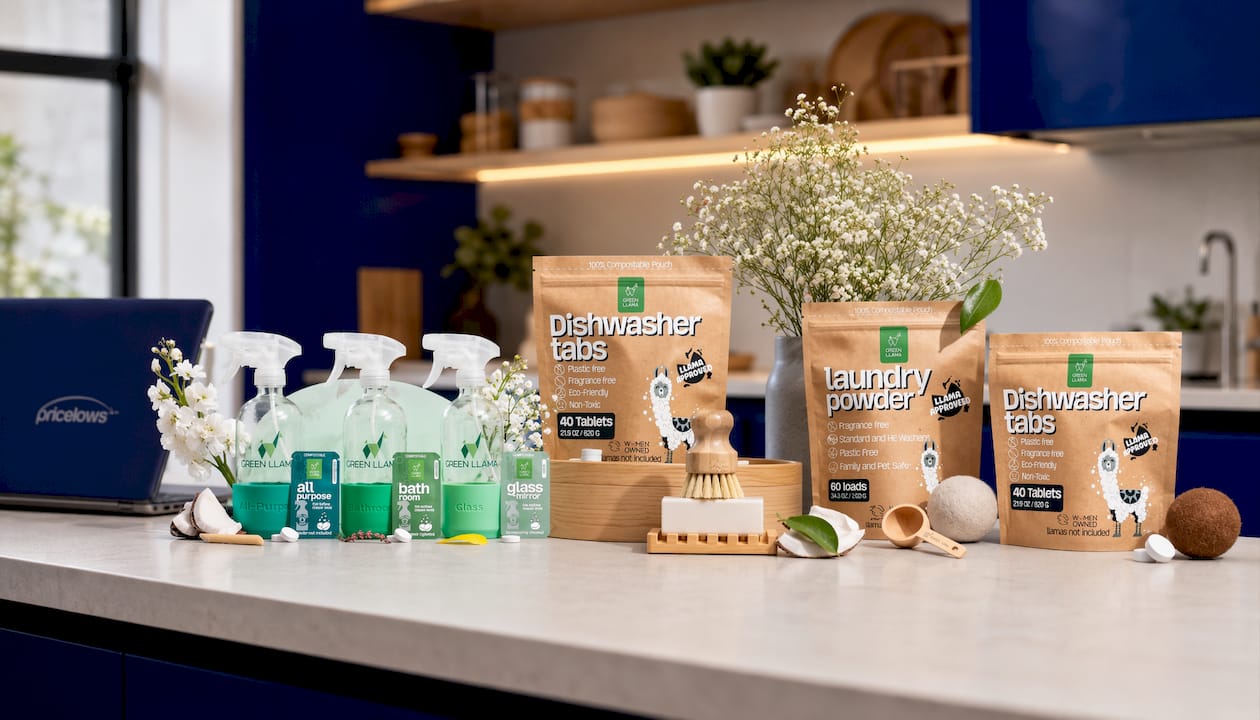
If you’d rather skip the piecemeal shopping and start with a complete kit, PriceLows™ has three options worth knowing about.
The Starter Home Cleaner Kit is a 3-in-1 eco kit built for renters and first-time buyers who want the basics covered without overspending. It’s the fastest path from “nothing” to “ready to clean.”
The Ultimate Home Kitchen Set suits households where the kitchen sees the most action. If cooking and food prep are daily, this set covers the tools that matter most in that room.
The Expert Home Cleaner Kit is the full-featured, eco-friendly option for homeowners who want everything in one order. Pet households and allergy-sensitive homes will find it covers the bases that matter most.
Every order at PriceLows™ ships free with a 100% shipping protection plan. Browse the kits and pick the one that fits your home today.
Useful sources and further reading
- Wirecutter: Best Cleaning Products & Supplies — Expert-tested picks for all-purpose cleaners, microfiber cloths, and reusable tools.
- Consumer Reports: Best Cleaning Products — Lab-tested evaluations of cleaners, cloths, and sponges.
- 10Best/USA Today: What Professional Cleaners Actually Use — Direct sourcing from working professional cleaners on multipurpose tool preferences.
- HGTV: 32 Best Cleaning Products — Editor-curated picks grouped by use case and home area.
- Lifehacker: Spring Cleaning Products Every Home Should Have — Practical guidance on tailoring tools to floor type, pets, and household needs.
- Forbes: Cleaning Supplies Checklist — Detailed checklist with notes on scrub brush performance and specialty vs. multipurpose tools.
- The Spruce: Cleaning Supplies List — Includes vacuum guidance for mixed-floor homes and beater-bar recommendations.
- EWG’s Guide to Healthy Cleaning — Safety ratings for common household cleaners; useful for allergy and chemical-sensitivity households.
- PriceLows™: Essential Yard Tools Guide — Brand context for PriceLows™ curated product collections and savings approach.