


Keep Your Yard Legal: 3 Backyard Fire Pit Safety Rules and Safer Buys
Yes, a backyard fire pit is safe to use, but only when three conditions are met: proper clearance from structures and overhead branches, the right fuel installed correctly, and constant supervision paired with a real plan to put the fire out. The NFPA, EPA, and USFA all point to the same fundamentals. Some retailers carry propane fire tables that make the placement rules easier to satisfy on tight patios, which this guide covers alongside distance, fuel choice, and extinguishing.
TL;DR:
- Propane fire tables significantly reduce clearance requirements and emissions, making them ideal for small or enclosed spaces with neighbors close by.
- The 25-foot distance from structures remains standard for wood-burning pits, but gas units may be safe at 10 to 15 feet depending on local regulations.
- Always verify the manufacturer’s clearance instructions and avoid burning toxic or heavy smoke-producing materials like treated wood or plastic.
- Using fire pit pads, elevated stands, and safety equipment like spark screens lowers the risk of surface damage and accidents.
- Constant adult supervision, safe ignition practices, and proper extinguishing procedures are essential for safe fire pit use.
Table of Contents
- Types of Fire Pits and Fuels: How Each Affects Safety
- How Far Should a Fire Pit Be From the House?
- Is It Safe to Put a Fire Pit on a Patio or Deck?
- Pre-Use Checklist and Safe Ignition Steps
- Rules for Staying Safe While the Fire Is Burning
- How to Fully Extinguish a Fire Pit and Handle Ashes
- Maintenance and Storage Habits That Reduce Risk All Year
- What Permits or Local Rules Apply to Backyard Fire Pits?
- PriceLows™ and Buying Smarter for Fire Pit Safety
- Enjoying a Fire Pit Without Becoming a Nuisance or a Hazard
- Safer Patio Fires Start With the Right Setup
- Sources
- FAQ
Types of Fire Pits and Fuels: How Each Affects Safety
Wood-burning pits throw embers, produce smoke, and need the most clearance. Manufactured smokeless wood products cut visible smoke but still send sparks upward, so they’re not a free pass on distance requirements. Propane and natural gas tables solve both problems at once: fewer embers, less smoke, and often a shorter required clearance depending on local rules, since outdoor fires burning wood can be a real source of fine-particle air pollution that gas doesn’t produce.
What you should never burn:
- Pressure-treated or painted lumber (releases toxic chemicals when burned)
- Household trash or plastic (creates dangerous fumes)
- Yard waste, leaves, or wet brush (smolders and produces heavy smoke)
- Particleboard or laminated wood (glues and resins burn dirty)
Pro Tip: If your neighbors sit close or your HOA has fielded smoke complaints before, skip the debate entirely and go with a propane or natural gas table. Fewer embers means fewer arguments over the fence.
How Far Should a Fire Pit Be From the House?
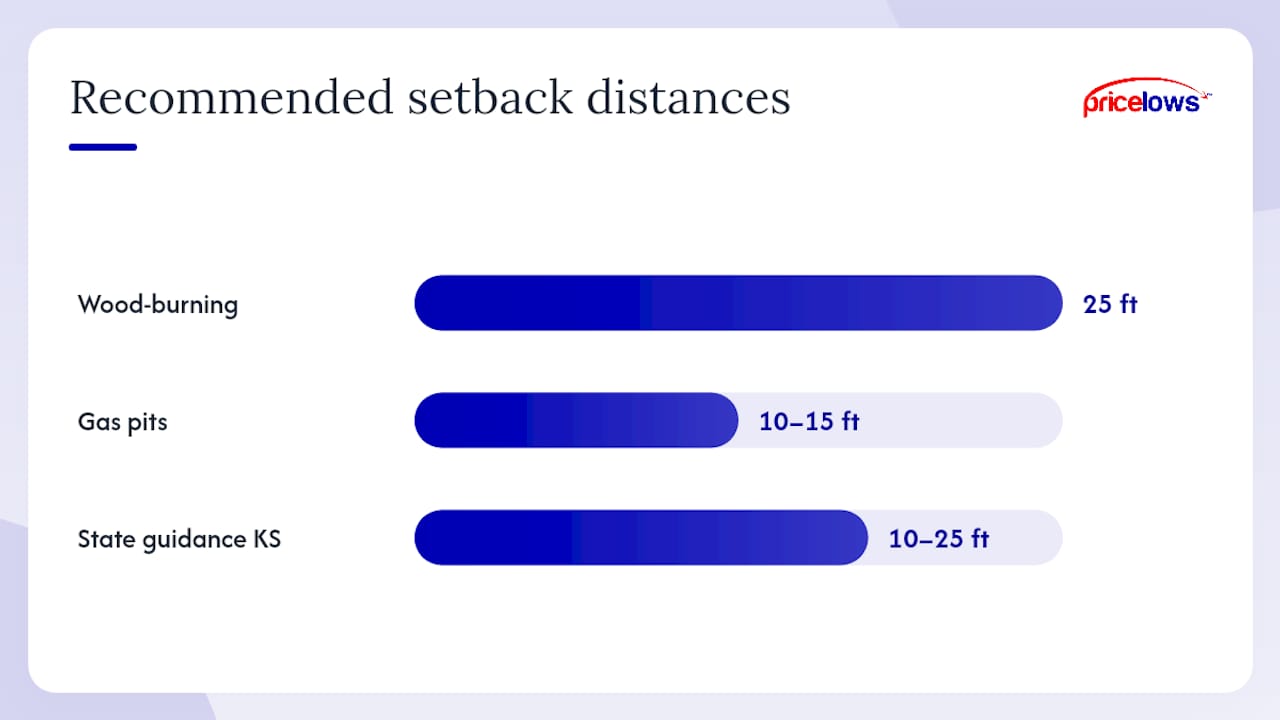
The 25-foot rule shows up constantly in fire codes, and for good reason: many NFPA and IFC guidelines anchor wood-burning recreational fires at that distance from structures, fences, and overhanging trees. Gas fire pits often get more breathing room in the rulebook, with some jurisdictions allowing 10 to 15 feet since they don’t launch embers the way wood does. State fire marshal offices frequently split the difference, with guidance like Kansas recommending 10 to 25 feet depending on fuel type.
To measure and mitigate risk properly:
- Pace off the distance from the fire pit’s edge to your house, garage, fence, and any wooden structures, then confirm with a tape measure.
- Look up. Overhanging branches, eaves, and gutters count as obstructions, and they need vertical clearance too, typically several feet above the flame.
- Check property lines, not just your own structures. A neighbor’s shed 12 feet away matters even if your house is 40 feet off.
- If space is tight, switch to a propane table, add a non-combustible barrier wall, or ask your local fire marshal about a variance before you build anything permanent.
Pro Tip: Local rules vary block to block in wildfire-prone regions, so a quick call to your fire department beats guessing. Provisions differ community by community, and NFPA itself recommends contacting local officials directly rather than assuming a national standard applies everywhere.
Is It Safe to Put a Fire Pit on a Patio or Deck?

Wood and composite decking are combustible, full stop, so any fire pit sitting directly on one is a hazard waiting for a stray ember or a hot base plate to scorch the surface. A stone or concrete patio is a better starting point, but even those benefit from a barrier that protects the surface from heat discoloration over time.
Products that make deck and patio placement safer:
- Heat-resistant fire pit pads rated for direct contact with wood decking
- Elevated stands that lift the unit off the surface and improve airflow underneath
- Fire pit pads sized specifically to the base diameter of your unit, not just “one size fits all”
Always check the manufacturer’s clearance specs stamped on the unit before placing it, and cross-reference that against your local code. If your deck space is limited, a propane fire table is usually the safer call. It runs cooler at the base than most wood-burning designs and pairs naturally with a thoughtfully laid out patio.
Pre-Use Checklist and Safe Ignition Steps
Run through this before you strike a match or open a valve:
- Check wind speed and direction. Gusty days send embers farther than you’d expect.
- Look up your local air quality index. If it’s flagged as unhealthy, skip burning wood that day.
- Clear a 3 to 5 foot radius of leaves, mulch, and other debris around the pit.
- Inspect the fire pit itself for cracks, rust, or a wobbly base.
- Keep a hose, bucket of water, or fire extinguisher within arm’s reach before lighting anything.
For ignition, never use gasoline, kerosene, or lighter fluid. Safety experts and the CPSC are explicit on this point: those liquids can flash back unpredictably. Use fire-starter sticks or dry kindling instead. If you’re running a gas unit, check the hose for cracks, confirm the valve turns smoothly, and do a soapy-water leak check on every connection before you light it.
Pro Tip: *Keep a moisture meter in your garage."
Rules for Staying Safe While the Fire Is Burning
An adult who isn’t distracted by a phone or a second glass of wine needs to watch the fire the entire time it’s lit. That’s not a suggestion, it’s the single biggest factor separating a pleasant evening from a trip to the ER.
- Keep children and pets at least 3 feet back from the flame at all times
- Arrange seating so no one is closer than that same 3-foot buffer, even when reaching for a marshmallow stick
- Use long-handled tools for cooking, never bare hands or short skewers that put fingers near the flame
- Add a spark screen on windy nights, understanding it reduces flying embers but doesn’t replace required clearance
- Go easy on the alcohol if you’re the one responsible for supervision that night
Good outdoor seating placement does double duty here: it keeps guests comfortable and keeps them at a safe radius without anyone feeling herded.
How to Fully Extinguish a Fire Pit and Handle Ashes
For wood or charcoal fires, use the water-stir-check method: pour water over the embers, stir with a metal tool to expose hidden hot spots, then pour again. Repeat until there’s no hissing and no visible steam. Coals that look dead can hold heat for hours underneath the surface.
- Douse the fire fully with water, not just a light sprinkle.
- Stir the ashes with a metal poker to break up clumps and expose buried embers.
- Pour water a second time and check for warmth with the back of your hand held near, not on, the ash.
- For gas units, turn off the valve at the tank or supply line and confirm the flame is fully out, then double check the connection for any residual smell of gas.
- Move cooled ashes into a metal container and store it away from the house, deck, or any combustible material, since embers can smolder for over a day.
Call 911 immediately if a fire spreads beyond the pit or you can’t control it with water on hand.
Maintenance and Storage Habits That Reduce Risk All Year
Firewood burns cleanest around 20% moisture, and seasoned wood at that level produces measurably less visible smoke and particulate output than green or wet logs. Store it stacked, covered, and off the ground so it seasons properly instead of absorbing moisture from the soil.
- Keep stacked firewood at least 30 feet from the fire pit itself
- Inspect gas fittings, hoses, and valves each season for cracks or corrosion, and replace anything questionable
- Store spare propane cylinders upright, outdoors, away from direct heat sources
- Cover metal fire pits in the off-season to slow rust and extend the unit’s life
Statistic Callout: Firewood seasoned to roughly 20% moisture content burns hotter and cleaner than green wood, which the EPA links directly to lower particle pollution in backyard settings.
What Permits or Local Rules Apply to Backyard Fire Pits?
Backyard fire regulations differ by city, county, and sometimes by HOA, so don’t assume your neighbor’s setup is automatically legal for your address.
- Call your local fire marshal’s office or check the city website for open-burning ordinances before installing anything permanent
- Ask your HOA about restrictions, since many communities ban wood burning outright even where the city allows it
- Watch for air-quality alerts. The EPA advises against burning during poor-air days, particularly given how much particulate pollution recreational fires can generate
- Call your insurance agent. Some policies address liability differently depending on fire pit type and placement, and it’s worth knowing before, not after, an incident
PriceLows™ and Buying Smarter for Fire Pit Safety
Author Thane Holland has spent years covering practical home and yard safety topics, with a focus on turning code language into decisions homeowners can actually act on.
When shopping for a fire table, match the product spec sheet to your actual yard constraints:
- Confirm the BTU rating against your intended use. A 50,000 BTU unit throws serious heat, so measure your clearance before you buy, not after.
- Check the frame material. Aluminum resists rust better than steel in humid climates.
- Look for included safety features like a lid, a control knob shutoff, and a stable base.
- Pair any new fire table with a fire pit pad, a spark screen, a rated extinguisher, and a moisture meter if you’re also burning wood elsewhere in the yard.
Enjoying a Fire Pit Without Becoming a Nuisance or a Hazard
Owning a fire pit comes with an obligation to the people living around you, not just yourself. The habit worth adopting tonight, before your next fire, is simple: check wind direction and the local air quality index every single time, not just on days that feel smoky. It takes 30 seconds on your phone and it’s the cheapest insurance against a neighbor complaint or a genuinely bad burn day.
If your lot is small or your deck sits close to a property line, don’t force a wood pit into a space it doesn’t fit. A propane option solves the clearance problem and the smoke problem in one move, and it lets you keep the fire pit tradition alive without turning your patio into a liability.
— Thane Holland
Safer Patio Fires Start With the Right Setup
Swapping wood for propane solves two problems most backyard fire pit owners run into at once: tight clearance requirements and smoke drifting toward the neighbors. Some retailers offer patio sets built around that exact tradeoff, giving you a fire table and matching furniture in one purchase instead of piecing it together yourself.

The Outdoor Patio Furniture Set with a 50,000 BTU fire pit table works well for a mid-size patio where you want real heat output without the ember risk of wood. If you’re hosting bigger groups regularly, the 8-piece patio set with a 50,000 BTU propane fire pit and its aluminum frame gives you enough seating for a full family gathering while keeping the same lower-clearance advantage gas offers. For smaller decks or condo patios, the 4-piece set with a 41-inch propane fire pit table, complete with a wicker sofa and swivel glider chairs, fits tighter spaces without sacrificing the fire feature.
Pair any of these with a fire pit pad, a spark screen, and a rated extinguisher, all things worth checking off before your first burn. And if you’re clearing brush or dead branches to open up clearance space, a partner resource on safe stump removal covers the vegetation side of that job. Before you check out, confirm the manufacturer clearance specs and BTU rating match your yard, then browse the full lineup at the retailer’s website to find the set that fits.
Sources
- Backyard recreational fires | US EPA
- Outdoor Fire Safety | USFA / FEMA
- Wildfire Prevention Tips for Fire Pits and Outdoor Fires | NFPA
- U.S. Consumer Product Safety Commission (CPSC)
- Outdoor Fire Pit Safety Tips | Travelers Insurance
FAQ
How Far Away Should a Fire Pit Be From the House?
Many codes anchor wood-burning fire pits at 25 feet from structures, while gas units sometimes get reduced clearance of 10 to 15 feet depending on local rules, so check your specific jurisdiction before placing one.
What Are the Do’s and Don’ts of Fire Pit Safety?
Do keep at least 3 feet of seating clearance, supervise constantly, and use seasoned wood or propane. Don’t use gasoline or lighter fluid to ignite a fire, and don’t leave it unattended even for a few minutes.
Should You Put Anything in the Bottom of a Fire Pit?
A layer of sand or lava rock at the bottom of a wood-burning pit helps insulate the base and improves airflow, though propane units typically use manufacturer-specified fire glass or rock instead.
What Is the Safest Type of Outdoor Fire Pit?
Propane and natural gas fire tables are generally considered the safer option for most yards because they produce far fewer embers and less smoke than wood, which often allows reduced clearance distances too. Some retailers carry several propane fire table sets built with exactly this safety advantage in mind.