


15–30 Minute Baking Soda Cleaning Fixes: 4 Recipes for Homeowners
Baking soda is a cheap, mild abrasive and odor neutralizer that handles everyday scrubbing and deodorizing better than almost anything else in your cabinet, but it isn’t a disinfectant or a limescale remover. It works because it’s a mild alkali that neutralizes acidic odor molecules while its fine crystals lift grease and light stains without scratching most surfaces. Use it for routine cleaning, not for killing germs or dissolving hard-water buildup. One safety note up front: never mix bleach with vinegar or other acids, and patch-test any delicate surface before you scrub.
TL;DR:
- Baking soda is effective for deodorizing and light cleaning but cannot disinfect or dissolve hard mineral deposits, requiring additional disinfectants or acids.
- It should be replaced monthly in refrigerators and used with appropriate dwell times of 15 to 30 minutes for most odor neutralization applications.
- Use baking soda safely on stainless steel, porcelain, grout, and textiles, but avoid natural stones, delicate finishes, and surfaces requiring sterilization.
- For stubborn grease or limescale, a specialized cleaner or vinegar is more effective than baking soda alone.
- Combining baking soda with acids or bleach can produce hazardous fumes, so always avoid mixing with these substances during cleaning.
Table of Contents
- The Fastest Baking Soda Cleaning Uses Around the House
- Baking Soda Cleaning Uses in the Kitchen
- Bathroom and Grout Cleaning With Baking Soda
- Baking Soda for Laundry and Fabric Stains
- Why Baking Soda Works So Well on Household Odors
- Appliance and Drain Maintenance With Baking Soda
- What Not to Clean With Baking Soda
- Exact Recipes: Baking Soda Ratios and Dwell Times
- Baking Soda Cleaning Uses for Patios and Garden Tools
- Baking Soda vs. Commercial Cleaners: What Actually Wins
- When Baking Soda Is the Right Tool, and When It Isn’t
- Affordable Complements When Baking Soda Isn’t Enough
- Sources
- FAQ
The Fastest Baking Soda Cleaning Uses Around the House
Some jobs need a full explanation. Others just need you to know what to sprinkle and how long to wait. Here’s the shortlist for when you’re standing in front of a mess and need an answer now.
- Fridge deodorizer: Set an open box on a shelf and replace it every 30 days, or sooner after a spill.
- Carpet refresh: Sprinkle a light, even layer, wait 15 to 30 minutes, then vacuum thoroughly.
- Oven paste: Spread a thick paste on grease and grime, let it sit several hours or overnight, then wipe and rinse.
- Sink scrub: Sprinkle directly on a damp sponge and work in circles on stainless steel or porcelain.
- Garbage disposal: Pour half a cup down the drain, let it sit 10 minutes, then run cold water with the disposal on.
- Grout paste: Mix into a spreadable paste, scrub with an old toothbrush, then rinse clean.
- Laundry booster: Add a moderate amount such as a cup to the wash drum alongside your regular detergent.
- Mattress freshening: Dust the surface, wait around 20 minutes, then vacuum with an upholstery attachment.
Each of these gets a deeper walkthrough below, including the exact ratios and dwell times that make the difference between a mediocre result and a genuinely clean surface.
Baking Soda Cleaning Uses in the Kitchen
The kitchen is where baking soda earns its reputation, mostly because grease, food residue, and lingering odors are its natural enemies.
For a baked-on oven mess, mix baking soda with a small amount of water until it forms a spreadable paste, thicker than pancake batter but not dry and crumbly. Spread it across the interior surfaces, avoiding heating elements, and let it dwell for several hours or overnight. A longer dwell time softens grease more effectively than a quick five-minute application because the paste has time to loosen carbon deposits mechanically. Wipe with a damp cloth, then rinse. If your oven has heavy carbonized buildup that a paste won’t touch, use the self-cleaning cycle or a purpose-made oven cleaner instead.
- Wet the stainless-steel sink or scuffed cookware surface.
- Sprinkle baking soda directly onto a soft sponge or cloth.
- Scrub in small circles, following the grain of brushed steel.
- Rinse thoroughly and dry to prevent water spots.
Skip this method on nonstick or ceramic-coated pans. The mild abrasive action that’s harmless on stainless steel can dull specialty coatings over time.
For the refrigerator, an open box of baking soda absorbs odors from spoiled produce or spilled sauces. Research from NC State’s cooperative extension recommends replacing the box roughly every month, since its odor-absorbing capacity drops off once it’s saturated.
Garbage disposals need mechanical cleaning before deodorizing. Run cold water and a few ice cubes through first to knock loose debris, then follow with baking soda and water to neutralize lingering smells. Skip caustic chemical drain cleaners here. They can damage disposal blades and seals over repeated use.
Pro Tip: Keep a small dish of baking soda paste on the counter while you cook. Wiping down stovetop splatters immediately, instead of letting them bake on, cuts your weekend scrubbing time in half.
Bathroom and Grout Cleaning With Baking Soda
Grout is porous, which means it grabs onto grime in a way flat tile never does. A paste made from baking soda and water, or baking soda and hydrogen peroxide for extra lifting power on stained lines, works into those grooves better than a liquid spray ever will.
- Mix the paste to a toothpaste consistency and apply directly to grout lines.
- Scrub with a stiff-bristled brush or an old toothbrush for tight corners.
- Let it sit 10 to 15 minutes before rinsing with warm water.
- For toilets, scrub the bowl with baking soda first, then flush.
- If residue remains, follow with a separate vinegar rinse rather than mixing the two in the bowl at once.
- Never add bleach to that vinegar rinse. Combining bleach with an acid releases chlorine gas, which can cause serious respiratory irritation even in small amounts.
Tubs and shower surrounds respond well to the same paste method, but natural stone is the exception. Marble, granite, and travertine can etch or dull under repeated mild-abrasive contact, especially on polished finishes. Spot-test in an inconspicuous corner first, and if you notice any dulling, stick to a nonabrasive cloth and a pH-neutral stone cleaner instead.
Baking Soda for Laundry and Fabric Stains
Fabric cleaning splits into two clear categories: odor problems and stain problems, and baking soda handles them differently.
- For odors on carpets, rugs, or mattresses: sprinkle a dry, even layer, let it sit 15 to 30 minutes, then vacuum completely. This dry-sprinkle method pulls musty and acidic smells out of fibers without introducing any moisture that could cause mildew.
- For oily or greasy stains on clothing: make a thick paste, work it into the stained area with your fingers or a soft brush, let it sit 15 to 20 minutes, then launder as usual. Test an inside seam first on delicate fabrics or anything with dark dye, since prolonged abrasive contact can fade or thin fine weaves.
- As a laundry booster: add about one cup directly to the wash drum along with your regular detergent to help control odors in workout clothes, towels, or cloth diapers. Skip this on wool and silk, which react poorly to alkaline exposure over repeated washes.
Why Baking Soda Works So Well on Household Odors
Baking soda doesn’t mask smells the way an aerosol spray does. It neutralizes them at the molecular level, reacting with the acidic compounds that make garbage, pet accidents, and old gym bags smell the way they do. That’s a meaningfully different mechanism than perfume-based air fresheners, which just layer a stronger scent on top of the problem.
- Open box in the fridge or freezer, replaced every month.
- A light dusting on carpets and mattresses, vacuumed after 15 to 30 minutes.
- Small sachets tucked into shoes or gym bags overnight.
- A half-cup layer in the bottom of trash cans, refreshed weekly or after each bag change.
By the Numbers: Cooperative extension research recommends 15 to 30 minute contact times for baking soda to meaningfully neutralize surface odors on carpets and in refrigerators, with fridge boxes needing monthly replacement once their absorbing capacity is used up.
If you’re dealing with a car that’s picked up a persistent odor, the same neutralizing logic applies, though diagnosing the actual source first matters more than any single product you sprinkle on the seats.
Appliance and Drain Maintenance With Baking Soda
Appliances accumulate two different problems: odors from organic residue and mineral scale from hard water. Baking soda only solves one of them.
- Washing machine: run an empty hot cycle with one cup of baking soda in the drum every month or two to neutralize detergent buildup and musty odors around the door seal.
- Dishwasher: sprinkle a small amount in the bottom of an empty machine and run a short hot cycle to freshen the interior between deep cleans.
- Kettle: for light residue, a mild baking-soda boil can help loosen buildup. For actual limescale, though, baking soda doesn’t have the acidity to dissolve calcium deposits the way distilled white vinegar does. Descale with vinegar, then rinse thoroughly before your next use.
- Drains: clear hair and debris mechanically first with a drain snake or gloved hand, then use baking soda with hot water as ongoing maintenance to control odor. For a genuinely stubborn clog, a lye-based cleaner or a plumber handles what baking soda physically can’t.
What Not to Clean With Baking Soda
Knowing baking soda’s limits saves you wasted effort and, in one specific case, protects your health.
- It’s not a disinfectant. Baking soda neutralizes odors and lifts light grime, but it doesn’t kill bacteria or viruses. Use an EPA-registered disinfectant on surfaces that actually need sanitizing, like cutting boards after raw meat or high-touch spots during flu season.
- Never mix bleach with vinegar, lemon juice, or any acid. That combination produces chlorine gas, which irritates eyes and lungs even at low concentrations and can cause serious harm in an enclosed bathroom. The same danger applies to mixing bleach with ammonia.
- Skip polished natural stone, gold-plated fixtures, and some anodized aluminum. The mild abrasive action that’s safe on ceramic and stainless steel can dull these finishes with repeated use.
- Don’t expect it to remove limescale. Save that job for an acidic descaler.
Pro Tip: If you ever create a chemical mixture that smells sharp or makes your eyes water, leave the room immediately, open windows for ventilation, and don’t go back in until the air has cleared. Call poison control if anyone experienced exposure symptoms.
Exact Recipes: Baking Soda Ratios and Dwell Times
Precision matters more than people assume. A paste that’s too thin runs off vertical surfaces before it can work; one that’s too thick just flakes off dry.
- Standard scrubbing paste: combine roughly 3 parts baking soda to 1 part water. Adjust toward thicker for vertical surfaces like oven walls or shower tile, where you need it to cling rather than drip.
- Laundry odor treatment: add a moderate amount of baking soda directly to the wash drum alongside your normal detergent dose. Skip this on wool, silk, and other delicate fibers.
- Grout and stain paste: for tougher discoloration, swap plain water for hydrogen peroxide in the same ratio to add mild lifting power.
- Sequencing with vinegar: use baking soda to scrub first, rinse, then apply a separate vinegar rinse if you want extra shine or residue removal. Mixing the two together in one step mostly just produces carbon dioxide fizz that looks dramatic but cancels out much of each ingredient’s individual effectiveness.
Pro Tip: Mix only as much paste as you’ll use in one session. Baking soda paste doesn’t store well once wet, and a fresh batch always outperforms a dried-out leftover.
Baking Soda Cleaning Uses for Patios and Garden Tools
Outdoor surfaces take a different kind of abuse: dirt, algae, rust, and mildew that build up over weeks of weather exposure rather than daily use.
For light mildew stains on concrete or stone patios, sprinkle baking soda directly onto the damp surface, let it sit 15 minutes, then scrub with a stiff outdoor broom and rinse with a hose. It won’t strip deep-set algae the way a pressure washer or oxygen bleach solution will, but it’s a solid first pass for surface-level grime and it won’t harm surrounding plants the way harsher chemical cleaners can.
Garden tools benefit from a baking-soda paste applied to metal blades and handles to loosen dried sap, dirt, and light surface rust before you oil them for storage. Scrub with a wire brush for stubborn spots, rinse, and dry completely before putting tools away, since any residual moisture invites new rust to form.
Plastic patio furniture and outdoor cushions respond well to a baking soda and water scrub for mildew spots and general grime, followed by a full rinse and air-dry in direct sun, which also helps kill lingering mildew spores. Skip it on outdoor fabric with waterproof coatings, since repeated abrasive scrubbing can wear down that protective layer faster than a soft cloth and mild soap would.
Baking Soda vs. Commercial Cleaners: What Actually Wins
Baking soda competes well against commercial multipurpose cleaners on cost, gentleness, and odor neutralization. It loses on speed, disinfecting power, and mineral scale removal.
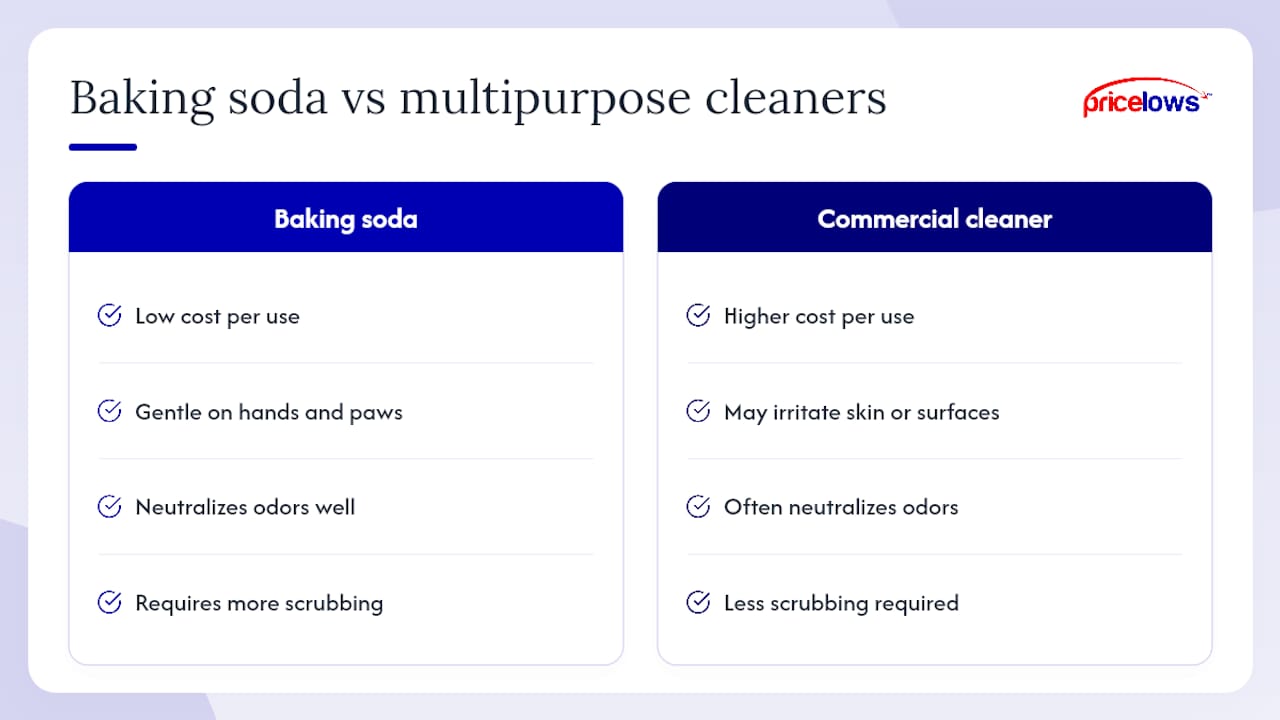
A commercial multipurpose cleaner is formulated to cut grease and, often, disinfect in a single pass, which means less scrubbing time for you. Baking soda requires more elbow grease and, in the case of oven grime, a much longer dwell time to get comparable results. Where baking soda pulls ahead is cost per use and the fact that it’s genuinely gentle on kids’ hands, pet paws, and countertops you don’t want exposed to fragrance chemicals or harsh solvents every single day.
For disinfecting needs, the comparison isn’t close. Baking soda doesn’t kill pathogens, so bathrooms, cutting boards, and sickroom surfaces need an EPA-registered disinfectant regardless of how much scrubbing you do. And for hard-water buildup, an acidic descaler or a dedicated limescale remover will outperform baking soda every time, since the chemistry simply isn’t there for baking soda to dissolve calcium deposits.
The practical answer for most households is to run both. Baking soda for daily maintenance, deodorizing, and light stains. A purpose-made cleaner for disinfecting, scale, and stubborn grease that’s had time to set.
When Baking Soda Is the Right Tool, and When It Isn’t
Baking soda earns its spot as a first-line cleaning tool because it’s cheap, low-risk, and genuinely effective on the jobs it’s built for. That’s most of your day-to-day maintenance: countertops, carpets, fridge odors, laundry freshness. But treating it as a universal fix leads people to skip disinfecting steps they actually need, or to scrub at limescale for twenty minutes with nothing to show for it.
The smarter approach is building a small, budget kit around it. Rubber gloves, a stack of melamine sponges for scuffs baking soda can’t quite lift, and one solid multipurpose cleaner for the jobs that need real disinfecting power. That combination covers nearly everything a household actually deals with.
— Thane Holland
Affordable Complements When Baking Soda Isn’t Enough
Baking soda handles daily maintenance, but disinfecting, heavy grease, and hard-water buildup call for a real cleaner sitting next to it in the cabinet. Budget-friendly backup cleaning products are available without the markup typical of many name-brand versions.
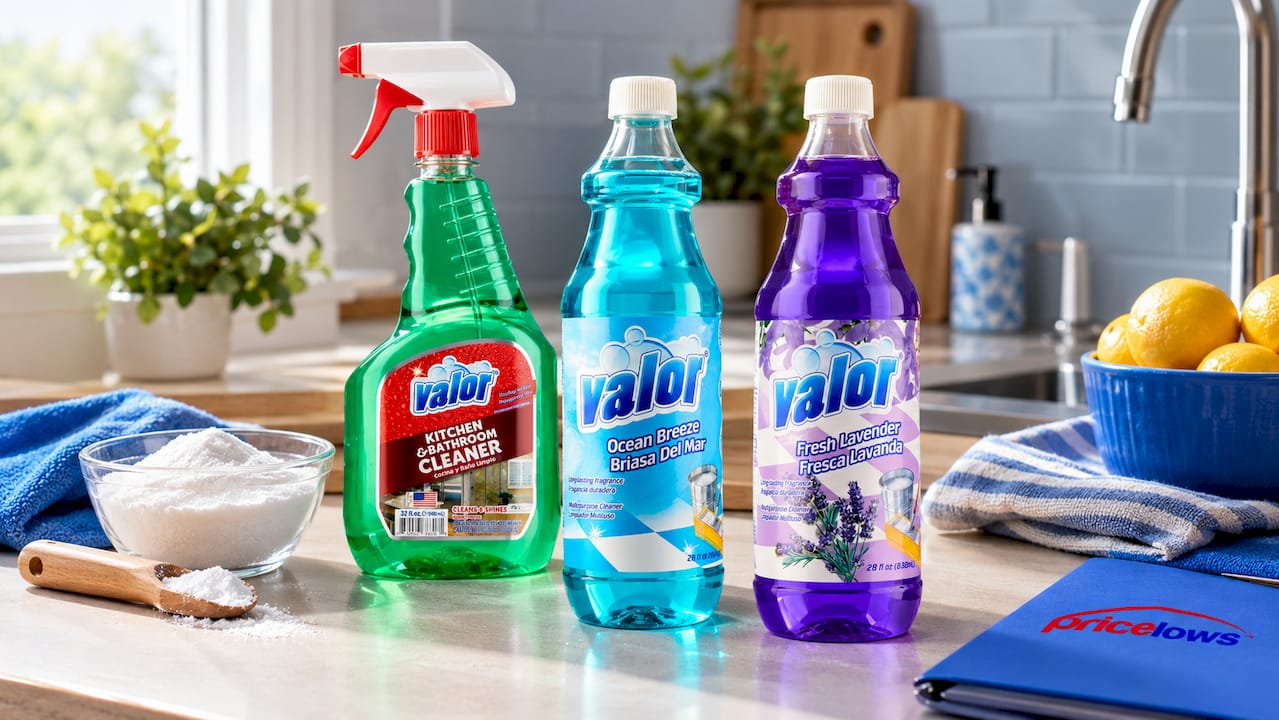
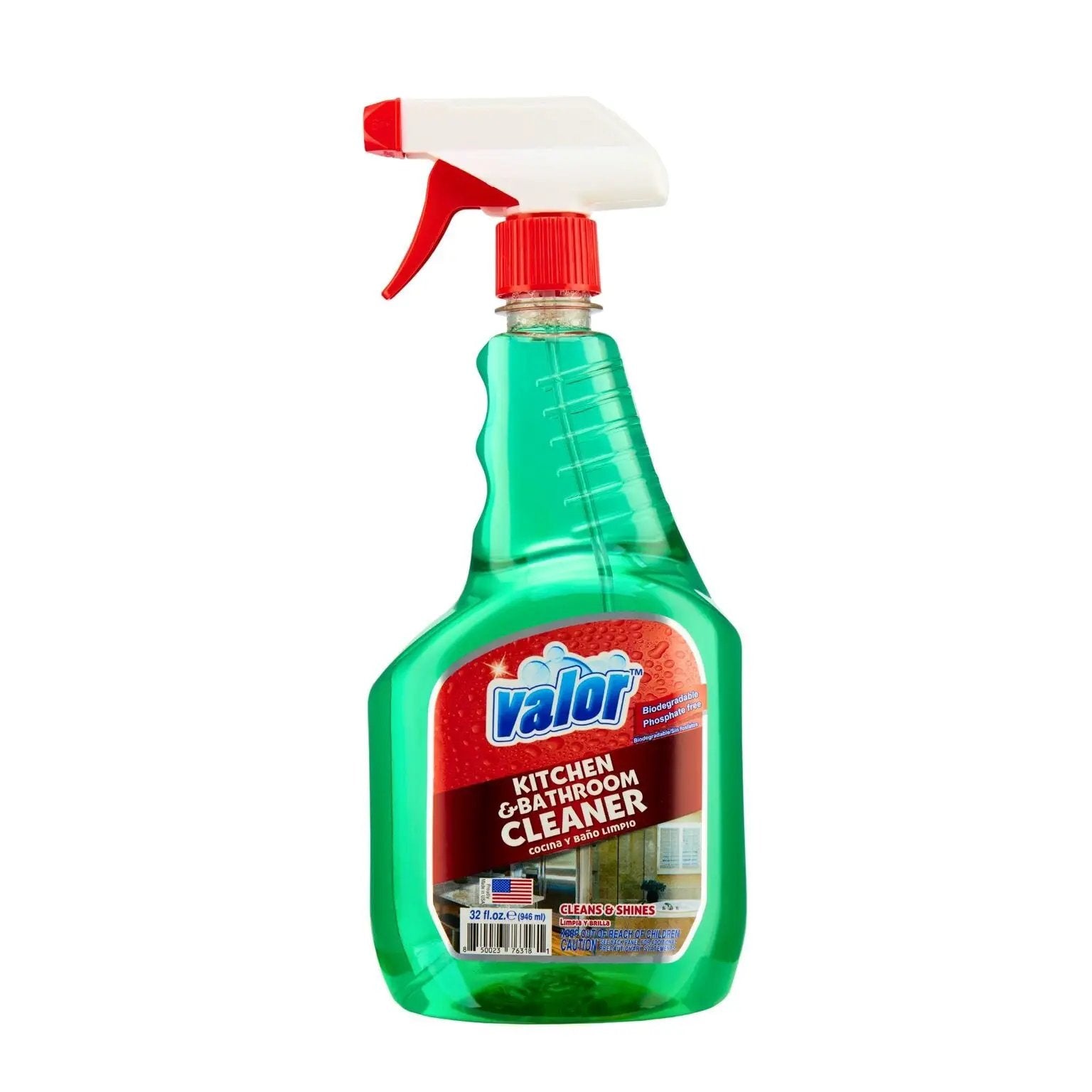
The Kitchen & Bathroom Cleaner is built for the jobs baking soda can’t finish alone, cutting grease and disinfecting surfaces in one pass. If you want a lighter, more pleasant scent for everyday wipe-downs, the Multi Purpose Cleaner Ocean Breeze and Multi Purpose Cleaner Lavender both pair well with a baking-soda routine on countertops, sinks, and bathroom fixtures. Browse the full lineup of home cleaning essentials and add whichever cleaner fits your household’s biggest gap, whether that’s disinfecting, scent, or straight grease-cutting power.
Sources
- Eliminating odors from your refrigerator
- Vinegar and baking soda: a cleaning hack or just a bunch of fizz?
- Dangers of Mixing Bleach with Cleaners | Washington State Department of Health
- Cleaning with baking soda
FAQ
Can you use baking soda to clean a toilet bowl?
Yes. Sprinkle baking soda directly into the bowl, scrub with a toilet brush, and flush. For extra shine, follow up with a separate vinegar rinse rather than combining the two in one step.
What happens when you mix Dawn dish soap and baking soda?
The combination creates a mildly abrasive, sudsy paste useful for greasy dishes and stovetop grime, but it’s not a hazardous mixture like bleach and acids. It works as a stronger degreasing paste, not a disinfectant.
Can I wash my private area with baking soda?
No. Baking soda’s alkalinity can disrupt the skin’s natural pH balance in sensitive areas, and it isn’t formulated or tested for that use. Stick to products specifically designed for personal hygiene.
What should you not clean with baking soda?
Skip polished natural stone, gold-plated fixtures, nonstick cookware, and anodized aluminum, since repeated mild-abrasive contact can dull these finishes. It also won’t remove limescale or disinfect surfaces that need actual sanitizing.