


Benefits of Affordable Home Organization for Every Budget
TL;DR:
- Affordable home organization improves mental health, physical wellbeing, and saves household money.
- Decluttering before purchasing storage prevents unnecessary spending and makes space more functional.
Affordable home organization reduces anxiety, saves money, and reclaims time you didn’t know you were losing. You don’t need a closet full of matching bins to get there. The research is clear, the methods are simple, and the payoff starts the moment you make one drawer functional.
What are the real benefits of affordable home organization?
Getting organized on a budget delivers gains across three areas: mental health, physical wellbeing, and daily finances.
Mental and emotional wins:
- Lower anxiety and cortisol levels from a calmer, less cluttered environment
- Sharper focus and better decision-making throughout the day
- Improved sleep quality when your bedroom isn’t visually chaotic
- Greater confidence at home, including feeling comfortable having guests over
Physical and practical gains:
- Fewer trips, falls, and accidents from clear walkways and properly stored items
- Reduced dust and allergens from regular decluttering
- Less food waste when your kitchen is organized and visible
Financial benefits:
- No more buying duplicates of items you already own but couldn’t find
- Fewer late fees from a simple filing system for bills
- Lower grocery bills when you can actually see what’s in your fridge and pantry
PriceLows™ has spent years helping families get there without overspending, offering vetted affordable organizing solutions across home, yard, and garage categories.
How does an organized home improve your mental and physical health?
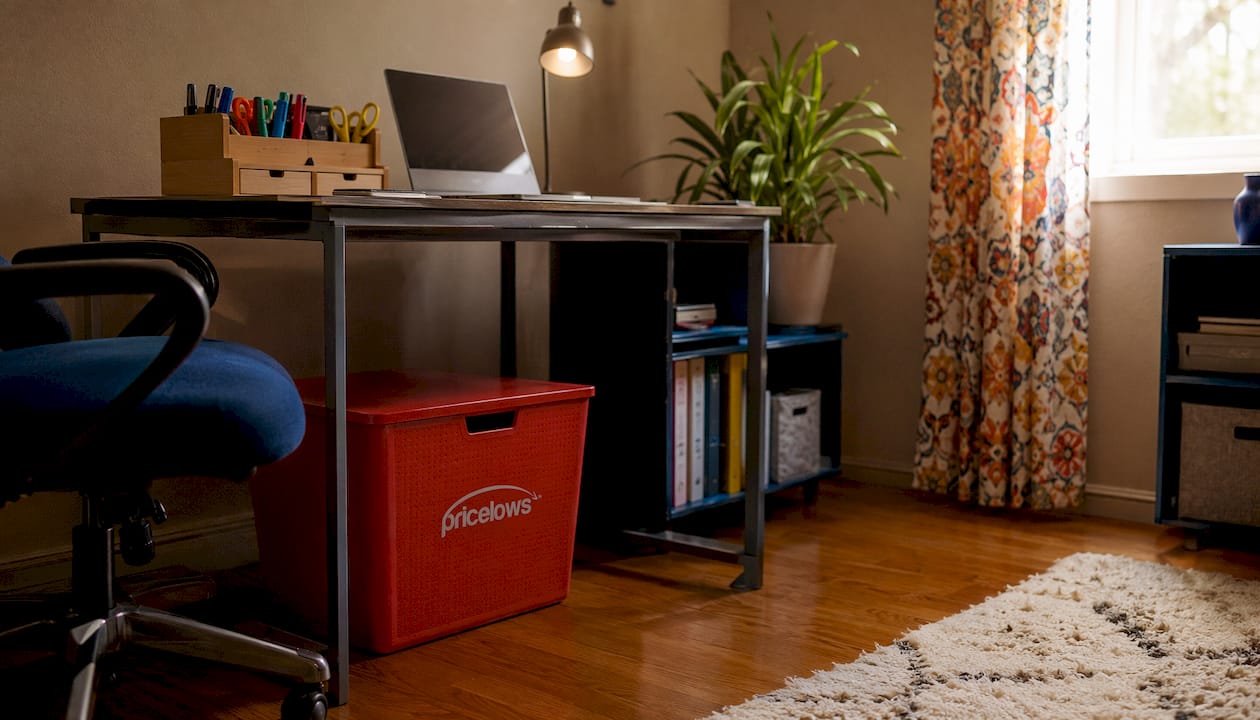
The connection between clutter and mental health is well-documented. Disorganization causes exhaustion, poor focus, and reduced quality of life, according to Professor Joseph Ferrari, a distinguished professor of psychology at DePaul University and one of the most recognized scholars on clutter research.
The physical effects are just as real. Organized environments lower stress hormones and improve wellbeing, and tidy homes consistently predict better physical health outcomes. People in organized spaces tend to eat better, exercise more, and sleep longer.
Key mental and physical health benefits:
- Reduced cortisol and anxiety symptoms
- Better sleep from a calm, clutter-free bedroom
- Improved diet and exercise habits
- Stronger relationships, since clutter can interfere with communication
- Higher self-worth and a greater sense of control over daily life
Why decluttering comes before buying any storage products
The single most expensive mistake in home organization is buying bins before editing your belongings. Decluttering first reduces the quantity of items you own, which directly lowers how much storage you actually need to purchase.
Think about it practically: if you own 20 pairs of shoes and pare down to eight, you may not need that extra shoe rack at all. The same logic applies to every drawer, cabinet, and closet in your home.
How to start decluttering without getting stuck:
- Tackle one drawer or one shelf at a time, not an entire room
- Sort everything into three piles: keep, donate, and discard
- Ask whether each item has been used in the past year
- Sell items you no longer need to fund any storage purchases you do make
- Donate usable items rather than storing things indefinitely “just in case”
Pro Tip: Edit your possessions before you set foot in any store. Buying storage for clutter you haven’t sorted yet is just moving the problem into a prettier container.
Frugal-first approaches: how to organize on a budget without overspending
True organization is about decision-making, not shopping. Expensive bins often create the illusion of order while the underlying clutter remains untouched.
Repurposing what you already own is the fastest path to a functional home. Glass jars from pasta sauce become pantry organizers. Cereal boxes become drawer dividers. Shoe boxes separate tools in a garage cabinet. Small tools like tension rods and shower curtain rings can multiply usable space in ways that bulky organizers never could.
Budget-friendly organizing ideas that actually work:
- Use glass jars for pantry staples, bathroom supplies, and craft materials
- Cut cereal boxes to fit drawers as custom dividers
- Repurpose baskets, bins, and boxes you already have before buying new ones
- Install adhesive hooks near doors for coats, bags, and keys
- Use vertical wall space with pegboards in the kitchen or garage
When you do spend money, keep it small and targeted. A five-tier adjustable rack from PriceLows™ costs a fraction of a custom shelving system and works across the laundry room, bathroom, and kitchen. A 16-cube storage organizer gives you modular flexibility without the modular price tag.
How to design organization systems that actually stick
The reason most organization attempts fail isn’t laziness. It’s that the system fights how people naturally live. Lasting organization works when storage reflects real family behaviors and daily routines, not an idealized version of them.
Gretchen Rubin calls this the “Strategy of Convenience”: make it easy to do the right thing and hard to do the wrong one. If your keys always land on the kitchen counter, put a hook there. Don’t put the hook by the door because that’s where it “should” go.
Practical tips for building systems that last:
- Match storage zones to where items naturally land, not where they “belong”
- Keep daily-use items at eye level and easy reach
- Use open bins and trays for things you access constantly
- Avoid overly specialized containers that only work for one item
- Assign every item a specific home, then practice returning it there
Key takeaways on the benefits of affordable home organization
Affordable home organization delivers lasting mental, physical, and financial benefits without requiring expensive products or a complete overhaul.
| Point | Details |
|---|---|
| Mental health gains | Organized spaces lower cortisol, reduce anxiety, and improve sleep quality. |
| Declutter before buying | Editing possessions first reduces storage needs and prevents wasted spending. |
| Repurpose before purchasing | Glass jars, cereal boxes, and tension rods replace costly organizers effectively. |
| Behavior-based systems | Systems aligned with natural habits require less effort to maintain over time. |
| PriceLows™ products | Affordable options like the 16-cube organizer and five-tier rack deliver function without the high price. |
How affordable organization saves you time every single day
Disorganization costs the average person a measurable fraction of their productive time, according to behavioral neuroscientist Daniel Levitin. Multiply your annual salary by 5% and you get a concrete number for what clutter is costing you.
The time savings from an organized home compound quickly. When everything has a designated place, you stop searching for keys, tools, and documents. Morning routines get shorter. Cooking gets faster because you know exactly where every utensil lives. A kitchen organization system built around how you actually cook can cut prep time noticeably.
Organization also reduces recurring costs by preventing duplicate purchases and late fees, two expenses that quietly drain household budgets over time.
How affordable organization makes small spaces work harder for you
Small spaces don’t need more products. They need fewer items and smarter placement. Wall storage consistently outperforms floor storage in compact rooms because it frees up the square footage you actually move through.
A few targeted upgrades go a long way. A foldable storage box with a clear door gives you visible, accessible storage without eating floor space. A closet organizer with fabric drawers turns dead closet space into a functional system for clothes, linens, or kids’ gear. For renters, smart storage for small spaces requires no drilling and no permanent changes.
The principle is simple: match item frequency to zone. Daily items go at eye level and easy reach. Seasonal or rarely used items go high or deep. That single adjustment costs nothing and feels like a remodel when done consistently.
How to keep your organization system working long-term
Maintaining organization comes down to daily habits, not expensive hardware. The “one-in-one-out” rule is the most effective maintenance tool available: when something new comes in, something old goes out. No exceptions.
A few other habits that prevent backslide:
- Do a ten-minute tidy each evening before bed
- Return items to their designated home immediately after use
- Reassess storage zones every few months as routines shift
- Label bins and drawers so every household member knows the system
- Resist buying new organizers until you’ve exhausted what you already own
The goal isn’t a perfect home. It’s a home that functions well enough that you stop losing things, stop buying duplicates, and stop dreading the weekend cleanup.
PriceLows™ makes affordable home organization easy to start today
Getting organized doesn’t require a big budget or a weekend overhaul. PriceLows™ offers the specific products that make a real difference without the retail markup: modular cube organizers, collapsible storage bins, multi-tier shelving racks, and closet drawer systems, all with free shipping and a 100% shipping protection plan.
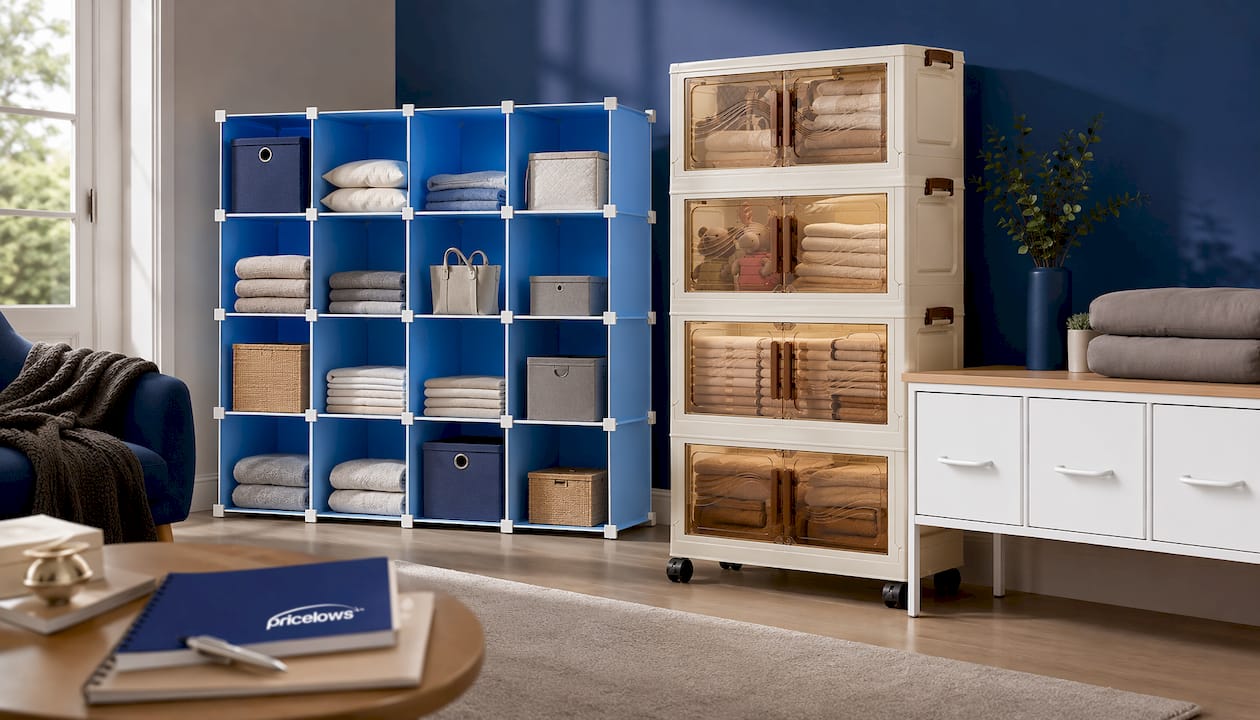
For families who want function over flash, PriceLows™ has spent 15 years sourcing the products that actually hold up, fit real spaces, and cost what they should. Whether you’re tackling a cluttered garage with stackable storage bins or finally fixing a chaotic kitchen with a durable storage rack, the right product at the right price is already there. Browse the full collection at PriceLows™ and start with one space today.