


How to Keep Ants Away: Natural and Safe Methods
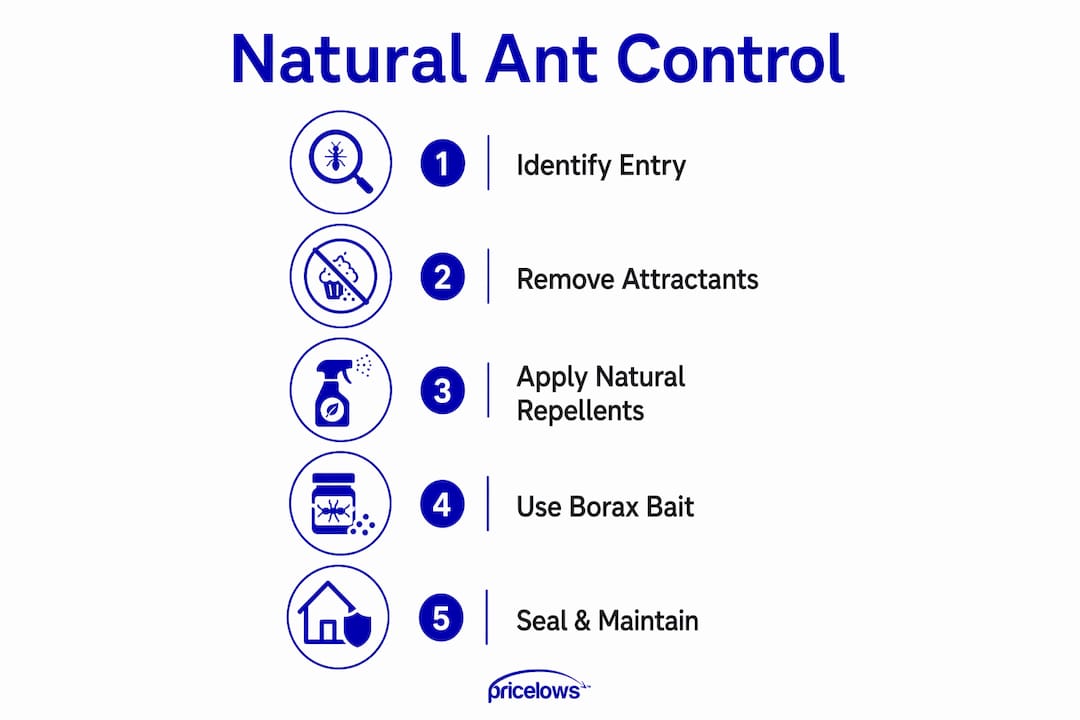
The fastest way to keep ants away is to remove what draws them in the first place. Food crumbs, standing water, and unsealed entry points are what turn a scout ant into a full column marching through your kitchen. Once you cut off those attractants and apply a few proven natural deterrents, most ant problems resolve without a single chemical spray.
Here is what works:
- Store food in airtight containers and clean up crumbs immediately
- Fix leaky pipes and eliminate standing water
- Seal cracks around windows, doors, and pipes with caulk
- Apply diatomaceous earth along baseboards and entry points
- Use peppermint, tea tree, or lemon eucalyptus essential oil sprays on ant trails
- Sprinkle cinnamon or coffee grounds near entry points as a deterrent
- Place borax-based bait stations where ants forage, and leave them alone for several weeks
Pro Tip: Bait stations with boric acid work slowly by design. Worker ants carry the poison back to the colony and feed it to the queen. If you spray the trail while baiting, you kill the carriers before they reach the nest and the whole process starts over. Patience is the strategy.
How to keep ants away with natural remedies
Natural substances can disrupt ant trails, repel foragers, and in some cases eliminate colonies entirely. The key is knowing which ones actually work, and how to apply them correctly.
Vinegar and lemon juice
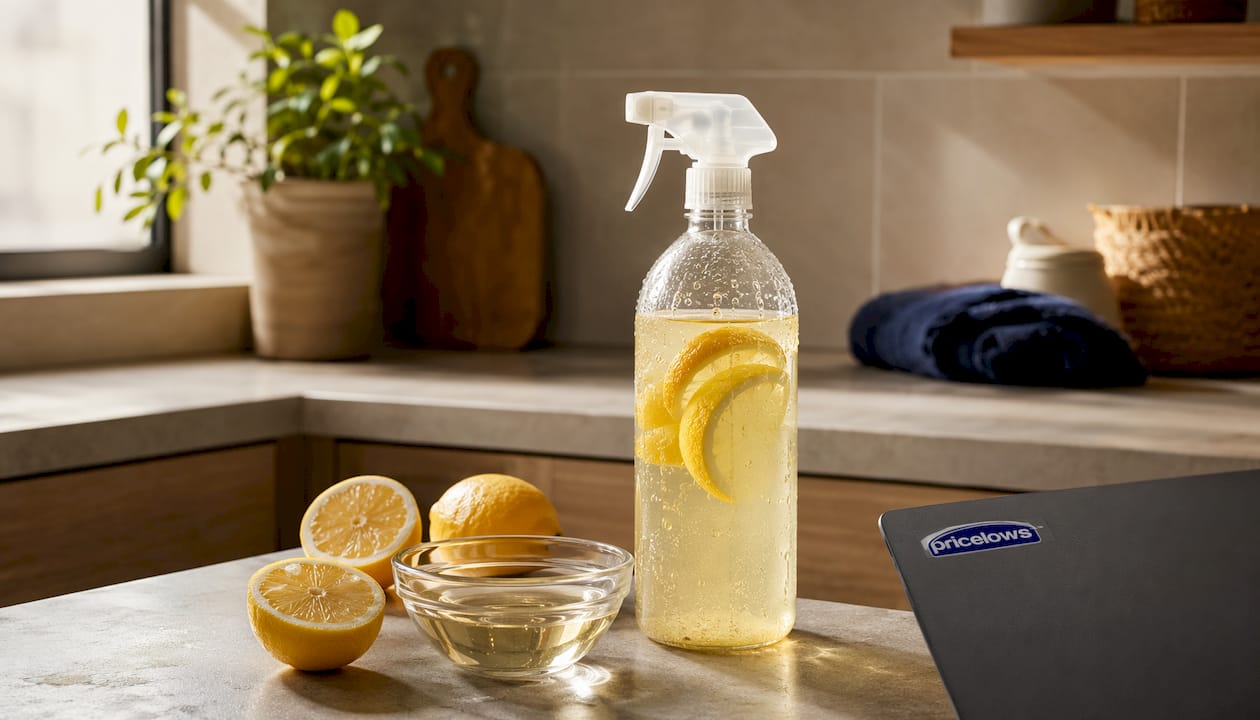
A 50/50 mix of white vinegar and water, wiped along baseboards and countertops, erases the scent trails ants use to navigate. Lemon juice works similarly because the citric acid masks pheromone signals. Neither kills ants, but both break the trail so foragers lose their route. Reapply after cleaning or mopping.
Baking soda and sugar
Mix equal parts baking soda and powdered sugar and place small amounts near ant activity. The sugar draws ants in; the baking soda disrupts their digestive chemistry when ingested. This works as a basic homemade ant trap for light infestations, though it is slower and less reliable than commercial borax bait.
Diatomaceous earth
Diatomaceous earth is a fine powder made from crushed fossilized marine organisms. It scratches the outer coating of ants, causing them to dehydrate and die. Sprinkle it in cracks, along baseboards, and around entry points. It stays active as long as it remains dry, so reapply after rain or mopping. Non-toxic to humans and pets, but avoid inhaling the dust during application.
Essential oils
Three oils stand out for ant deterrence:
- Peppermint oil: Mix 10–15 drops with water in a spray bottle and apply along windowsills, door frames, and baseboards. The strong menthol scent overwhelms ants’ ability to follow trails.
- Tea tree oil: Dilute similarly and spray directly on trails and entry points. It also works as a surface wipe.
- Lemon eucalyptus oil: Less common but effective, particularly against fire ants and carpenter ants. Apply the same way as peppermint.
Reapply every few days, especially after cleaning. Essential oils are a natural ant repellent, not a colony killer, so combine them with bait or exclusion for lasting results.
Cinnamon, coffee grounds, and chalk
Cinnamon disrupts ants’ scent receptors when placed at entry points. Ground cinnamon works better than cinnamon oil for this purpose. Coffee grounds, scattered near outdoor nests or along foundation edges, create a scent barrier many ant species avoid. Chalk lines at doorways and windowsills work because ants dislike crossing calcium carbonate, though rain washes them away quickly.
Plants that deter ants
Certain plants act as a living natural ant repellent around your home’s perimeter. Mint, lavender, rosemary, and tansy all produce scents that ants find unpleasant. Plant them near entry points, along walkways, or in window boxes. They look good, smell great to you, and send ants elsewhere.
Borax-based bait
Bait stations containing boric acid or hydramethylnon are the most effective DIY ant control method for eliminating colonies. Mix borax with a sweet bait like sugar water or peanut butter and place it directly in the path of foraging ants. The workers carry it back to the nest and feed it to the queen and larvae. The colony collapses over 2–3 weeks. Do not disturb the trail or use sprays during this period.
Pro Tip: Use two different bait types simultaneously, one sweet and one protein-based. Ant colonies shift food preferences seasonally, and offering both increases the odds that foragers take the bait back to the nest.
Preventive steps that stop ants before they enter
The most effective long-term strategy is removing what attracts ants in the first place. Food, water, and shelter are the three things every ant colony needs. Deny all three and you make your home genuinely unattractive to scouts.
Food storage and kitchen hygiene
Ants detect food residues that are invisible to you. Store sugar, flour, cereals, and pet food in airtight containers with snap-tight lids. Wipe countertops after every meal, sweep or vacuum floors daily, and rinse recyclables before tossing them. Pet food dishes are a common entry point; place them in a shallow dish of water since ants cannot swim across it.
Sealing entry points
Ants enter through cracks in foundations, gaps around pipes, and worn weatherstripping around doors and windows. Walk the perimeter of your home and caulk every visible gap. Use duct tape or petroleum jelly as a temporary fix while you wait for caulk to dry. Pay special attention to where utility pipes enter the house since these are among the most common ant highways.
Moisture control
Standing water is as attractive to ants as food. Fix dripping faucets, repair leaky pipes under sinks, and make sure gutters drain away from the foundation. Basements and crawl spaces that stay damp invite nesting. A dehumidifier in a chronically wet basement removes one of the three things ants need to survive.
Outdoor and yard management
Keep vegetation and mulch at least 6 inches from your home’s foundation. Ants nest in moist mulch and use it as a staging area before entering the house. Trim tree branches and shrubs so they do not touch exterior walls or the roof since ants use them as runways. Clear gutters of decaying leaves regularly, another favorite nesting spot.
Here is a quick checklist of ant prevention tips:
- Store all food in sealed containers, including pet food
- Clean up spills and crumbs immediately after meals
- Fix leaks and eliminate standing water indoors and outdoors
- Caulk cracks around windows, doors, pipes, and the foundation
- Keep mulch, plants, and wood piles away from the house
- Trim branches and shrubs that touch exterior walls
- Clear gutters and remove decaying organic material
- Place bait stations outdoors along known foraging paths
Pro Tip: Walk your yard perimeter once a month and look for new ant mounds or trails near the foundation. Catching a new colony early, before it sends scouts indoors, is far easier than dealing with an established indoor infestation. A yard maintenance routine makes this a five-minute habit rather than a weekend project.
Do DIY ant repellents actually work?
The honest answer: some do, most do not, and a few actively make things worse. Knowing the difference saves you weeks of frustration.
What the research says about viral hacks
Entomologists who tested popular social media ant hacks found that vinegar sprays, lemon juice, pepper, bay leaves, and cinnamon often redirect ants rather than eliminate them. The colony simply reroutes around the treated area and finds a new entry point. You end up with ants in a different part of your kitchen and a false sense that you addressed the problem.
Why surface sprays fail
Quick-kill sprays kill the ants you can see. The nest, which may contain thousands of workers and a queen, stays intact and sends replacements within hours. Repeated spraying also disrupts bait stations by killing the foragers before they carry poison back to the colony. If you are baiting, spraying is counterproductive.
When DIY methods genuinely help
Diatomaceous earth, borax bait, and physical exclusion (caulking, airtight storage) have real evidence behind them. They work at the colony level or prevent access entirely, rather than just killing surface ants. Wiping trails with a vinegar solution also helps as a supporting tactic, not a standalone fix.
Environmental and pet safety
Most natural repellents are safe around pets when used correctly. Diatomaceous earth is non-toxic but irritates lungs if inhaled, so keep pets away during application. Essential oils, particularly tea tree oil, can be toxic to cats in concentrated form. Dilute all oil sprays properly and avoid applying them to surfaces where cats walk and then groom themselves. Borax bait stations should be placed out of reach of children and pets, even though boric acid has low toxicity compared to most chemical pesticides.
When to call a professional
Call a licensed pest control professional when you find carpenter ants in wood structures, fire ant mounds in the yard, or an infestation that persists after four weeks of consistent baiting and exclusion. Carpenter ants cause structural damage; fire ants pose a health risk. Both require targeted treatment beyond what DIY methods reliably deliver.
Common questions about ant control:
What smell do ants hate most? Peppermint is the most consistently cited scent that deters ants. Tea tree oil and lemon eucalyptus also rank high. All three disrupt the pheromone trails ants rely on to navigate.
Does vinegar kill ants? No. Vinegar erases scent trails and temporarily deters foragers, but it does not kill ants or reach the colony. Use it as a trail-wipe alongside bait, not as a standalone treatment.
How long does borax bait take to work? Expect 2–3 weeks for full colony elimination. The slow action is intentional; it allows workers to carry the bait back to the queen before dying.
Are coffee grounds effective? Coffee grounds create a scent barrier some ant species avoid, but results are inconsistent. They work better as a supplemental deterrent near outdoor nests than as a primary control method.
Expert advice and Integrated Pest Management for lasting ant control
Integrated Pest Management, or IPM, is the framework professional pest controllers and university extension programs recommend for ant problems. It prioritizes removing the conditions that allow ants to thrive before reaching for any chemical solution.
The three pillars of IPM for ants
Sanitation means eliminating food and water sources. Removing attractants is the foundation of long-term ant control and reduces the need for repeated pesticide use. No food, no water, no reason for ants to stay.
Exclusion means physically blocking entry. Caulking cracks, fixing weatherstripping, and keeping vegetation away from the foundation are all exclusion tactics. They address the structural reasons ants can enter, not just the behavioral ones.
Targeted baiting means using slow-acting bait stations when prevention alone is not enough. IPM explicitly discourages perimeter sprays and foggers because they kill beneficial insects, leave chemical residues, and provide only short-term results. A well-placed bait station does more lasting work than a can of spray.
Why IPM beats repeated spraying
Perimeter sprays often fail because ants bypass chemical barriers and the residues can harm beneficial insects, birds, and pets. Sprays treat the symptom, not the cause. IPM addresses the cause, which is why pest professionals and university entomologists consistently endorse it over chemical-first approaches.
Key IPM best practices for homeowners
- Identify the ant species if possible; carpenter ants and fire ants need different responses than common pavement ants
- Follow ant trails back to the entry point before treating
- Remove food, water, and shelter before placing any bait
- Use enclosed, tamper-resistant bait stations with boric acid, hydramethylnon, or fipronil
- Avoid sprays, foggers, and granular perimeter treatments
- Keep bait stations active for at least two weeks
- Reapply bait if ant activity continues after the first week
The lawn and yard habits that support IPM are the same ones that keep your outdoor space healthy generally. Trimming branches, managing mulch depth, and clearing gutters all serve double duty as ant prevention and basic yard care.
Key Takeaways
Removing food, water, and entry points is the single most effective way to keep ants away long-term, with targeted borax bait handling any colony that gets through.
| Point | Details |
|---|---|
| Remove attractants first | Store food in airtight containers, fix leaks, and clean crumbs immediately to cut off what draws ants in. |
| Seal every entry point | Caulk cracks around windows, doors, and pipes; keep mulch and plants at least 6 inches from the foundation. |
| Use borax bait for colonies | Boric acid bait stations eliminate colonies over 2–3 weeks by letting workers carry poison back to the queen. |
| Viral DIY hacks often backfire | Vinegar, pepper, and cinnamon sprays redirect ants rather than eliminate them, according to entomologist testing. |
| IPM beats repeated spraying | Integrated Pest Management focuses on sanitation, exclusion, and targeted baiting, which is safer and more effective than perimeter sprays. |
Stock your home against ants with PriceLows™

The right tools make ant prevention a habit rather than a chore. PriceLows™ carries airtight kitchen storage that cuts off food access, cordless vacuums for fast crumb cleanup, and garage organization systems that keep clutter from becoming a nesting ground. Every product ships free with a 100% shipping protection plan, so you get what you ordered, on time.
For your garage, the 6-piece garage cabinet set from PriceLows™ keeps stored items off the floor and away from pests, with a steel construction and locking doors that ants and rodents cannot compromise. Pair it with a rolling tool chest to keep your pest control supplies organized and accessible.
PriceLows™ is built for homeowners who want practical solutions at prices that make sense. The Home. The Yard. The Garage. The Family.