


How to Teach Kids Gardening: A 2026 Family Guide
TL;DR:
- Giving children their own gardening space encourages emotional investment and pride. Short, consistent sessions help build responsibility without overwhelming kids. Gardening teaches multiple skills, including biology, math, and social-emotional learning, through hands-on experience.
How to teach kids gardening the right way
Give each child their own space. That single move, more than any lesson plan or fancy tool, is what turns a reluctant helper into an enthusiastic grower. Whether it’s a dedicated container or a small raised bed, garden ownership builds emotional investment and pride that no adult-managed plot can replicate.
Keep sessions short. Setting aside fifteen to twenty minutes once or twice a week for gardening is enough to build real responsibility without overwhelming anyone, including you. Consistency beats intensity every time.
A few non-negotiables before you dig in:
- Give kids their own space: a pot, a container, or a corner of the yard they control
- Use child-sized tools: small trowels, lightweight watering cans, and fitted gloves
- Check for toxic plants: tomato stems, rhubarb leaves, and potato plants all have poisonous parts; save the Poison Control number (1-800-222-1222) in your phone
- Match tasks to age: toddlers dig and carry; preschoolers plant seeds and pull easy weeds; older kids read seed packets and plan layouts
- Stay nearby but step back: hovering kills curiosity; let kids make small mistakes and figure things out
Pro Tip: Resist the urge to fix every crooked seedling. Children learn more from a wilted plant they overwatered than from a perfect one you managed for them.
What plants and strategies actually keep kids engaged?
Fast results are the secret weapon of teaching children gardening. Radishes are fast-growing plants that can be harvested soon after planting. Peas, spinach, and cherry tomatoes all reward young growers quickly enough to hold their attention across multiple sessions.
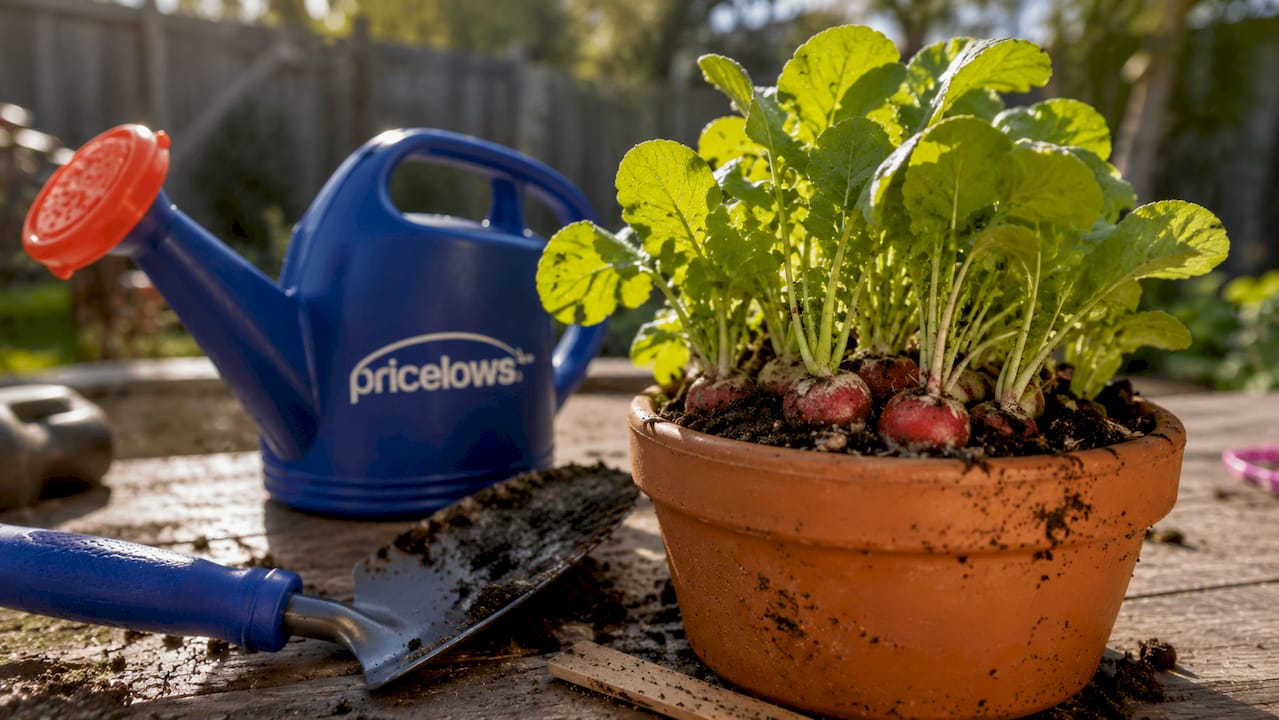
Let kids pick their own plants at the nursery. Children who choose what they grow are far more likely to water it, protect it, and eat it. That last part matters: kids who grow their own food consistently show more willingness to try vegetables they would otherwise refuse.
Themed gardens add another layer of excitement. A pizza garden grows tomatoes, basil, and peppers together. A salad garden fits neatly into a single container. Sensory gardens, with plants chosen for texture, scent, and color, work especially well for younger children who learn through touch and smell.
- Start with containers or small raised beds: container gardens give you better control over soil quality and moisture, which means fewer frustrating failures early on
- Build a weekly routine: watering, weeding, and observation each visit keeps the habit alive
- Add a scavenger hunt or bug search: turning garden time into a game resets attention spans fast
- Let them journal: drawing or photographing plant growth gives kids a record they are proud of
Pro Tip: Start with one container before committing to a full bed. A thriving pot of cherry tomatoes on the porch does more for a child’s confidence than a sprawling garden that becomes a chore.
What does gardening actually teach children?
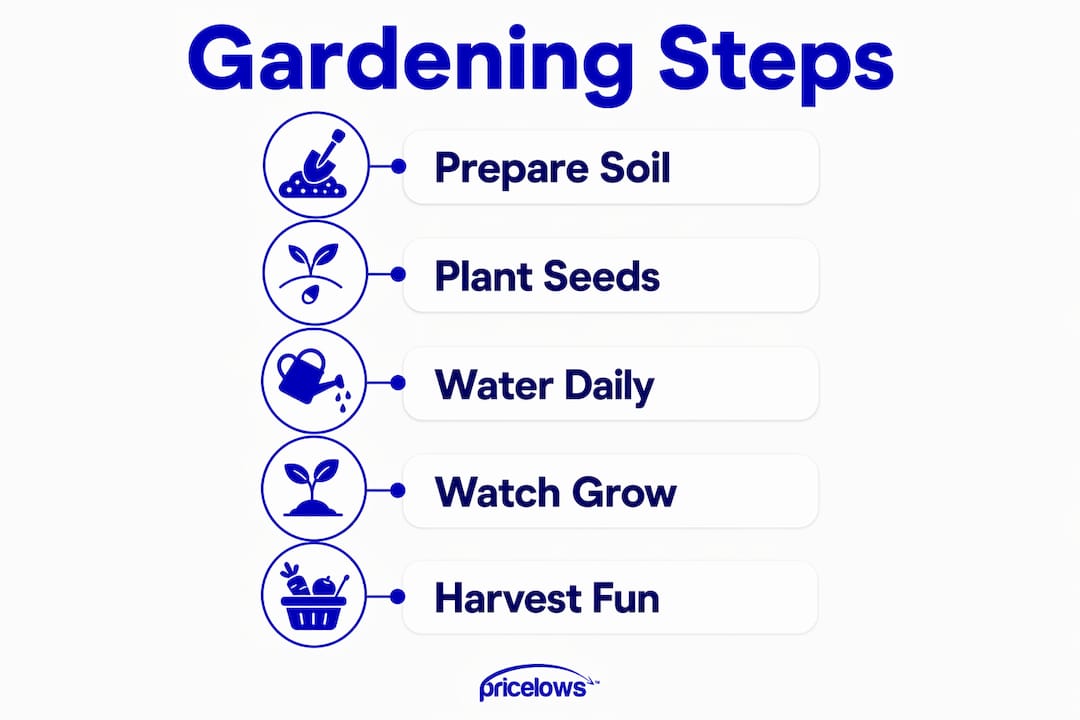
Quite a lot, and most of it happens without anyone noticing. Gardening covers biology, math, literacy, and social-emotional skills in a single afternoon outside, which is why educators increasingly treat it as a cross-curricular tool rather than an extracurricular activity.
The physical benefits alone are worth the muddy clothes. Digging, planting, carrying tools, and pouring water all build both fine and gross motor skills. Counting seeds, measuring rows, and reading seed packets bring math and literacy into a context children actually care about.
- Motor development: digging, gripping tools, and pouring water build hand strength and coordination
- Cognitive skills: predicting what a seed will become, testing hypotheses, and solving problems like an overflowing pot
- Responsibility and patience: tending plants and waiting for growth teaches children that effort has delayed rewards
- Cooperation: shared garden work builds a sense of community and contribution
- Nutrition awareness: growing, harvesting, and cooking food connects children to healthy eating in a direct, memorable way
- Environmental stewardship: composting, observing pollinators, and tracking rainfall build habits that last into adulthood
How to assign age-appropriate roles that build real ownership
Structure helps, but flexibility keeps it fun. Think of garden roles the way a classroom uses jobs: rotating weekly, clearly defined, and genuinely useful. Weekly roles like Waterer, Weeder, Tool Washer, and Garden Progress Reporter give children real responsibility without putting the whole garden on their shoulders.
Age matters when assigning tasks. Toddlers do best with digging holes, planting large seeds like beans or corn, and carrying supplies. Preschoolers can handle smaller seeds, filling watering cans, and pulling easy weeds. Older children are ready to plan layouts, read seed packets, and take on harvesting and food preservation.
- Toddlers: digging, carrying mulch or seed packs, planting large seeds
- Preschoolers: filling watering cans, pulling easy weeds, planting smaller seeds like carrots
- Older kids: planning garden layouts, reading seed packets, harvesting, and preserving food
- All ages: decorating containers, journaling growth, and observing insects
Rotate roles weekly so no child gets stuck with the same job. And when a child wanders off-script and starts examining a beetle instead of weeding, follow their lead. That curiosity is the whole point.
Common misconceptions parents need to drop
The biggest myth in teaching children gardening is that the garden needs to look good. It does not. A slightly messy, child-driven garden offers richer learning than a tidy adult-managed one, because the child’s choices, mistakes, and experiments are what drive genuine understanding.
You also do not need land, a greenhouse, or a green thumb. A sunny windowsill and a packet of seeds is enough to start. The goal is participation, not production.
- Myth: You need a large yard. A single container on a porch works perfectly.
- Myth: The garden must be productive. Engagement and learning matter far more than yield.
- Myth: Kids will ruin it. Mistakes are the curriculum. A wilted plant teaches more than a perfect one.
- Safety reality: some common plants have toxic parts; always verify before planting and keep Poison Control’s number handy.
Pro Tip: When a child’s plant dies, resist the urge to replace it secretly. Talk through what happened, then replant together. That conversation is worth more than any harvest.
Seasonal gardening activities worth planning around
Each season offers something different, and planning around that rhythm keeps kids gardening activities fresh year-round. Spring is the best entry point: radishes and peas go in early, rain gauges can track april showers, and the soil is workable without summer heat.
Summer shifts the focus to watering, harvesting, and observing pollinators. Watching bees and butterflies visit blooms is a natural science lesson that requires zero preparation. Fall brings composting, seed saving, and planting cool-season crops like spinach for a second round of quick results.
Winter is not downtime. Indoor terrariums, seed viewer projects using dried beans, and kitchen scrap gardening (regrowing green onions or lettuce from scraps) keep the habit alive when the ground is frozen.
Three beginner gardening projects any child can finish
Seed viewer in a cup
Wet a paper towel, press it against the inside of a clear cup, and tuck a few bean seeds between the towel and the glass. Cover with a zip-top bag. Seeds sprout within a week, and children can watch every stage of germination without digging anything up.
Grass-head planter
Fill a small container with potting mix, plant grass seed on top, and draw a face on the outside. Within two weeks, “hair” grows above the face. It is silly, fast, and completely irresistible to young children.
Container salad garden
Choose a pot at least 12 inches wide, fill it with potting mix, and plant lettuce, spinach, or radish seeds. Harvest outer leaves as they grow. Children can eat from this garden within three to four weeks, which is fast enough to feel like magic.
Connecting gardening to science, math, and nutrition
The garden is one of the few places where a child can run a real experiment, eat the results, and call it school. Ask kids to plant one seed in full sun and another in shade, then predict and track the difference. That is the scientific method, done with dirt and a watering can.
Math shows up constantly: counting seeds, measuring plant height, tracking days to harvest, and calculating how many cups of water a container needs. Literacy connects through reading seed packets, writing in garden journals, and looking up answers in gardening books when questions come up.
Nutrition lands differently when a child grew the food. Kids who harvest their own cherry tomatoes or snap peas are far more likely to eat them, and to understand why fresh food matters. Cooking a simple meal from garden ingredients, even just a salad, closes the loop from soil to table in a way no classroom lesson can.
Get the right tools without overspending

The right gear makes gardening with kids easier and more fun, and it does not have to cost much. PriceLows™ carries affordable yard tools and family-friendly garden supplies, all with free shipping and a 100% shipping protection plan. From child-sized trowels to storage solutions that keep the garage tidy between sessions, PriceLows™ has what your family needs to get growing. Shop at PriceLows™ and keep more money in your pocket while your garden grows.
Key Takeaways
Teaching kids gardening works best when children have ownership, fast-growing plants, short consistent sessions, and age-appropriate roles that build real responsibility.
| Point | Details |
|---|---|
| Own space drives engagement | Giving each child a dedicated container or bed builds pride and investment in the garden’s success. |
| Keep sessions short | Fifteen to twenty minutes once or twice a week builds responsibility without overwhelming kids or adults. |
| Pick fast-growing plants | Radishes, peas, spinach, and cherry tomatoes reward young growers quickly enough to hold their attention. |
| Rotate weekly roles | Jobs like Waterer, Weeder, and Tool Washer give children real responsibility and a sense of community. |
| Embrace the mess | A child-driven, imperfect garden teaches more than a tidy adult-managed one ever will. |