


Home Organization Efficiency: Save Time and Cut Stress
TL;DR:
- Home organization improves efficiency by assigning each item a specific, easy-to-retrieve place and organizing by behavior. Implementing a simple daily reset and starting small can lead to significant time and mental energy savings. Budget-friendly storage solutions from PriceLows™ help sustain organized systems for any home or garage.
Home organization efficiency means arranging your space so every item you use daily has a designated place, can be retrieved in one step, and can be returned just as easily — minimizing time lost searching and decisions made under pressure. It’s a function-first concept, not an aesthetic one.
Quick-start checklist (TL;DR):
- Declutter first. Remove what you don’t use before buying a single bin.
- Zone by behavior. Store items where you actually use them, not where they look tidy.
- One-step storage. If putting something away takes more than one motion, the system won’t last.
The payoff is real: the average American loses about 2.5 days per year searching for misplaced items, and about 80% of items in a typical home are rarely or never used. Start with those two facts, and the case for efficiency over aesthetics makes itself.
Table of Contents
- Why organization saves time, money, and mental energy
- The three core principles that make any system work
- A step-by-step plan you can actually follow
- Room-by-room examples that show real efficiency gains
- When to hire a professional organizer vs. doing it yourself
- What the research actually says about clutter and efficiency
- How long projects take and what they typically cost
- How to measure progress and keep systems working
- Key Takeaways
- The case for starting smaller than you think
- Useful sources and further reading
- PriceLows™ has the storage gear your system actually needs
Why organization saves time, money, and mental energy
The time argument is straightforward: fewer searches mean more minutes for everything else. But the cognitive argument is just as compelling. Visual clutter competes directly for attention, raising decision fatigue throughout the day even when you’re not actively looking for anything. A cluttered kitchen counter doesn’t just slow down meal prep — it quietly drains focus before you’ve cracked an egg.
Cost savings follow naturally. People who maintain regular organization habits report fewer duplicate purchases because they know what they own. That extra bottle of olive oil, the third pair of scissors, the backup phone charger you bought because you couldn’t find the first one — those add up fast in a household of any size.
The three core principles that make any system work
Every durable organization system rests on three pillars. Apply them in order.
-
Give every item a designated home. Not a general area — a specific spot. “In the kitchen” is not a home. “Second drawer left of the stove” is. When a spot is specific, items return to it automatically because there’s no decision to make.
-
Categorize by function, not by appearance. Group items by how and where you use them, not by size or color. Batteries near the remote, not in a “miscellaneous” drawer across the room. Cleaning supplies in the bathroom and the kitchen, not consolidated in one central cabinet that nobody walks to.
-
Design for one-step retrieval. Systems that require multiple steps to access or return an item get abandoned by household members within weeks. Open bins beat lidded boxes for daily items. Hooks beat hangers for coats and bags.
Pro Tip: Apply the “prime real estate” rule — eye-level, arm’s-reach space is your most valuable storage. Reserve it for the items you touch every single day. Seasonal gear, rarely used appliances, and sentimental items go on high shelves or in deep storage.
The two-foot rule is a practical companion to these pillars: work within a two-foot radius of where you stand when you use something. If the item lives farther away, it probably won’t get returned consistently.
A step-by-step plan you can actually follow
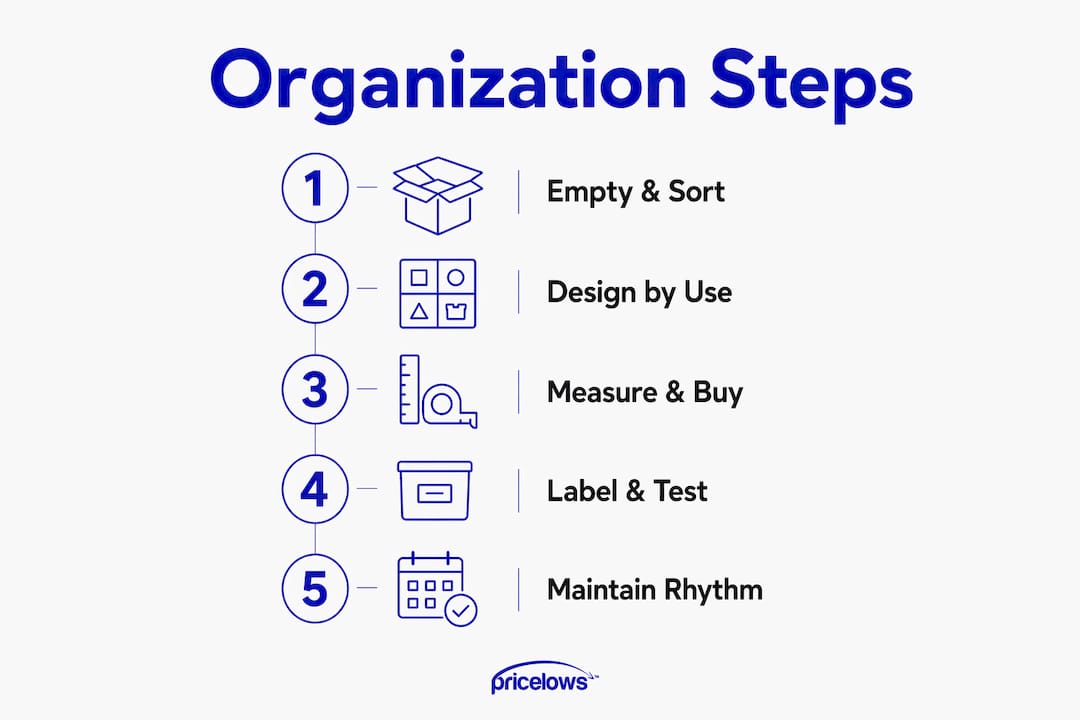
Pick one zone — one drawer, one shelf, one corner. Not a room. A zone.
Step 1: Empty and sort. Pull everything out. Sort into keep, donate, and trash. Be honest: if you haven’t used it in a year and can’t name a specific upcoming use, it goes.
Step 2: Design by behavior. Before anything goes back in, ask where you use it. That’s where it lives. Don’t let aesthetics override logic here.
Step 3: Measure, then buy containers. Buying storage before you declutter and measure is the single most common mistake — those containers become clutter themselves. Measure the shelf or drawer first, then shop.
Step 4: Label and test. Labels aren’t just for kids. They remove the “where does this go?” question for every person in the household. Run the system for two weeks before adjusting.
Pro Tip: For families, use picture labels alongside text labels for lower shelves. A child who can read the label puts things back without being asked.
Common mistakes to skip: over-categorizing (12 sub-bins for snacks is not a system, it’s a puzzle), buying matching containers before knowing what you’re storing, and trying to organize an entire floor in a single weekend.
Room-by-room examples that show real efficiency gains
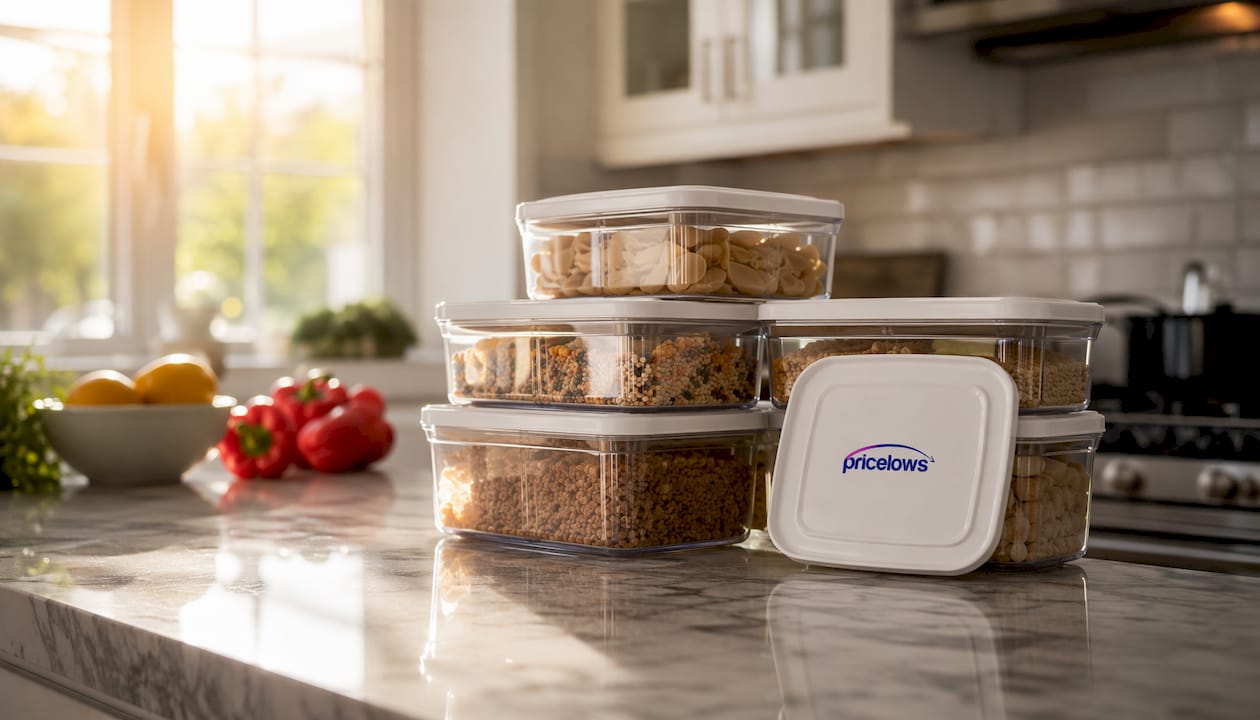
Kitchen: Zone by activity — prep zone, cooking zone, cleanup zone. Keep cutting boards and knives at the prep counter, not across the room. A kitchen storage rack at the sink keeps dish tools where you actually use them. Quick win: move daily-use items to the top shelf of the most-used cabinet.
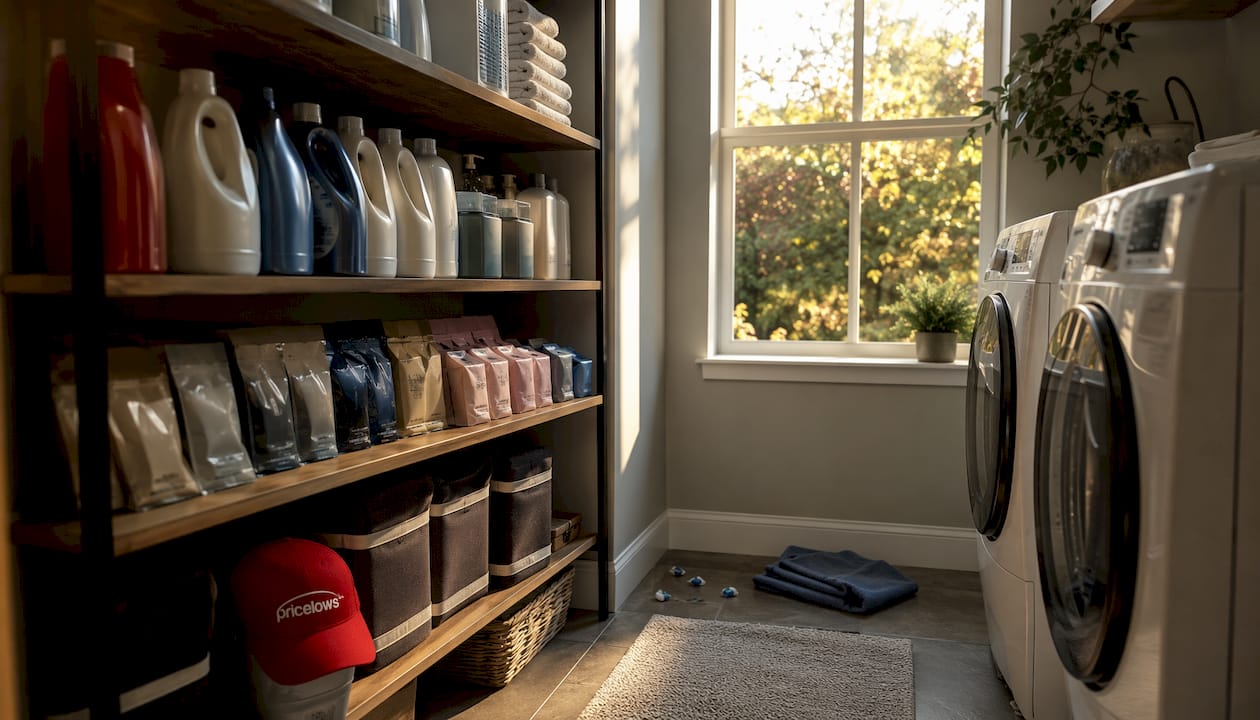
Laundry room: A five-tier adjustable shelf next to the washer holds detergent, dryer sheets, and stain remover in one reach. No more hunting across the house mid-cycle.
Entryway: Hooks at the door for bags and coats. A small tray or drawer for keys, sunglasses, and wallet. The goal is zero decisions when you’re walking out the door.
Bedroom/closet: Group clothes by category and frequency of use. Daily wear at eye level, seasonal items on the top shelf or in vacuum-seal bags. Vertical wall storage frees floor space and makes everything visible at a glance.
Garage: This is where heavy-duty storage pays off most.
- The Rolling Garage Tool Cabinet from PriceLows™ keeps tools mobile and organized with a lockable, powder-coated steel chest that resists rust — practical for anyone who works in the garage regularly.
- The Garage Storage Cabinet with 3-point locking system adds secure, wheeled storage for tools and seasonal gear you want locked away from kids.
- For a full setup, the 6-Piece Garage Storage Cabinet Set includes a rubberwood worktop, pegboard, rolling chests, and lockers — a complete system rather than piecemeal bins.
When to hire a professional organizer vs. doing it yourself
DIY works well when the project is contained, you have a free weekend, and the decisions are mostly practical rather than emotional. A single room, a garage, a closet — those are reasonable solo projects.
Hire a professional when the scale is whole-house, when items carry emotional weight (an estate, a major life transition), when accessibility needs require specialized planning, or when you’ve started and stalled more than twice.
When you do hire, ask for a written scope of work before the first session, confirm whether they supply products or expect you to, and clarify whether the rate is hourly or project-based. Most professional organizers charge by the hour for consultations and offer flat-rate packages for full-room installs. Expect a single-room project to run a half-day to a full day of professional time.
What the research actually says about clutter and efficiency
The numbers behind home organization efficiency are more persuasive than most people expect.
| Finding | Source | Practical implication |
|---|---|---|
| About 80% of home items are rarely or never used | The Pothole View | Declutter before organizing — most of what you own doesn’t need a system |
| About 2.5 days per year lost searching for items | Kittycatbliss (Pixie survey) | A designated spot for daily items pays back hours within weeks |
| Visual clutter reduces cognitive performance | Princeton-linked research via Kittycatbliss | Clearing surfaces isn’t aesthetic — it’s a productivity intervention |
| Daily 10-minute reset outperforms deep cleans | Purely Simple Living | Maintenance rhythm beats periodic overhauls for long-term results |
The daily 10-minute reset finding is particularly useful because it reframes the maintenance question. Most people think staying organized requires willpower or discipline. It mostly requires a short, consistent habit — one that prevents the slow accumulation that makes a space feel unmanageable.
How long projects take and what they typically cost
| Project size | Time estimate | DIY cost range | Pro cost range |
|---|---|---|---|
| One drawer or shelf | 30 minutes | — | N/A |
| Single room | 1–2 days | $50 | $800 |
| Full floor or garage | 1–2 weekends | $150 | $800 |
| Whole house | 2–6 weeks | $300 | — |
Cost ranges above reflect typical U.S. market rates and are approximate; actual costs vary by region, home size, and storage product choices.
- DIY costs drop significantly when you declutter before buying — less stuff means fewer containers needed.
- Budget-friendly storage options from PriceLows™ cover most room types without the markup of specialty organizing stores.
- Reuse before you buy: shoeboxes, mason jars, and existing shelving often work fine until you know exactly what you need.
Pro Tip: Set a container budget only after your first declutter session. You’ll almost always need fewer bins than you thought — and the ones you do buy will actually fit.
How to measure progress and keep systems working
Three simple metrics tell you whether your system is actually working:
- Time-to-find: Can you locate a specific item in under 30 seconds? If not, the zone or label needs adjusting.
- Duplicate purchases: Track how often you buy something you already owned. A drop here signals the system is working.
- Weekly reset time: If your 10-minute nightly reset is creeping toward 30 minutes, a zone has drifted and needs a quick remap.
The recommended maintenance rhythm: a nightly 10-minute reset, a 15–30 minute zone refresh weekly, and a quarterly purge where you pull items out and reassess. That quarterly session is where you catch the slow creep before it becomes a weekend project.
Habit formation typically takes around two weeks of consistent practice before a new routine feels automatic. Build the reset into an existing habit — right after dinner, right before bed — rather than treating it as a standalone task.
Key Takeaways
Home organization efficiency is a function-first system: give every item a designated place, zone by behavior, and design for one-step retrieval to recover about 2.5 days per year the average American loses searching for misplaced items.
| Point | Details |
|---|---|
| Declutter before buying anything | About 80% of home items are rarely or never used — remove them before spending on storage. |
| Zone by behavior, not aesthetics | Store items where you use them; prime real estate goes to daily-use items at eye level. |
| One-step retrieval is non-negotiable | Systems requiring multiple steps to access or return items get abandoned quickly. |
| Maintain with a nightly 10-minute reset | A short daily habit outperforms periodic deep cleans for keeping systems intact long-term. |
| PriceLows™ for garage and home storage | The Rolling Garage Tool Cabinet, locking cabinet, and 6-piece set cover heavy-duty storage at budget-friendly prices. |
The case for starting smaller than you think
Most people who fail at home organization don’t fail because they lack discipline. They fail because they started too big, bought too much, and tried to solve everything at once. A whole-house overhaul sounds satisfying in theory. In practice, it stalls by Saturday afternoon.
The research backs a different approach: one drawer, one shelf, one small win creates the momentum that predicts whole-home success better than any ambitious weekend plan. That’s not a consolation prize for people who can’t commit — it’s the actual method that works.
What changes when a system is running well isn’t just the time you save. It’s the low-level mental weight that lifts. Fewer micro-decisions, fewer moments of frustration, more mental space for the things that actually matter. That’s what efficiency in home organization is really about — not a tidy shelf, but a quieter mind.
Useful sources and further reading
- Kittycatbliss — What Is Home Organization? — Covers the cognitive science link between visual clutter and attention, plus the 2.5-days-per-year search statistic.
- The Pothole View — What Actually Defines a Home Organization System? — Source for the 80% rarely-used-items finding; useful for justifying aggressive decluttering.
- Purely Simple Living — Organization Ideas That Last All Week — Practitioner guidance on the 10-minute reset, zoning by behavior, and the buy-last rule for containers.
- The Spruce — Organizing Hacks for Every Room — Practical room-by-room tactics including the two-foot rule and start-small approach.
- WonderHowTo — Home Organizing Systems That Actually Last — The one-step access principle and why friction kills household compliance.
- Scott Torrance Homes — How to Create a System That Stays Organized — Practitioner data on duplicate purchases and the well-being benefits of regular maintenance.
- PriceLows™ — Types of Garage Storage Systems — Practical setup guide for garage storage options across different budgets.
PriceLows™ has the storage gear your system actually needs
Decluttering is free. Zoning costs nothing. But when you get to the “contain and store” step, the products you choose determine whether the system holds up or falls apart in six months.

PriceLows™ carries the heavy-duty storage solutions that make garage and home systems durable without the specialty-store price tag. The Rolling Garage Tool Cabinet gives you lockable, rust-resistant steel storage on wheels — built for real use, not display. The 6-Piece Garage Storage Cabinet Set delivers a complete system with a rubberwood worktop, pegboard, rolling chests, and lockers in one purchase. Free shipping and a 100% shipping protection plan come standard on every order. Browse the full garage storage lineup at PriceLows™ and find the setup that fits your space and your budget.