


Avoid Gloves That Melt: Work Glove Materials for Home, Yard & Garage
Match the material to the hazard: aramid, HPPE, or UHMWPE fibers stop blades and glass shards; nitrile-coated shells shrug off oil, grease, and chemical splashes; leather survives abrasion, sparks, and rough outdoor handling; cotton or bamboo covers light dexterity chores. Check the ANSI or ISO cut rating before you buy, and keep thermoplastic materials away from grinders, welders, or high heat. PriceLows™ stocks yard and garage gear built around exactly these tradeoffs.
TL;DR:
- Core-sheath construction with steel or glass cores provides optimal cut and coupe resistance but may cause skin irritation or degradation over time.
- Nitrile-coated gloves outperform latex in oily or chemical environments and pose fewer allergy risks, making them the standard for garage and industrial tasks.
- Leather gloves excel in abrasion resistance and durability for outdoor work, with goatskin, cowhide, and pigskin suited for different handling conditions.
- Thermoplastic fibers like HPPE and nylon soften or melt under high heat, so they should not be used near grinders, welders, or high-heat tools.
- Matching glove material and construction to the specific hazard—cut, chemical, heat, or abrasion—ensures safety and cost efficiency during prolonged use.
Table of Contents
- Work Gloves Materials for Cut Resistance: Aramid, HPPE, and Core Constructions
- Nitrile vs Latex Work Gloves and Other Synthetic Coatings
- Leather and Natural Fabric Work Gloves for Yard and Outdoor Tasks
- Heat Risks and Hidden Failure Points in Common Glove Materials
- How to Match a Work Glove Material to Your Task
- Cleaning and Lifespan Tips by Glove Material
- PriceLows™ Perspective: Buying Gloves for Real Home, Yard, and Garage Work
- Pair the Right Gloves With the Right Yard and Garage Gear
- Sources
Work Gloves Materials for Cut Resistance: Aramid, HPPE, and Core Constructions
Cut protection comes down to fiber chemistry and how yarns are built, not just thickness, as detailed in this complete guide on why fabric matters in work socks. Para-aramid (the fiber family that includes Kevlar) resists heat and cutting simultaneously, which is why welders and metal fabricators lean on it. HPPE, sold under names like Dyneema or Spectra, delivers similar or better cut resistance at a lighter weight, but it softens under heat instead of charring. UHMWPE behaves similarly to HPPE and tends to excel specifically at tear and puncture resistance rather than raw blade cutting.
Testing distinguishes between “blade cut” (a straight edge dragged across fabric) and “coupe cut” (a rotating blade test), and materials don’t perform identically on both. A 2025 study on protective glove fabrics found that core material, sheath fiber density, ply structure, and fabric weight all significantly change blade cut, coupe cut, tear, and puncture results independently. Glass cores tested best for coupe-cut resistance, steel cores won on blade-cut resistance, and UHMWPE cores led on tear and puncture protection.
That’s the case for core-sheath construction: a rigid core (steel, glass, or UHMWPE filament) wrapped in a flexible sheath yarn. You get cut resistance without full rigidity, though glass and wire cores can cause skin irritation some workers call “glass itch” after long wear. Newer coreless designs use denser sheath yarns to reach similar cut ratings without that discomfort, a real shift worth asking about when you shop.
Where each fits:
- Metal fabrication and sheet metal work: steel-core or heavy para-aramid gloves for blade-edge protection.
- Glass handling and recycling: glass-core or high-density HPPE for coupe-cut resistance against curved shards.
- Light assembly and parts handling: thinner HPPE or UHMWPE liners that preserve finger dexterity.
- Mixed hazard shops: a coreless UHMWPE blend balances comfort with tear and puncture resistance.
Nitrile vs Latex Work Gloves and Other Synthetic Coatings
Nitrile generally beats latex for oily, greasy, or chemical-heavy jobs, and it carries a much lower allergy risk. That combination has made nitrile-coated shells the standard pick across U.S. automotive, industrial, and landscaping supply houses. Latex still holds its own for dry, grip-heavy tasks where its natural tackiness outperforms synthetic rubber, but repeated exposure raises the risk of a latex allergy developing over time, so anyone with sensitive skin should default to nitrile or a hypoallergenic alternative.
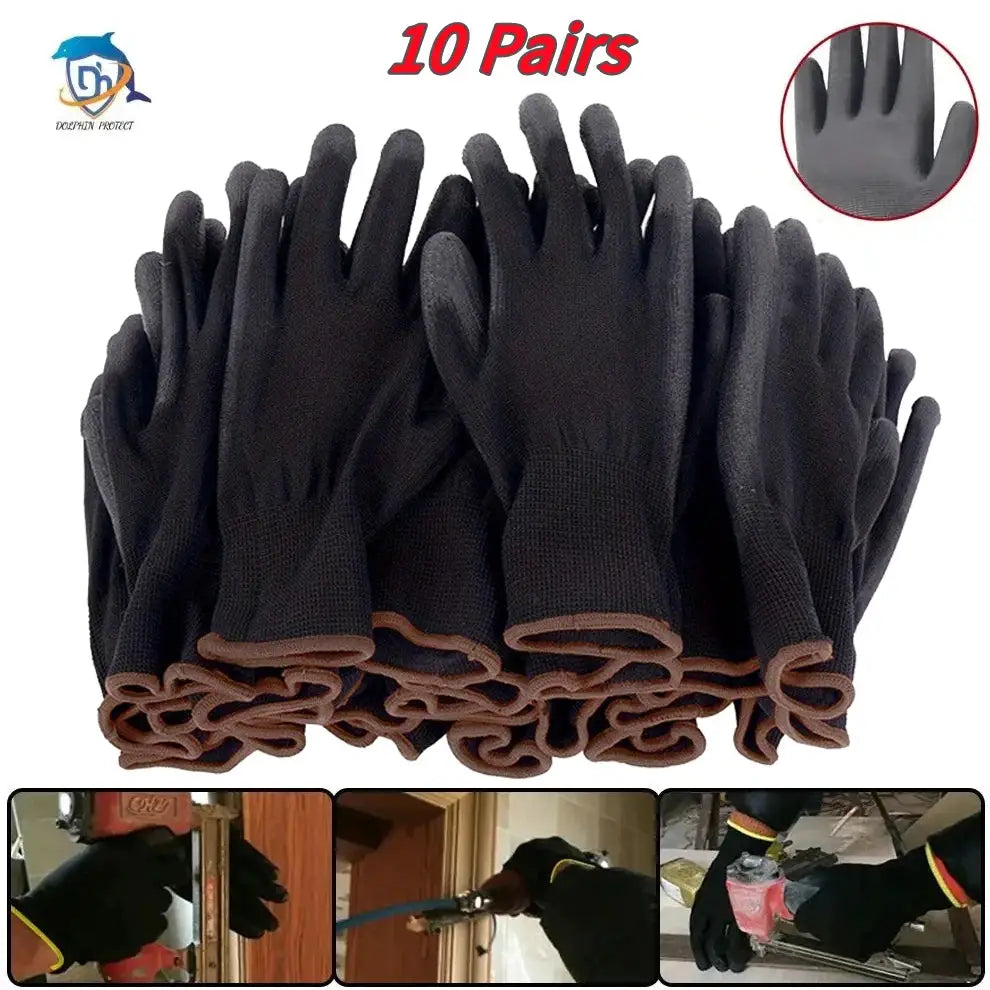
PVC, neoprene, and polyurethane round out the coating options. PVC handles wet, chemical-exposed work like concrete pouring or pool maintenance. Neoprene resists a broader range of solvents and holds up in cold weather. Polyurethane coats thinner and gives more tactile feedback, which machinists and electronics assemblers prefer over bulkier nitrile.
The finish texture matters as much as the polymer itself:
- Foam nitrile: cushioned grip with better breathability, good for extended wear.
- Sandy finish: aggressive grip on wet or oily surfaces, common in mechanic gloves.
- Smooth coating: full liquid resistance, best for chemical handling and wet maintenance.
- Crinkle latex: textured surface for confident grip in dry construction and landscaping work.
For garage mechanics, smooth or sandy nitrile with full palm coverage covers most oil-and-grease scenarios. For dry-condition construction or fence work, crinkle latex still earns its keep.
Leather and Natural Fabric Work Gloves for Yard and Outdoor Tasks
Leather remains the default for abrasion-heavy outdoor work because it resists sparks, thorns, and rough handling better than any synthetic at a comparable price point. Goatskin stays soft and flexible while still resisting punctures, which makes it a favorite for pruning and detail work. Cowhide trades some dexterity for raw durability, standing up to years of digging, hauling, and fence repair. Pigskin resists water and grease absorption even after it gets wet, so it stays pliable through repeated soakings.
Cotton and bamboo gloves make sense only for light cleanup: raking leaves, potting plants, or handling clean debris. Product testing on gardening glove performance confirms bamboo and lightweight knit liners deliver strong breathability and dexterity, while leather remains the choice for thorn protection and heavy digging. Neither cotton nor bamboo offers meaningful cut or chemical protection, so skip them for pruning thorny shrubs or handling solvents.
Leather needs conditioning with saddle soap periodically to prevent cracking. Cotton and bamboo tolerate a standard warm wash but wear out fast under repeated abrasion, so treat them as a consumable rather than a long-term investment.
Heat Risks and Hidden Failure Points in Common Glove Materials
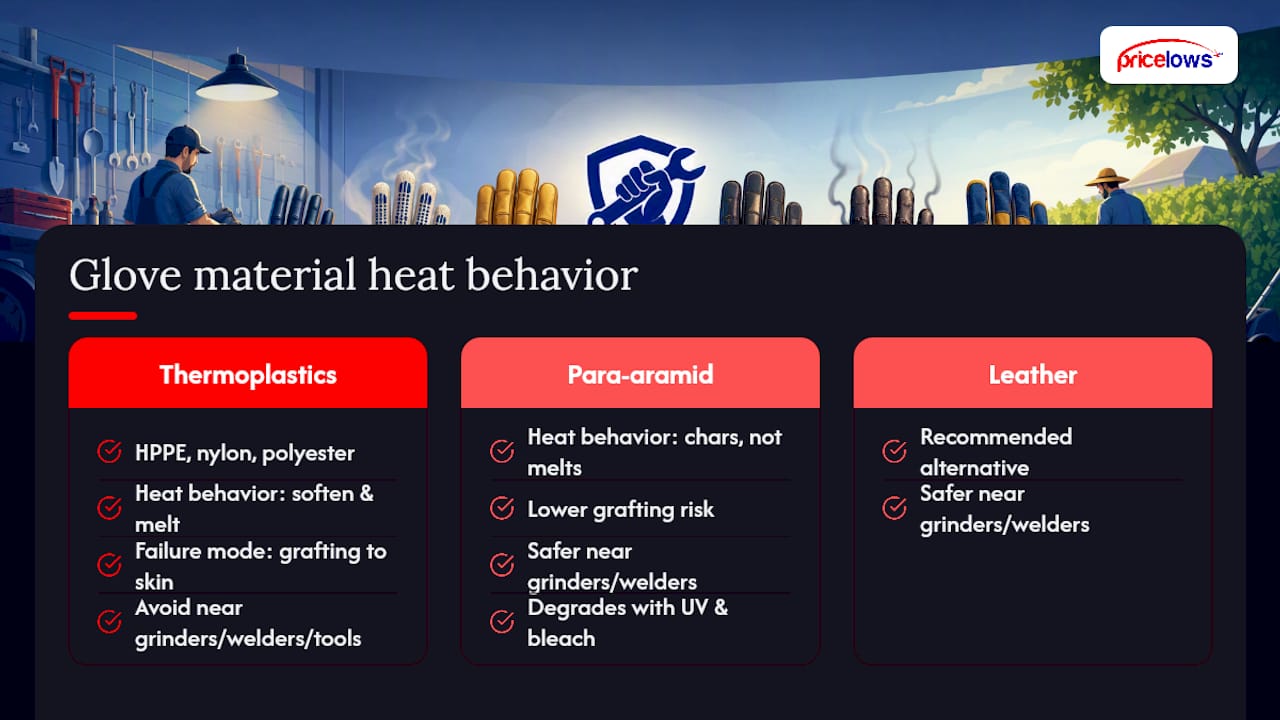
Thermoplastic fibers like HPPE, nylon, and polyester don’t burn the way natural or aramid fibers do. They soften and can melt directly onto skin, a failure mode called grafting. Heat and friction exposure causes these materials to behave very differently from para-aramid, which chars instead of melting when things get hot.
Statistic Callout: Lab testing on core-sheath yarns shows single-ply constructions can outperform two-ply yarns on certain blade cut and tear metrics, and increasing fabric weight boosts blade cut resistance while sometimes reducing coupe-cut and tear performance. There’s no single “best” spec. Manufacturers tune these parameters against each other depending on the hazard they’re designing for.
Practical takeaway: never wear HPPE, nylon, or straight polyester gloves near grinders, welding torches, or any friction-generating power tool. Para-aramid or leather is the safer call there. Also inspect gloves regularly for exposed wire or glass cores poking through worn sheath fabric, since that’s both a cut hazard and a source of skin irritation. Para-aramid fibers degrade under prolonged UV exposure and aggressive bleach washing, so follow the manufacturer’s care label rather than tossing them in with regular laundry.
How to Match a Work Glove Material to Your Task
- Identify the primary hazard. Cut risk, abrasion, chemical exposure, heat, puncture, or fine dexterity work each point toward a different material family.
- Choose the material and coating that fits that hazard and environment. Aramid or HPPE for blades, nitrile for oil and chemicals, leather for abrasion and heat, cotton or bamboo for light dry tasks.
- Verify the rating and construction details before buying. Look for ANSI/ISEA or ISO cut level ratings, glove gauge (thinner gauge numbers mean thicker yarn and less dexterity), coating style, and coverage: palm-only, three-quarter, or full dip.
Institutional PPE selection guidance consistently stresses matching gloves to the specific hazard rather than buying generically. A rating printed on the label only means something if it matches the job you’re actually doing.
Pro Tip: Calculate cost-per-shift, not just sticker price. A nitrile glove that costs twice as much as latex but lasts three times longer for oily jobs is cheaper over a month of garage work, even before you count fewer mid-task glove swaps.
Cleaning and Lifespan Tips by Glove Material
Wash thermoplastic-blend gloves (HPPE, nylon, polyester) in cold or warm water, never hot, since heat degrades the fiber over repeated cycles. Leather needs saddle soap and a leather conditioner every few months, not machine washing. Coated gloves (nitrile, latex, PVC) usually do best hand-washed if the manufacturer allows washing at all. Check the glove against its safety data sheet if it’s rated for a specific chemical, since coating compatibility varies by solvent.
- Retire gloves showing fraying, exposed core fibers, or a peeling coating layer.
- Watch for seam failure at the fingertips, a common early wear point.
- Store gloves away from direct sunlight and heat sources to slow UV and thermal breakdown.
- Keep coated gloves away from prolonged dampness to prevent coating degradation.
PriceLows™ Perspective: Buying Gloves for Real Home, Yard, and Garage Work
Most PriceLows™ customers aren’t outfitting an industrial crew. They’re weeding a flower bed on Saturday and rebuilding a lawn mower deck on Sunday, and that split matters more than any single spec sheet. Leather and cowhide cover the outdoor abrasion side of that equation. Nitrile-coated shells cover the garage side, where grease and small metal parts are the daily reality.
We group gardening tools and gloves together in our catalog for exactly that reason. If you’re shopping the garden tool material guide, pair it with a leather or cowhide glove rather than defaulting to whatever’s cheapest on the shelf. Fit matters too: an ergonomic tool grip paired with an ill-fitting glove still causes hand fatigue.
— Thane Holland
Pair the Right Gloves With the Right Yard and Garage Gear
Once you’ve settled on a glove material, the tools you’re using it with matter just as much. For anyone spending a Saturday on root removal and bed prep, a manual cultivator with a thickened steel frame or a wood-handled weed puller pairs naturally with a leather or cowhide glove built for grip and thorn resistance.
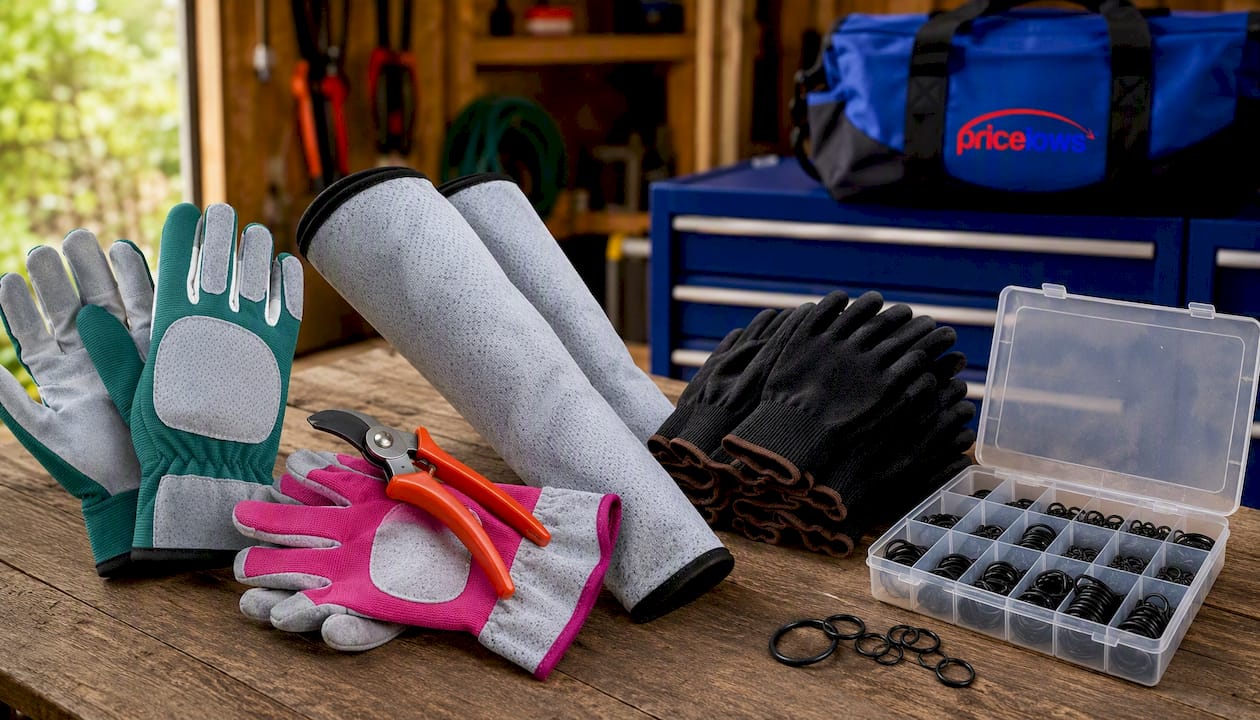
For garage work, a lockable garage tool cabinet with a 3-point locking system keeps nitrile gloves, cut-resistant liners, and hand tools organized in one place instead of scattered across a workbench. If you’re setting up a rolling station, the powder-coated rolling storage chest handles the rust resistance that matters in an unheated garage. Every order ships free with PriceLows™'s shipping protection plan, so you’re covered if anything arrives damaged. Browse the garden tool collection now and outfit your glove drawer and your garage shelf in the same order.
Sources
- Influence of Fabric Characteristics on Mechanical Performances of Protective Gloves
- Hand and arm protection (NCSU EHS) - Appendix D
- Nitrile vs Latex Coated Gloves: A Detailed Comparison - Snell Safety