


Kitchen Hygiene for Kids: What It Means and How to Teach It
TL;DR:
- Keeping hands, utensils, surfaces, and food clean prevents illness in kids’ kitchens. Teaching proper hygiene habits, tailored to each age, reduces cross-contamination and accidents. Proper adult supervision and organized storage support a safer, healthier cooking environment.
Kitchen hygiene for kids means keeping hands, utensils, surfaces, and food clean to prevent illness during cooking. It covers handwashing, safe food handling, and stopping germs from spreading between raw and ready-to-eat foods. Crucially, it also includes the cook’s own cleanliness — tied-back hair, clean clothes, and no jewelry near food. Germs are invisible, which is exactly why these habits matter even when everything looks fine.
Key kitchen hygiene practices every child should learn:
- Wash hands with soap for at least 20 seconds before and after handling food
- Wear a clean apron; tie back long hair
- Use separate cutting boards for raw meat and vegetables
- Rinse fruits and vegetables under running water before eating or cooking
- Keep surfaces and utensils clean and dry
- Never let raw meat or eggs touch ready-to-eat foods
- Refrigerate leftovers promptly to prevent bacterial growth, being especially careful in hot conditions
Table of Contents
- How to teach kitchen hygiene by age and maturity
- Why the cook’s personal hygiene matters just as much as food hygiene
- Teaching kids about germs they can’t see
- How to make kitchen hygiene habits fun and natural
- Common kitchen hazards kids face and how hygiene prevents them
- Safe and kid-friendly kitchen cleaning routines
- How to involve kids in kitchen hygiene tasks effectively
- Tips for supervising children during food preparation
- Recommended hygiene supplies safe for children
- Addressing picky eaters and hygiene compliance challenges
- PriceLows™ has the storage solutions your kitchen needs
- Key Takeaways
How to teach kitchen hygiene by age and maturity
Teaching kids to cook safely depends heavily on where they are developmentally, not just how old they are. A cautious 7-year-old may handle a vegetable peeler better than an impulsive 9-year-old.
- Ages 3–5: Rinsing produce, tearing lettuce, stirring cold ingredients. Constant adult supervision near any heat source.
- Ages 6–8: Measuring dry ingredients, using a hand grater with guidance, learning to wash up. Still needs an adult within arm’s reach.
- Ages 9–12: Can work more independently — cracking eggs, using a stovetop with supervision, reading recipes. Must follow safety rules consistently before earning more freedom.
Key safety rules for all ages: turn pan handles toward the back of the stove, unplug appliances after use, and always ask an adult before using knives or the oven.
Pro Tip: Position yourself so you can see the child’s hands at all times during food prep. Standing beside them, not across the kitchen, lets you catch a hygiene slip before it becomes a food safety problem.
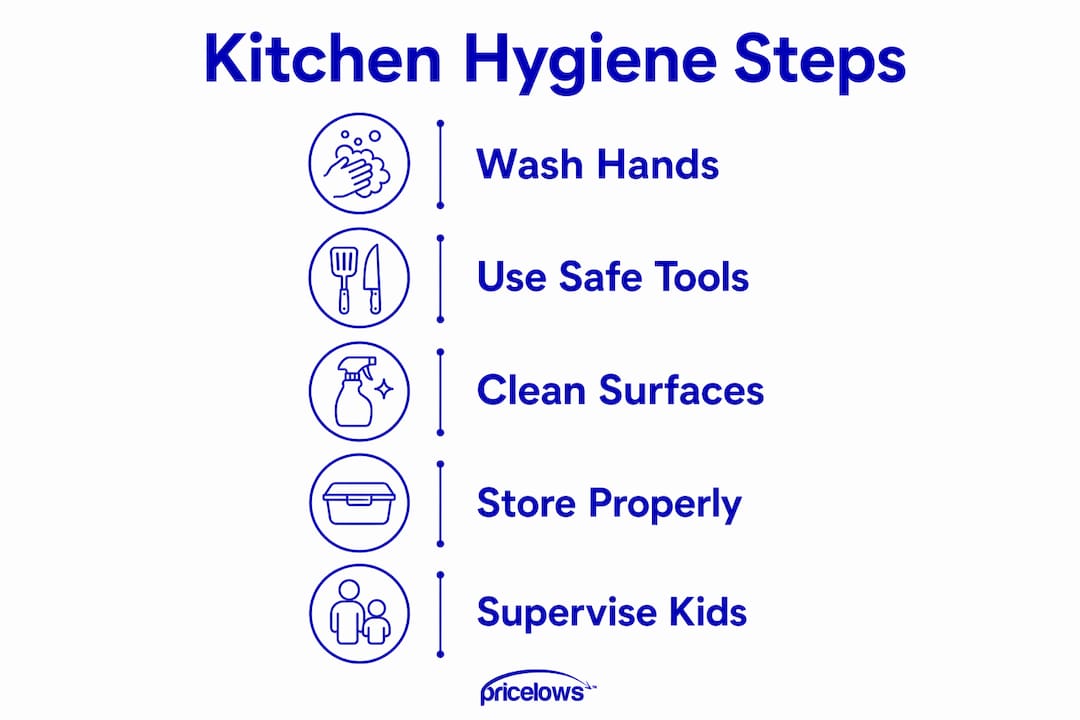
Why the cook’s personal hygiene matters just as much as food hygiene
Most parents focus on food hygiene and overlook the cook. Nutritionists and safety experts point out that hair, jewelry, and dirty clothing are common contamination sources that kids need to understand.
A loose strand of hair falling into a salad is obvious. What’s less obvious is that rings and bracelets trap bacteria and transfer them directly to food during mixing or kneading. Unwashed clothing carries outdoor germs straight to the prep area.
Personal hygiene habits kids should build:
- Tie back or braid long hair before entering the kitchen
- Remove rings, bracelets, and watches
- Put on a clean apron or change into a clean shirt
- Avoid touching the face, nose, or mouth while cooking
- Wash hands again after sneezing, coughing, or touching a pet
Teaching kids about germs they can’t see
Child safety educators stress that germ literacy is the foundation of real hygiene compliance. When kids understand that germs are invisible and can hide on clean-looking surfaces, hygiene rules stop feeling arbitrary.
Explain it plainly: bacteria live on raw chicken, unwashed vegetables, and even clean-looking hands. They spread to other foods if surfaces and utensils aren’t cleaned between uses.
Concepts worth teaching:
- The “danger zone” is the temperature range between 40°F and 140°F, where bacteria multiply fastest
- A cutting board used for raw meat needs washing before it touches vegetables
- Handwashing removes germs that eyes can’t detect
- Food can look and smell fine and still carry harmful bacteria
How to make kitchen hygiene habits fun and natural
Repetitive, fun activities build lasting hygiene habits far better than lectures. Singing “Happy Birthday” twice while washing hands gets kids to the full 20 seconds without a timer. Turning cleanup into “germ busters” — where kids hunt down spills and wipe surfaces — reframes chores as a game.
- Assign kids their own color-coded cutting board so ownership builds habit
- Let them pick their apron design to make wearing it feel special
- Use a sticker chart to track handwashing before meals
- Make cleanup a team race against the clock
Pro Tip: Link hygiene directly to the food they love. “We wash our hands so the cookies taste good, not germy” lands better with a 6-year-old than any explanation about pathogens.
Common kitchen hazards kids face and how hygiene prevents them
Burns, cuts, and foodborne illness are the three biggest risks for kids in the kitchen. Hygiene directly prevents the third and reduces the first two indirectly by keeping workspaces clear and organized. Cluttered counters lead to spills; spills lead to slippery surfaces and rushed cleanup that skips proper sanitizing.
Raw meat left on a counter while a child reaches across it is both a burn risk and a cross-contamination event. Teaching kids to clear and wipe surfaces before starting a new task addresses both hazards at once.
Safe and kid-friendly kitchen cleaning routines
Keep it simple and age-appropriate. After cooking, kids can wipe counters with a damp cloth and mild soap, rinse their own utensils, and help load the dishwasher. Kitchen sponges and dishcloths harbor more germs than most surfaces, so swap them out regularly rather than letting kids reuse a week-old sponge.
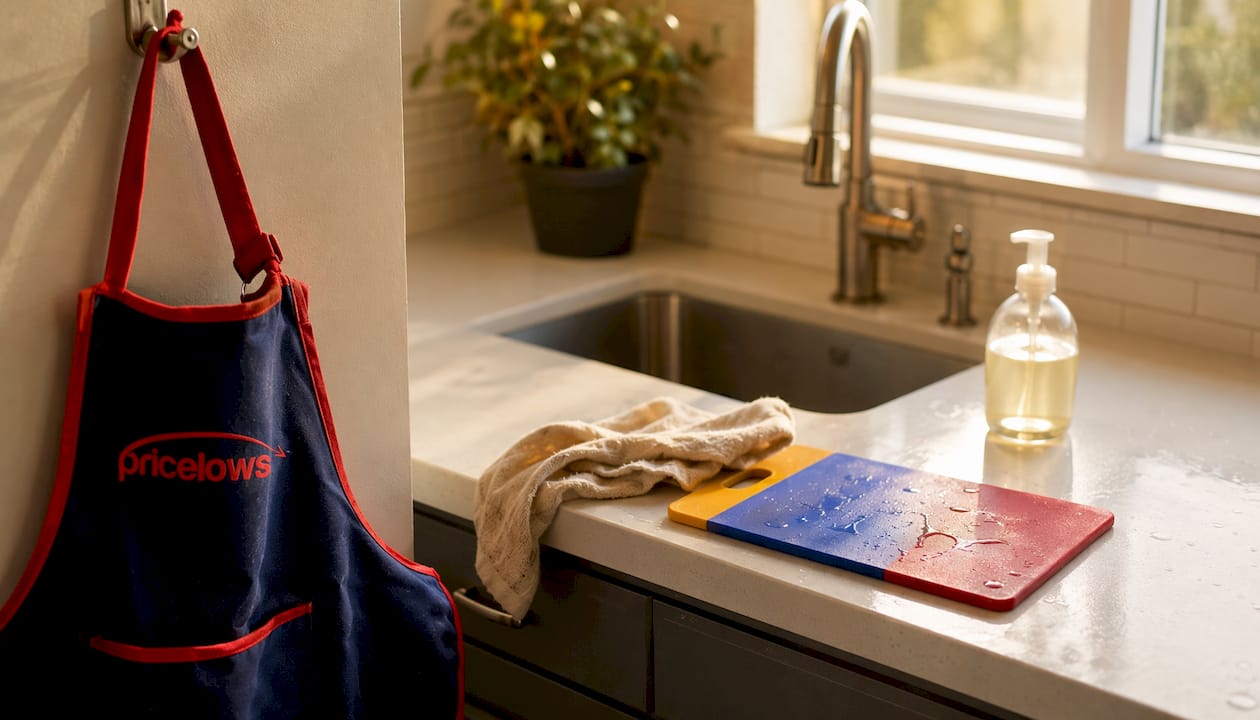
A basic post-cooking routine for kids: wipe the counter, rinse cutting boards, wash hands, and put tools away. Four steps, every time, builds the habit automatically.
How to involve kids in kitchen hygiene tasks effectively
Give kids ownership of one specific task rather than vague instructions to “help clean up.” A child responsible for rinsing produce every time develops that habit reliably. One assigned to wiping the counter after dinner will do it without being asked within a few weeks.
Child-sized utensils that fit small hands reduce spills and mess-related contamination risks, making kids more confident and more careful. Pair each task with a clear hygiene reason: “You rinse the apples because they can have germs from the store.”
Tips for supervising children during food preparation
Stay close, stay consistent. For children under 8, that means within arm’s reach near any heat source or sharp tool. For older kids, it means staying in the same room and checking in rather than hovering. The goal is gradual independence, not abrupt freedom.
Set clear rules before cooking starts, not during. “You use the plastic knife, I use the chef’s knife” is a boundary a child can follow. Correcting mid-task breaks focus and increases accident risk. Affordable kitchen storage solutions that keep sharp tools locked away remove the temptation entirely for younger children.
Recommended hygiene supplies safe for children
Budget-friendly doesn’t mean cutting corners. These supplies work well and won’t break the bank:
- Plastic or color-coded cutting boards — assign one per food type
- Child-sized aprons — washable cotton, not synthetic
- Mild dish soap — fragrance-free options are gentler on kids’ skin
- Microfiber cloths — more effective than paper towels for wiping surfaces, reusable
- Produce brush — for scrubbing root vegetables before cooking
- Labeled spray bottle with diluted white vinegar — a safe, low-cost surface cleaner for kids to use
Replacing sponges weekly or laundering dishcloths in hot water is one of the most cost-effective hygiene habits a family can build.
Addressing picky eaters and hygiene compliance challenges
Picky eaters often resist touching unfamiliar foods, which can actually work in a parent’s favor hygienically. A child who won’t touch raw chicken is less likely to cross-contaminate. The challenge is the opposite: kids who grab and taste everything.
For resistant kids, frame hygiene as a cooking skill, not a rule. “Professional chefs always wash their hands first” carries more weight than “because I said so.” For kids who struggle with the 20-second handwashing requirement, a kitchen gadget like a small sand timer at the sink makes the habit visual and concrete.
PriceLows™ has the storage solutions your kitchen needs
Keeping a family kitchen safe for kids starts with keeping dangerous tools out of reach and cleaning supplies organized. PriceLows™ offers durable, lockable storage built for exactly that. The Rolling Garage Tool Cabinet features a powder-coated rust-resistant finish and lockable chest, ideal for storing sharp kitchen tools away from small hands. The Garage Storage Cabinet with 3-Point Locking System adds wheels and locking doors for flexible, secure placement anywhere in the home. For families who want a complete setup, the 6-Piece Garage Storage Cabinet Set includes a rubberwood worktop, pegboard, rolling chests, and lockers in a bold black and red finish.

Free shipping and a 100% shipping protection plan come standard. Browse the full range at PriceLows™ and find the storage solution that fits your family’s kitchen setup.
Key Takeaways
Kitchen hygiene for kids means clean hands, clean tools, and a clean cook — all three together prevent foodborne illness.
| Point | Details |
|---|---|
| Handwashing is the foundation | Wash with soap for at least 20 seconds before and after handling food. |
| Age shapes the task | Kids ages 9–12 can work more independently; younger children need constant adult supervision. |
| The cook’s hygiene counts | Tie back hair, remove jewelry, and wear a clean apron to prevent contamination. |
| Germs are invisible | Teach kids the “danger zone” (40°F–140°F) and the need for separate cutting boards. |
| PriceLows™ for safe storage | Lockable cabinets from PriceLows™ keep sharp tools and cleaners safely out of children’s reach. |