


Why Fragrance-Free Cleaners Matter for Your Family
Yes, choosing fragrance-free cleaners meaningfully reduces your family’s routine exposure to hidden chemicals that affect children, pregnant people, and anyone with asthma or sensitive skin. The American Academy of Pediatrics recommends minimizing early-life exposure to synthetic fragrances, and the American Lung Association flags scented cleaning products as a source of indoor VOCs and secondary pollutants. For parents making daily decisions about laundry, baby products, and kitchen cleaners, that guidance has real, practical weight.
Three reasons fragrance-free household cleaners matter for families:
- The word “fragrance” on a label can legally represent dozens of undisclosed chemicals, including suspected endocrine disruptors and allergens, because U.S. federal law does not require manufacturers to list them individually.
- Scented cleaners release volatile organic compounds (VOCs) that linger indoors and can trigger headaches, asthma flare-ups, and skin irritation, especially in young children whose airways are still developing.
- Fragrance-free products with full ingredient disclosure, EPA Safer Choice certification, or EWG Verified status give parents a clearer picture of what they are actually bringing into the home.
The highest-impact swaps are also the most routine ones: baby laundry detergent, multipurpose spray, and bathroom cleaner.
Table of Contents
- 1. Why fragrance-free cleaners matter: health risks families need to understand
- 2. Fragrance-free vs. unscented: what those labels actually mean
- 3. How fragrances affect the air inside your home
- 4. Room-by-room: which fragrance-free swaps give you the most protection
- 5. How to choose truly fragrance-free cleaners: a practical shopping guide
- 7. Who is most at risk and when switching matters most
- 8. What the research and health experts say
- Key Takeaways
- The case for fragrance-free is stronger than most parents realize
- PriceLows™ picks for fragrance-free family cleaning basics
- Sources and further reading
1. Why fragrance-free cleaners matter: health risks families need to understand
The core problem is not scent itself. It is what hides behind it. Under current U.S. law, a manufacturer can list a single ingredient called “fragrance” and legally shield the dozens of individual chemicals that make up that blend. Consumer Reports confirms that this nondisclosure is standard practice, not an edge case.
“Cleaning products can contain chemicals that may harm health, including volatile organic compounds (VOCs), which can irritate the eyes, nose, and throat, cause headaches, and trigger asthma attacks.” — American Lung Association
Children are more vulnerable than adults for a straightforward reason: pound for pound, they breathe more air, spend more time on floors and surfaces where residues settle, and their developing systems are more sensitive to chemical interference. The AAP’s environmental health guidance specifically calls out synthetic fragrances as a category parents should reduce in early childhood.
Common health outcomes linked in studies and flagged by health authorities include:
- Potential endocrine effects from phthalates, which are commonly used as fragrance carriers and have been studied for hormonal and developmental impacts
- Allergic reactions to specific fragrance components, some of which the FDA recognizes as known cosmetic allergens
None of this means a single spray of scented cleaner will harm your child. The concern is cumulative, daily exposure across laundry, surfaces, and air.
2. Fragrance-free vs. unscented: what those labels actually mean
These two terms are not the same, and the difference matters when you are shopping for cleaning products for sensitive families.
Fragrance-free means no fragrance ingredients were added at any point in formulation. The product has no scent compounds, masking agents, or odor neutralizers.
Unscented means the product has no noticeable smell, but it may still contain fragrance chemicals added specifically to cancel out the base odor of the formula. You get no smell, but you still get the chemicals.
Federal labeling rules do not require manufacturers to disclose what is inside their “fragrance” blend, so an unscented product can contain the same undisclosed compounds as a scented one. The only way to know is to look for full ingredient disclosure or a third-party certification.
Label-reading checklist for parents:
- Look for “fragrance-free” explicitly, not just “unscented” or “no added perfume”
- Scan the ingredient list for the word “fragrance,” “parfum,” or “perfume” — any of these signals undisclosed chemistry
- Avoid products that list “fragrance” without naming individual components
- Prefer products with EPA Safer Choice or EWG Verified seals, which require ingredient transparency
- Check for full ingredient disclosure on the brand’s website if the label is limited
- When evaluating detergents, a laundry ingredient checklist can help you identify what to look for and what to skip
Pro Tip: The EPA Safer Choice label means every ingredient has been reviewed for safety, not just the active ones. EWG Verified goes further by requiring full public disclosure. Either seal is a faster shortcut than reading every ingredient line yourself.
3. How fragrances affect the air inside your home
Fragrance compounds in cleaning products release VOCs into indoor air. Unlike outdoor air, indoor air has limited dilution, so these compounds accumulate, especially in bathrooms, laundry rooms, and kitchens where scented products are used most.
The less obvious problem is secondary pollutant formation. Terpenes, the compounds that give citrus and pine scents their smell, react with ozone naturally present in indoor air to form formaldehyde and ultrafine particles. This means a “natural” lemon-scented cleaner can generate pollutants that were not in the bottle. The American Lung Association flags this reaction chain as a reason to avoid air fresheners and scented cleaning products even when they are plant-derived.
| Source | Exposure pathway | Key concern |
|---|---|---|
| Scented multipurpose spray | Inhalation during and after use | VOC release, respiratory irritation |
| Scented laundry detergent | Dryer vent emissions, fabric residue | Hazardous chemical emissions outdoors and on skin |
| Air fresheners | Continuous airborne release | Secondary pollutant formation with indoor ozone |
| Scented dish soap | Dermal contact, steam inhalation | Skin sensitization, fragrance allergens |
University of Washington researchers found that scented laundry products emit hazardous chemicals through dryer vents, including compounds classified as hazardous or toxic under federal law. That is not a trace amount drifting outside. It is a continuous emission pathway every time you run a load.
Key fact: Dryer vent emissions from scented laundry products can include chemicals classified as hazardous under U.S. environmental law, according to University of Washington research — a pathway most families never consider when choosing detergent.
4. Room-by-room: which fragrance-free swaps give you the most protection
Not every product needs to change at once. Prioritize by contact frequency and vulnerability of the person using the space.
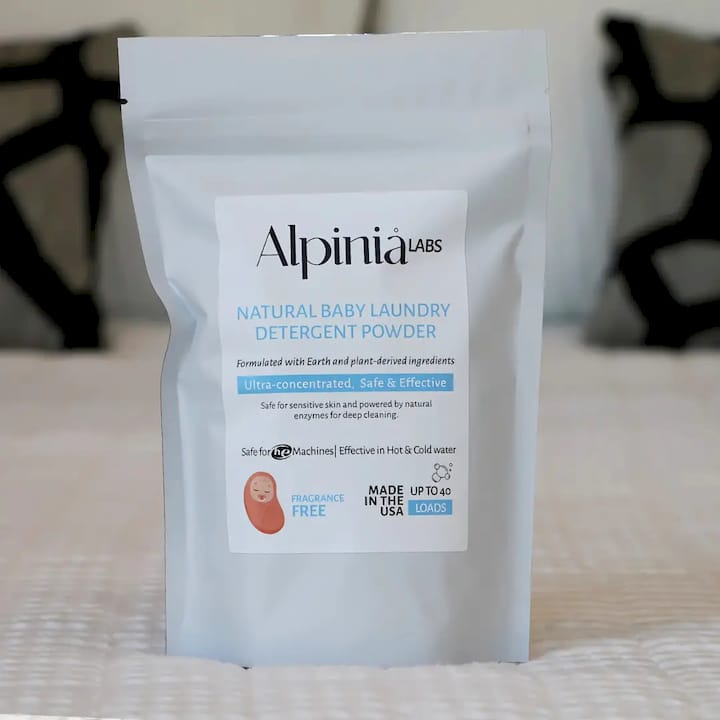
Laundry room (highest priority) Baby and children’s clothing sits against skin for hours. Switch to a fragrance-free baby detergent with an enzyme-powered formula first. Enzymes do the cleaning work that fragrance used to mask, so performance does not drop. This also eliminates the dryer vent emission pathway described above.
Nursery and baby care Infants spend the most time in contact with laundered fabrics and wiped surfaces. Every product in this room should be fragrance-free: detergent, surface wipes, and any fabric spray. The AAP’s guidance on personal care products applies directly here.
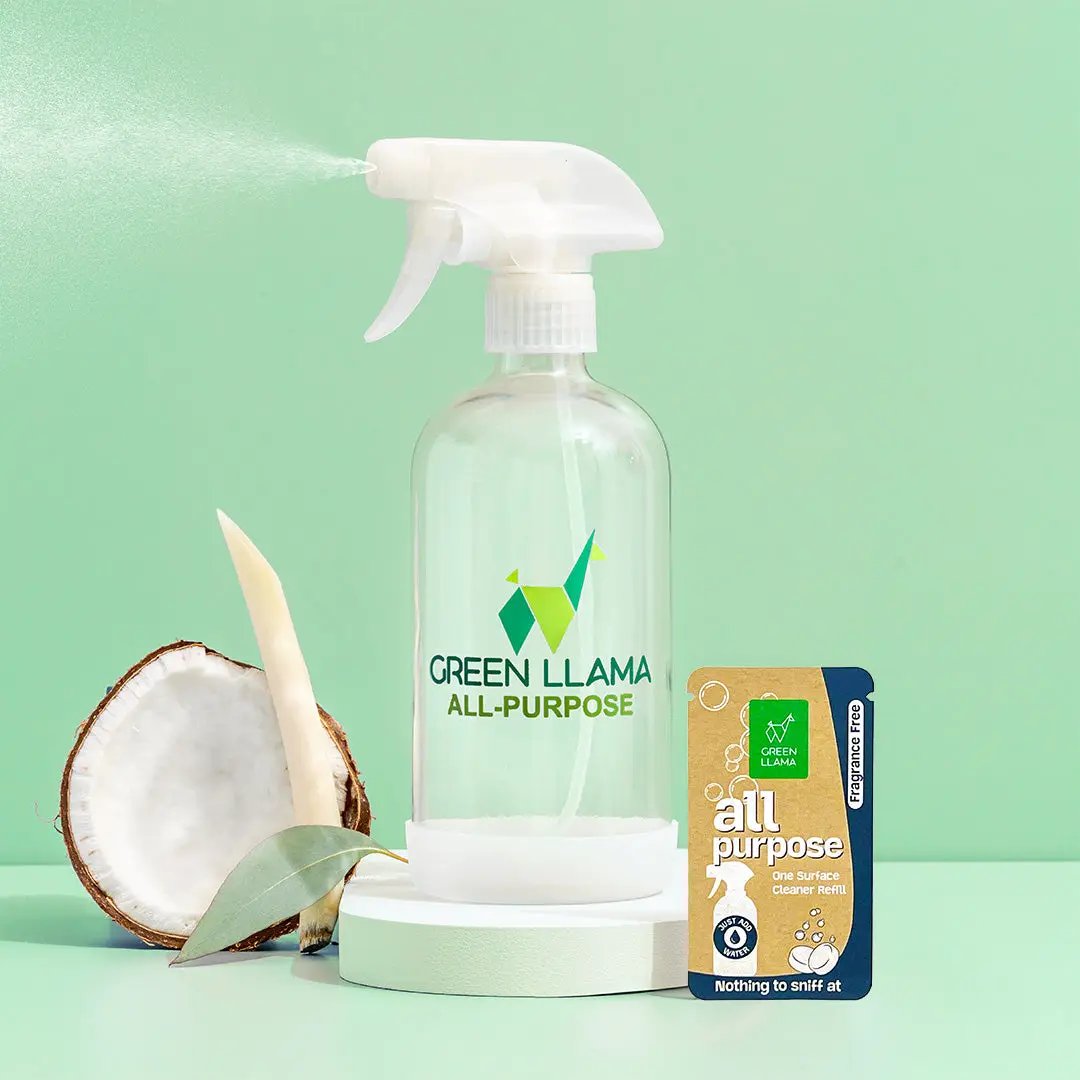
Kitchen High-contact surfaces, food prep, and children touching counters and floors make the kitchen the second-highest priority. A refillable glass spray bottle kit lets you use a concentrated fragrance-free formula and refill rather than buying new plastic bottles repeatedly. Pair it with a 3-in-1 cleaning brush for scrubbing without needing scented aerosol sprays. For more on kitchen hygiene for kids, PriceLows™ has a dedicated guide.
Bathroom Bathrooms are small, often poorly ventilated, and cleaned with some of the most heavily scented products in the home. Switch to fragrance-free toilet bowl cleaner and surface spray. Open a window or run the fan for at least 10 minutes after cleaning.
Living areas and bedrooms Lower priority for cleaners, but fabric sprays and carpet deodorizers are common fragrance sources here. Baking soda on upholstery before vacuuming replaces most of them.
Prioritization note: Laundry detergent and multipurpose spray deliver the largest exposure reduction per dollar because they are used most frequently and touch skin or air directly. Start there before worrying about specialty products.
5. How to choose truly fragrance-free cleaners: a practical shopping guide
The marketing language on cleaning products is not regulated the way drug labels are. “Natural,” “green,” “pure,” and “gentle” mean nothing specific. Here is what actually matters:
- Choose concentrated or refillable formats. A concentrated fragrance-free cleaner used with a refillable glass spray bottle costs less per use than single-use scented alternatives and reduces plastic waste. Ways to clean your home with less spending covers this cost angle in more detail.
- Check detergent labels carefully. Learning how to read laundry detergent ingredient labels takes about five minutes and pays off every time you shop.
Consumer Reports notes that fragrance-free formulations can perform as well as scented ones when properly built around effective surfactants, which is exactly what good manufacturers do when they cannot rely on scent to mask a weak formula.
Pro Tip: Invest in fragrance-free baby laundry detergent and a multipurpose refillable spray first. These two products cover the highest-exposure scenarios. For everything else, basic fragrance-free dish soap and baking soda handle most needs at minimal cost.
7. Who is most at risk and when switching matters most
Fragrance-free cleaning products benefit everyone, but the case for switching is most urgent in specific situations.
Highest-risk groups:
- Infants and toddlers: Developing respiratory and endocrine systems, high skin-surface-to-body-weight ratio, and more time on cleaned floors and fabrics
- Children with asthma or eczema: Fragrance compounds are among the most common triggers for both conditions; peer-reviewed research links cleaning product exposure to respiratory outcomes and occupational asthma
- Pregnant people: Phthalates and other fragrance components have been studied for developmental and hormonal effects during pregnancy
- Household members with chemical sensitivities or multiple chemical sensitivity (MCS): Even low-level fragrance exposure can cause significant symptoms; the Invisible Disabilities Association documents the social and health impact of fragrance in shared spaces
- Elderly family members with reduced respiratory reserve or skin barrier function
Scenarios to prioritize:
- A new baby arrives: switch laundry detergent, surface spray, and bathroom cleaner immediately
- A child is diagnosed with asthma or eczema: audit every cleaning product in the home
- A family member undergoes chemotherapy or has a compromised immune system: fragrance-free across the board reduces unnecessary chemical burden
- Recent home renovation: new materials off-gas their own VOCs; adding fragrance compounds on top compounds the indoor air load
- Frequent visitors with sensitivities: fragrance-free environments are more accessible and inclusive, as the Invisible Disabilities Association notes
8. What the research and health experts say
The expert consensus is consistent: reduce fragrance exposure where possible, especially for children and people with respiratory conditions.
- The American Academy of Pediatrics advises parents to choose personal care and cleaning products with transparent ingredient lists and to minimize early-life exposure to synthetic fragrances, phthalates, and parabens.
- The American Lung Association identifies scented cleaning products as a source of indoor VOCs and recommends avoiding air fresheners and heavily scented cleaners to protect respiratory health.
- NIEHS research on phthalates documents their widespread presence in fragrance formulations and their potential endocrine and reproductive effects, particularly relevant during pregnancy and early childhood.
- Peer-reviewed studies indexed on PubMed link cleaning product use to respiratory symptoms and occupational asthma, with fragrance compounds among the identified contributors.
- The FDA maintains a list of recognized cosmetic allergens that includes fragrance components, supporting the case for label transparency.
- Consumer Reports finds that fragrance-free formulations perform comparably to scented ones when built on effective surfactants, removing the performance trade-off parents sometimes worry about.
“Fragrance is one of the most common causes of allergic contact dermatitis, and many fragrance ingredients are not disclosed on product labels — making it difficult for consumers to avoid specific allergens.” — FDA, Allergens in Cosmetics
For parents who want to go deeper, PubMed’s database of peer-reviewed studies is searchable by ingredient or health outcome. The NIEHS and FDA pages linked throughout this article are primary sources, not summaries, and worth bookmarking.
Key Takeaways
Fragrance-free cleaners reduce your family’s daily exposure to undisclosed VOCs, allergens, and phthalates that hide behind a single “fragrance” label, with the biggest gains coming from switching laundry detergent and multipurpose spray first.
| Point | Details |
|---|---|
| “Fragrance” hides dozens of chemicals | U.S. law does not require individual disclosure, so one label term can cover allergens, VOCs, and phthalates. |
| Laundry is the highest-priority swap | Scented detergents emit hazardous chemicals through dryer vents and leave residues on skin-contact fabrics. |
| Fragrance-free outperforms “unscented” | Unscented products may still contain masking fragrance agents; only “fragrance-free” guarantees none were added. |
| Certifications beat marketing claims | EPA Safer Choice and EWG Verified require ingredient review; “natural” and “green” do not. |
| PriceLows™ stocks the key starter products | The fragrance-free baby detergent and refillable glass spray bottle kit cover the two highest-exposure scenarios at budget-friendly prices. |
The case for fragrance-free is stronger than most parents realize
The conventional framing around fragrance-free cleaning is that it is a nice-to-have for people with allergies. That framing undersells the issue by a wide margin.
The real argument is about information asymmetry. When a label says “fragrance,” you are not choosing a scent. You are agreeing to an undisclosed chemical blend that the manufacturer is not legally required to explain. For most adults in good health, that may be a tolerable trade-off. For a six-month-old whose laundry is washed daily, or a child who already has reactive airways, it is a different calculation entirely.
What I find most telling is the performance argument. Manufacturers that go fragrance-free cannot rely on scent to mask a weak formula. They have to make the product actually clean. Consumer Reports has noted this directly: the absence of fragrance pushes better formulation. That means fragrance-free is not a compromise. In many cases, it is the better-built product.
Budget is the real barrier for most families, not conviction. The good news is that concentrated formats and refillable systems close that gap fast. Two products, a fragrance-free baby detergent and a refillable multipurpose spray, cover the majority of your family’s highest-exposure moments without requiring a full household overhaul on day one.
PriceLows™ picks for fragrance-free family cleaning basics
Switching to fragrance-free does not have to mean spending more. PriceLows™ carries the two products that cover the highest-priority swaps for most families, at prices built for real household budgets.
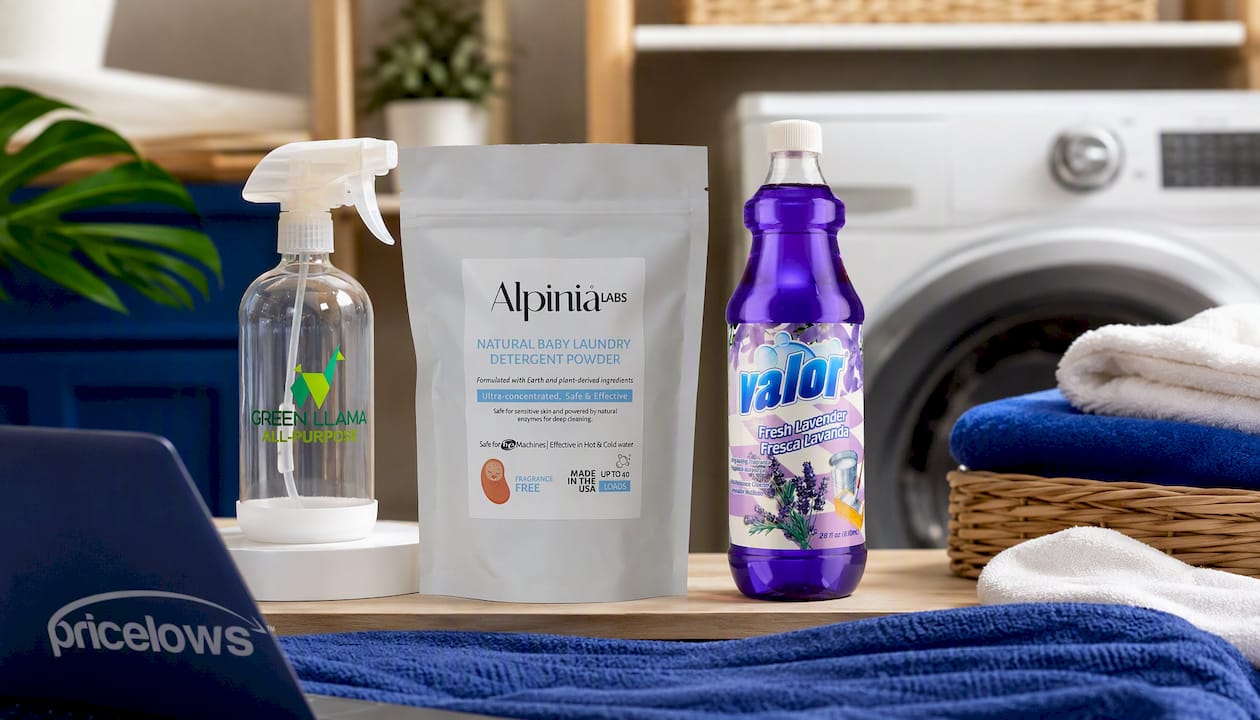
The natural baby laundry detergent is an enzyme-powered, fragrance-free formula rated for many loads and designed for sensitive skin. Enzymes break down organic stains without needing fragrance to cover the smell, which is exactly the formulation approach Consumer Reports points to as a marker of a well-built product.
The refillable glass spray bottle kit pairs with any fragrance-free concentrate and cuts your cost per use while eliminating single-use plastic. It is the practical backbone of a fragrance-free kitchen and bathroom routine.
PriceLows™ also carries the Multi Purpose Cleaner Lavender for households that want a scented option. Note clearly: this product contains lavender fragrance and is not fragrance-free. It is a good choice for adults without sensitivities who prefer a scent, but it is not right for nurseries or households with asthma.
All orders ship free with PriceLows™'s 100% shipping protection plan. Browse the full home cleaning tools selection to build out the rest of your fragrance-free kit.
Sources and further reading
These are the primary sources behind the claims in this article. Each one is worth bookmarking if you want to go deeper.
- How to Choose Nontoxic Cleaning Products - Consumer Reports
- Cleaning supplies and household chemicals | American Lung Association
- Personal care products | American Academy of Pediatrics (AAP)
- Phthalates, the everywhere chemical (NIEHS handout)
- Allergens in cosmetics | FDA
- Scented laundry products emit hazardous chemicals through dryer vents - University of Washington News
- PubMed entry — cleaning products and respiratory health
- Choose Friendships Over Fragrances — Invisible Disabilities Association
This article provides general health and product information, not medical advice. Consult your pediatrician or a qualified healthcare professional for guidance specific to your family’s health needs, and check current EPA and FDA resources for the latest regulatory standards.